Desk Report:
While new residential and commercial areas have rapidly sprung up in the eastern part of the capital, fuel supply infrastructure has not expanded proportionately. Consequently, residents of the ‘300-Feet Road’ area and neighborhoods adjacent to Purbachal must travel several kilometers to reach the nearest filling station to refuel their vehicles. This not only wastes time and money but also generates additional traffic congestion along the routes taken to and from the stations. The impact extends to key roads in the vicinity, including those in Kuril and Khilkhet.
Abdullah Al Mamun, a resident of a housing project near the 300-Feet Road, regularly travels to filling stations in Kuril or along the Airport Road to refuel his car. He notes that a significant amount of fuel is consumed just during the journey to the station, even when starting with a few liters in the tank.
“Two days ago, I set out to get fuel with just a few liters left in the car. Half of that fuel was consumed on the way there. Had I been unable to refuel for some reason, I might have run out completely and been stranded on the road. If there were adequate filling stations nearby, I wouldn’t have to travel so far,” he said.
Discussions with local residents reveal that a vast number of people live in various residential areas—including Bashundhara, Police Housing Society, Navy Housing, Swadesh Swarnali, Swadesh Sunvalley, and United—stretching from Kuril along the 300-Feet Road up to the Purbachal project. Residents of these areas are forced to rely on relatively distant filling stations for fuel.
In contrast, there are multiple filling stations along the approximately 1.5-kilometer stretch from the Gulshan-Tejgaon Link Road to Satrasta. Locals complain that while there is a high density of filling stations in one part of the capital, the supply infrastructure in the rapidly expanding eastern residential areas falls far short of demand.
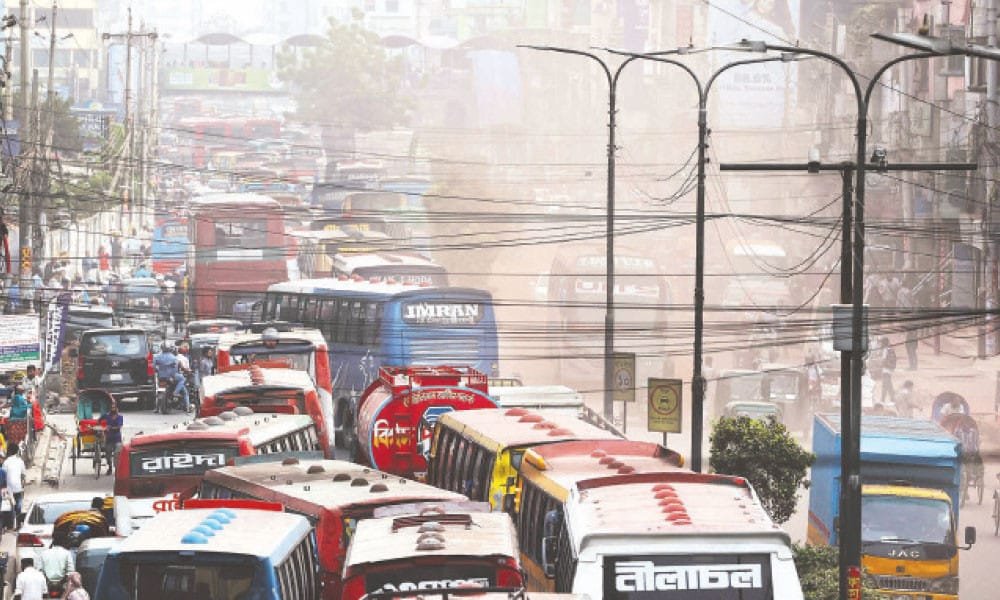
Residents argue that due to the lack of adequate filling stations in these areas, thousands of vehicles are compelled to travel extra distances every day solely to refuel. This situation not only drives up fuel costs but also results in the loss of valuable working hours. Furthermore, the movement of vehicles for this purpose exacerbates traffic congestion on the affected roads.
According to locals, some vehicles in the area must travel an additional 10 kilometers to Kuril, nearly 13 kilometers to Khilkhet, and approximately 18 kilometers to Jalsiri just to refuel.
Consequently, a portion of the fuel being procured is effectively consumed during the journey to obtain it. In some instances, the commute adds an extra 30 to 60 minutes of travel time.
The impact of this situation extends beyond private cars; various other types of vehicles—including public transport, freight trucks, ride-sharing vehicles, and motorcycles—are also adding to the traffic volume on these roads to refuel.
Locals fear that if the residential and commercial expansion of East Dhaka continues, the region could see a daily traffic volume of 300,000 to 400,000 vehicles in the future. Without adequate local refueling facilities, the pressure from this increased traffic will intensify. Experts also believe this pressure could mount further once the Mohakhali Bus Depot is fully relocated.
The financial and environmental consequences of this additional traffic are significant. Estimates suggest that if 50,000 vehicles travel an average of 7 extra kilometers daily to refuel, the total additional distance covered amounts to approximately 350,000 kilometers per day.
Given an average fuel consumption of 0.10 to 0.12 liters per kilometer, this extra travel could require an additional 35,000 to 42,000 liters of fuel daily.
In other words, the lack of sufficient local filling stations leads not only to traffic congestion and lost working hours but also to the wastage of vast quantities of fuel every day. There is a risk that the long-term financial cost of this could reach a substantial figure.
Simultaneously, the burning of excess fuel increases carbon emissions and air pollution. Noise pollution levels may also rise due to the increased volume of traffic. Thus, the issue extends far beyond the mere convenience of refueling; Issues regarding urban management, the environment, and traffic congestion are also intertwined with this matter.
Local residents allege that during the tenure of the Awami League government, the process of establishing new fuel stations was halted through a special directive; however, the installation of LPG stations was permitted to continue during the same period.
They argue that because the opportunity to set up new fuel stations was restricted at that time, the necessary infrastructure failed to keep pace with the fuel demands of rapidly expanding residential areas.
On one hand, new residential areas have emerged, and both the population and the number of private vehicles have increased. On the other hand, no provisions were made to establish an adequate number of fuel stations to meet the future fuel requirements of these areas. Consequently, residents are now forced to rely on distant stations.
Given this situation, locals have called for a comprehensive study that takes into account the current and future fuel needs of the Bashundhara residential area and its surrounding neighborhoods.
In their view, such a study should consider factors such as vehicle volume, population size, future residential and commercial expansion, and road capacity to determine suitable locations for establishing at least two or three well-planned fuel stations.
However, the establishment of these stations must prioritize fire safety, environmental clearance, urban planning, road load-bearing capacity, vehicle entry and exit arrangements, and adequate space for waiting vehicles.
Stakeholders believe that a coordinated initiative involving the Ministry of Power, Energy and Mineral Resources, Bangladesh Petroleum Corporation (BPC), RAJUK, the Roads and Highways Department, the City Corporation, and the Department of Environment is essential for this purpose.
Mohammad Ali, a resident of the Police Officer Housing Society, said, “If filling stations are established in a planned manner, the need to travel far for fuel will decrease. This would help reduce unnecessary vehicular movement, the wastage of fuel and money, and the loss of productive man-hours.”
Tajul Islam, a resident of the United City area, remarked, “Reducing unnecessary vehicle trips for refueling would alleviate the excessive pressure on the Kuril-Khilkhet area. At the same time, it would be possible to keep air and noise pollution under control.”
He added, “Rapid residential and commercial expansion is taking place in this part of East Dhaka. The demand for vehicles and fuel will rise further in the future. Therefore, it is crucial to develop the necessary infrastructure now, keeping future needs in mind.”
Speaking on condition of anonymity, a senior official from the Bangladesh Petroleum Corporation (BPC) stated that the process of approving new petrol pumps under existing policies has been suspended through a special office order. The policy regarding this matter was originally formulated around 2019–20.
He mentioned that the government has requested a draft policy from BPC for the approval of new petrol pumps and filling stations. Although BPC had previously submitted a draft policy to the ministry, it was returned for further scrutiny.
The BPC official noted that consultations and feedback sessions with various stakeholders regarding the draft policy have already taken place. It is currently in the final stages of review, and the process of finalizing the policy could be completed soon. According to him, this is the primary reason why the approval of new filling stations remains suspended.
Urban planning expert Professor Dr. Adil Mohammed Khan stated that urban infrastructure planning must be based on the residential patterns and needs of the people in specific areas. A lack of coordination in planning results in residents having to bear the negative consequences later on.
He stated, “The population is growing, yet arrangements for sourcing necessary fuel are not being made—or cannot be made—at a commensurate rate. Consequently, people are forced to travel to other areas, thereby placing additional strain on those locations as well.”
According to experts, it is crucial to plan fuel supply infrastructure now, taking into account the projected population and vehicular traffic in the rapidly expanding residential areas of East Dhaka. Failure to do so will not only perpetuate the trend of traveling longer distances to procure fuel but could also exacerbate traffic congestion, fuel wastage, and environmental pollution.