Desk Report:
Finance and Planning Minister Amir Khasru Mahmud Chowdhury has stated that establishing strong and institutional partnerships among NGOs, the private sector, and the government is vital. He called for time-bound measures to ensure sustainable financing.
He made these remarks on Tuesday (October 6, 2026) while addressing a seminar titled “Moving Beyond Aid Dependency: The Future of NGO Financing in Bangladesh,” held at the conference room of the Bangladesh Institute of Development Studies (BIDS).
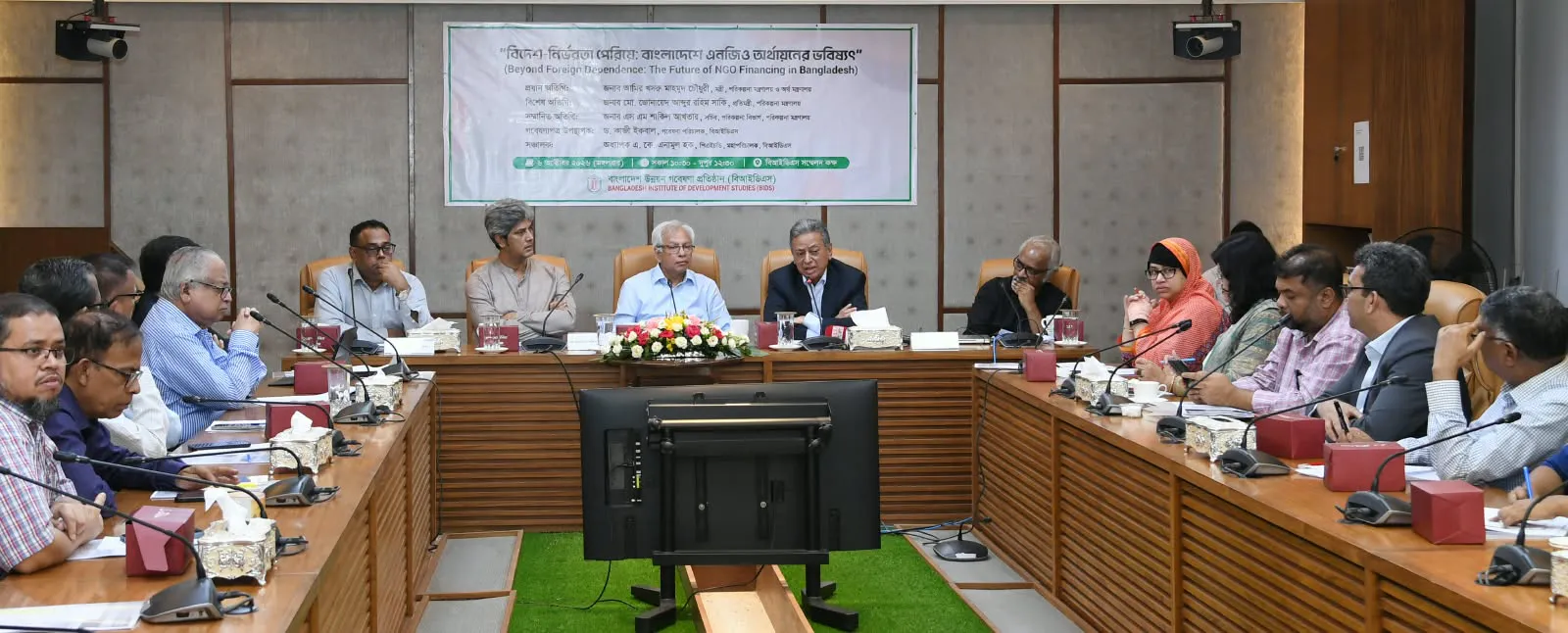
The Minister noted that the government is working to resolve various crises facing the country and to ensure accountability. “We do not merely want to listen; we want to provide an effective response,” he said. He emphasized the need for an integrated framework involving human development, the preservation of local culture, and private sector participation. He observed that NGOs and relevant stakeholders are already active in various fields, including the creative economy, and stressed the need to give this partnership a more institutional and policy-driven structure.
Highlighting the importance of strong institutional partnerships among NGOs, the private sector, and the government, the Minister remarked that NGOs play a crucial role in delivering government services directly to the grassroots level. He called for paving the way for sustainable NGO financing through the formulation and implementation of policies with specific timeframes.
Citing the heritage of local crafts such as Shitalpati (traditional cool mats), the Minister stated that modern design, value addition, and marketing promotion are essential to introduce these traditional products to international markets.
The Minister emphasized four key conditions for project approval: value for money, return on investment, creation of employment or entrepreneurship, and environmental considerations and safeguards. He further declared that no project would be approved unless these four conditions were met.
State Minister for Planning Md. Junaid Abdur Rahim Saki and Planning Division Secretary S. M. Shakil Akhtar, among others, were present at the seminar.