Desk Report:
Political and social unrest in France, cautious purchasing behavior among European buyers, and mounting pressure to lower product prices have created fresh uncertainty for Bangladesh’s ready-made garment (RMG) sector. While exports have increased in some European markets, the overall downward trend in demand and selling prices is putting pressure on export earnings and factory profit margins. This has ripple effects across the entire spectrum—from production operations to workers’ working hours and their opportunities for additional income.
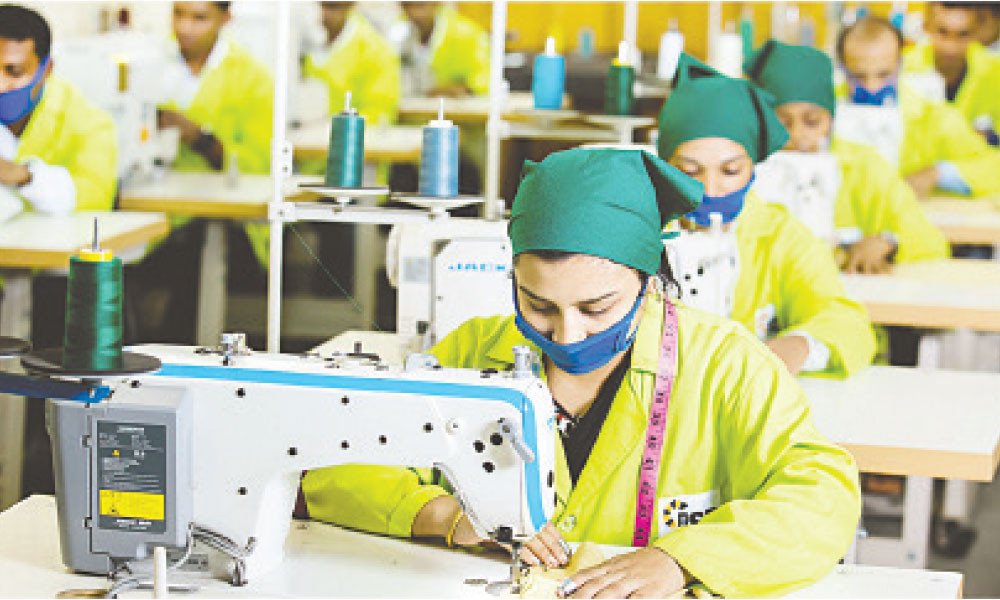
The reality of the situation is reflected in the experience of Rahima Khatun, a sewing machine operator at a garment factory in Gazipur. She says, “Previously, I could earn extra income by working until 8:00 PM or 10:00 PM. Now, the factory often closes by 5:00 PM; there is very little overtime work available.”
“Management says that orders from European buyers have dropped. In the past, the extra income from overtime helped ease the burden of household expenses. Now, it has become difficult to cover the costs of groceries and other family needs. On top of that, the fear of losing my job is growing.”
According to data from the Export Promotion Bureau (EPB), Bangladesh’s ready-made garment exports to the European Union (EU) grew by 3.33% during the first three months of the 2026-27 fiscal year—from July to September. However, this growth was not uniform across all countries.
During this period, Bangladesh’s garment exports to France fell by 4.91%, with export earnings dropping to $449 million. Conversely, exports to Spain rose by 13.73%, reaching a total value of $1.1484 billion.
Furthermore, statistics from Eurostat for the period between January and August of this year paint an even more concerning picture of exports to the European market. During this timeframe, Bangladesh’s export earnings from ready-made garments to the European Union declined by 11.67%, falling to approximately €11.93 billion. Simultaneously, the volume of exports decreased by 4.58%. Along with a decline in export earnings, the average price of garments has also fallen. According to Eurostat data, the average export price of Bangladeshi garments in the European market has dropped from 14.87 euros per kilogram to 13.76 euros. In other words, not only has the volume of exports decreased, but the revenue generated per kilogram of garments sold has also declined.
Bangladesh’s share of the European Union’s total garment imports has likewise shrunk—falling from 21.5 percent to 19.8 percent.
Rising costs of living in Europe, pressure on consumer purchasing power, and uncertainty in retail sales are impacting garment orders. When sales fall short of expectations, brands and retailers find themselves with excess, unsold inventory. Consequently, they tend to reduce new orders, delay delivery schedules, or push for lower prices from their suppliers.
Such situations make it difficult for Bangladeshi garment manufacturers to manage production and business operations. Factories must incur upfront costs—procuring raw materials, hiring workers, and preparing production capacity—based on the orders received. If orders are subsequently reduced or delivery timelines pushed back after production has begun, the expected returns on these investments fail to materialize.
Furthermore, the impact of declining sales prices is exacerbated by rising costs—including worker wages, electricity, fuel, and other production expenses. This compresses factory profit margins and increases the risks associated with running the business.
Mahmud Hasan Khan, President of the Bangladesh Garment Manufacturers and Exporters Association (BGMEA), told Kaler Kantho, “While export growth is already somewhat sluggish, the political and social unrest in France has introduced new concerns. We have advised our members to take necessary measures to address potential risks. Simultaneously, we are working on expanding into new markets and diversifying our product offerings to reduce our over-reliance on any single market.”
The political and social instability in France could potentially affect the country’s commerce, transport systems, and consumer confidence. If the protests persist, they could lead to disruptions in retail operations, delays in product supply, and a tightening of consumer spending. This raises the risk of changes to new purchase orders or the delivery schedules for existing orders.
However, the current pressure on Bangladesh’s ready-made garment (RMG) exports cannot be attributed solely to the unrest in France. Broader factors—such as the overall economic situation in Europe, consumer purchasing power, the sales performance of brands, and existing inventory levels—also play a critical role in shaping export trends.
Dr. Fahmida Khatun, an economist and Distinguished Fellow at the Centre for Policy Dialogue (CPD), told Kaler Kantho, “Demand for Bangladeshi garments depends on overall consumption in Europe, brand sales, inventory levels, and new purchase orders. Therefore, the situation in France alone does not dictate the dynamics of the entire European market. Nevertheless, if the unrest continues, it could impact new orders and delivery schedules.”
She added, “Due to inflation and the rising cost of living across Europe, households may cut back on discretionary purchases, such as clothing. If retail sales weaken as a result, brands will likely become more cautious about placing new orders. Furthermore, a growing tendency to source goods at lower prices could force supplier nations like Bangladesh to face even tougher price negotiations.”
A decline in garment orders directly impacts factory production operations. When production pressure eases, opportunities for overtime work—in addition to regular working hours—become limited. This creates an added burden, particularly for workers who rely on overtime earnings to cover their household expenses.
If order volumes remain low for an extended period, factories may be forced to take measures such as limiting new recruitment, reducing working hours, or restructuring production operations. While the situation varies from factory to factory, a prolonged weakness in demand from the European market poses a risk of negative impacts on both employment and workers’ incomes.
Consequently, evaluating the growth of garment exports requires looking beyond mere export volume or revenue. Factors such as export pricing, factory production capacity, profit margins, and workers’ working hours must be given equal consideration.
In the current climate, exporters should increase engagement with buyers in the short term, closely monitor any changes to orders, and align production planning with potential supply risks. Simultaneously, greater flexibility in raw material procurement and production management is essential to minimize financial losses should order specifications or volumes change.
In the long term, it is crucial to reduce over-reliance on specific European markets and intensify efforts to penetrate new ones. Furthermore, the focus should shift toward producing higher-value garments, diversifying product offerings, adopting modern technology, and enhancing productivity. Such initiatives can help move the industry beyond the race to the bottom—competing solely on low prices—and instead create opportunities for greater value addition.
While a return to normalcy in France might alleviate temporary uncertainty in that specific market, the broader challenges facing Bangladeshi exporters are unlikely to dissipate quickly—especially if European consumers continue to curtail spending, average garment prices remain depressed, and buyers persist in pressuring suppliers for price discounts.
Therefore, the primary objective for Bangladesh’s ready-made garment industry is no longer limited to merely maintaining exports in existing markets; it must now focus on developing new markets, enhancing product quality and diversity, and strengthening its competitive edge in the international arena. It is essential to maintain export earnings and industrial stability, while simultaneously ensuring employment and livelihood security for workers.