Desk Report:
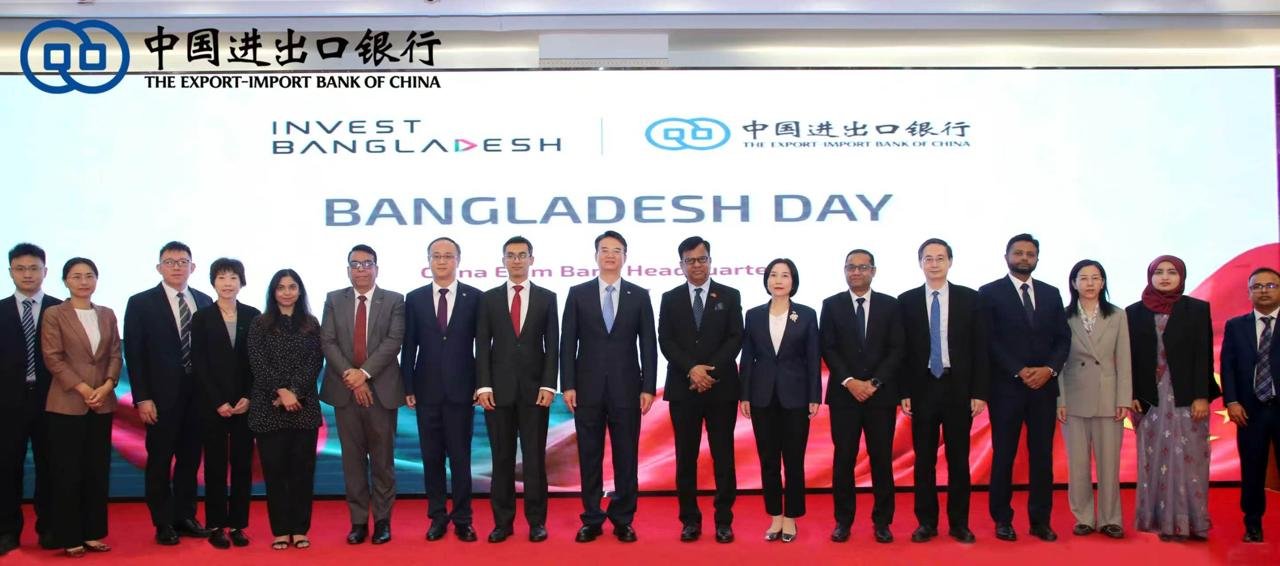
A ‘Bangladesh Day’ event was held in Beijing to highlight opportunities for Chinese banks and financial institutions to establish operations in Bangladesh, expand investments, and strengthen bilateral financial cooperation. The event was organized at the headquarters of the Export-Import Bank of China (China Exim Bank) in collaboration with ‘Invest Bangladesh.’
Eleven Chinese financial institutions participated in the event, including the Industrial and Commercial Bank of China, the Agricultural Bank of China, and the Bank of China—three of the world’s four largest banks by total assets. Additionally, 26 Chinese companies from sectors such as infrastructure and engineering, power and renewable energy, information technology and electronics, smart and industrial technology, eco-friendly technology, consumer electronics, and agricultural technology took part.
Ashik Chowdhury, Chairman of ‘Invest Bangladesh,’ attended the event as the chief guest. Other notable attendees included Wang Kang, Vice President of China Exim Bank, and Md. Nazmul Islam, Ambassador of Bangladesh to China.
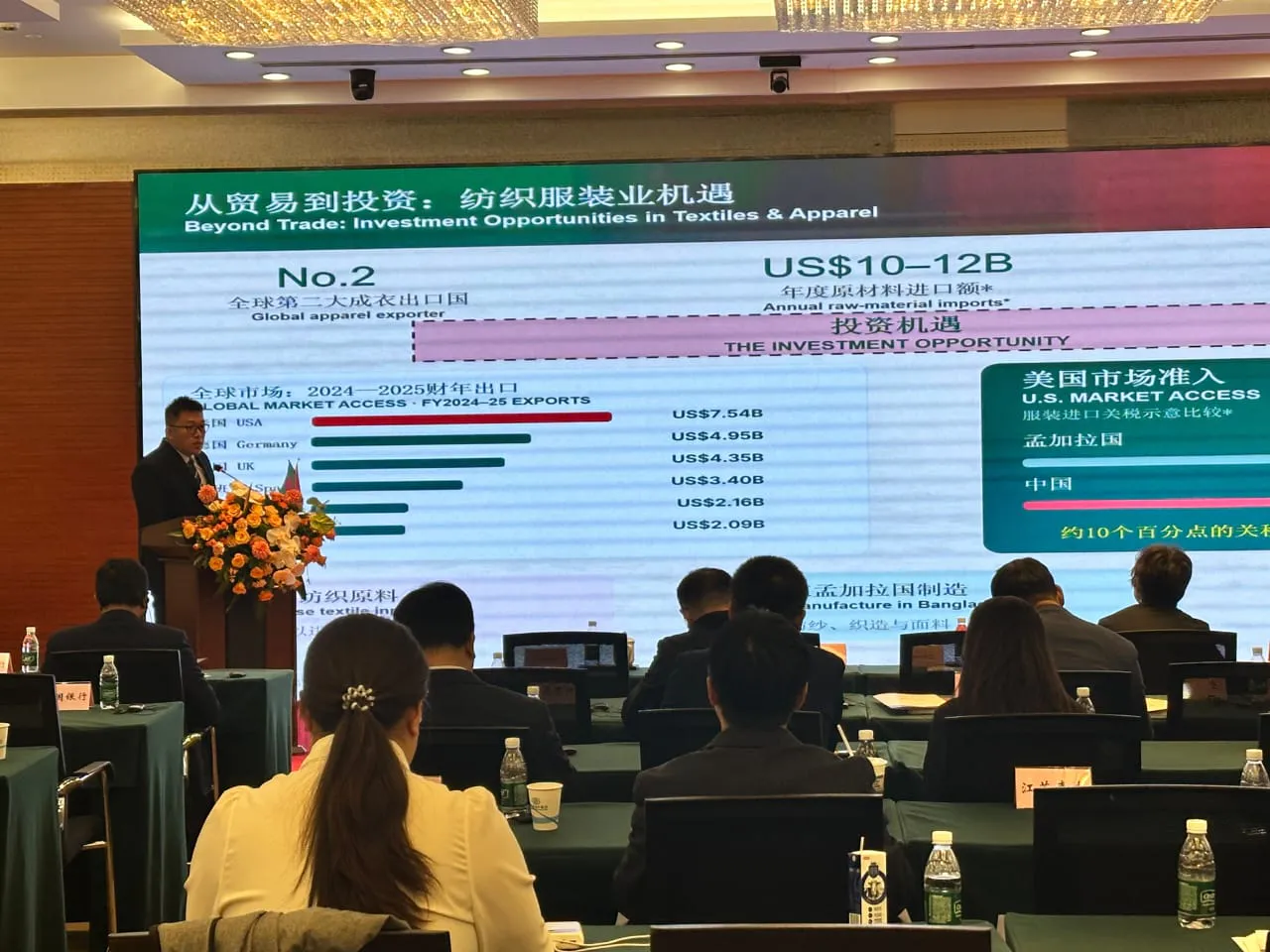
During the event, Bangladesh Bank and ‘Invest Bangladesh’ jointly delivered a keynote presentation titled “The Next Frontier—Bangladesh-China Financial Connectivity.” The presentation outlined the growing potential for trade and investment between the two nations, as well as the prospects for Chinese banks to establish direct operations in Bangladesh.
The presentation noted that in the 2024–25 fiscal year, the volume of trade between Bangladesh and China reached approximately 19 billion USD. Despite this significant commercial relationship, no Chinese bank currently operates directly in Bangladesh. In contrast, Chinese banks maintain operations in countries like Cambodia, Sri Lanka, and Myanmar—nations that have smaller or less extensive trade ties with China compared to Bangladesh.
Against this backdrop, discussions focused on the potential for expanding trade finance, industrial investment, and business partnerships between the two countries by increasing the presence of Chinese banks and financial institutions in Bangladesh. The event highlighted investment opportunities in Bangladesh’s priority sectors, including the Chinese Economic and Industrial Zone (CEIZ) and the Mongla Economic Zone. Participants discussed how Chinese companies and their financing institutions could engage to capitalize on these prospects.
A presentation was also delivered on the role of the Export-Import Bank of China (China Exim Bank) in bilateral trade and investment. During the subsequent networking session, representatives from Chinese banks and companies engaged in direct discussions with the Bangladeshi delegation regarding investment, financing, and potential business partnerships.
Ashik Chowdhury, Chairman of ‘Invest Bangladesh,’ stated, “The next phase of Bangladesh-China cooperation is the establishment of financial connectivity. Chinese companies investing in Bangladesh require accessible and efficient trade finance, funding for machinery procurement, working capital, and long-term investment support. The volume of trade between the two nations underscores these needs.”
He added that Bangladeshi companies require partnerships that facilitate the acquisition of technology and the expansion of business and manufacturing operations. An increased presence of Chinese financial institutions in Bangladesh would be mutually beneficial and would also simplify the process of translating investment decisions into reality.
Wang Kang, Vice President of China Exim Bank, noted that as a financial institution dedicated to supporting China’s foreign trade, investment, and international cooperation, the Export-Import Bank of China is leveraging its specialized capabilities.
He mentioned that the bank is currently involved in approximately 40 projects in Bangladesh across various sectors, including infrastructure, energy, agriculture, processing, and manufacturing.
Wang Kang further stated that leading Chinese companies will be encouraged to make direct investments in priority sectors such as textiles and healthcare. Through this, financial support can play a sustained role in the development of Bangladesh’s manufacturing and service-oriented economy.
The ‘Bangladesh Day’ event, held in Beijing, is viewed as a significant initiative aimed at expanding financial cooperation between the two nations, exploring market entry opportunities for Chinese banks, and fostering direct engagement with investors. According to relevant stakeholders, increased participation by Chinese financial institutions could create new opportunities for Bangladesh in areas such as industrialization, infrastructure development, technology transfer, and the attraction of foreign investment.