Desk Report:
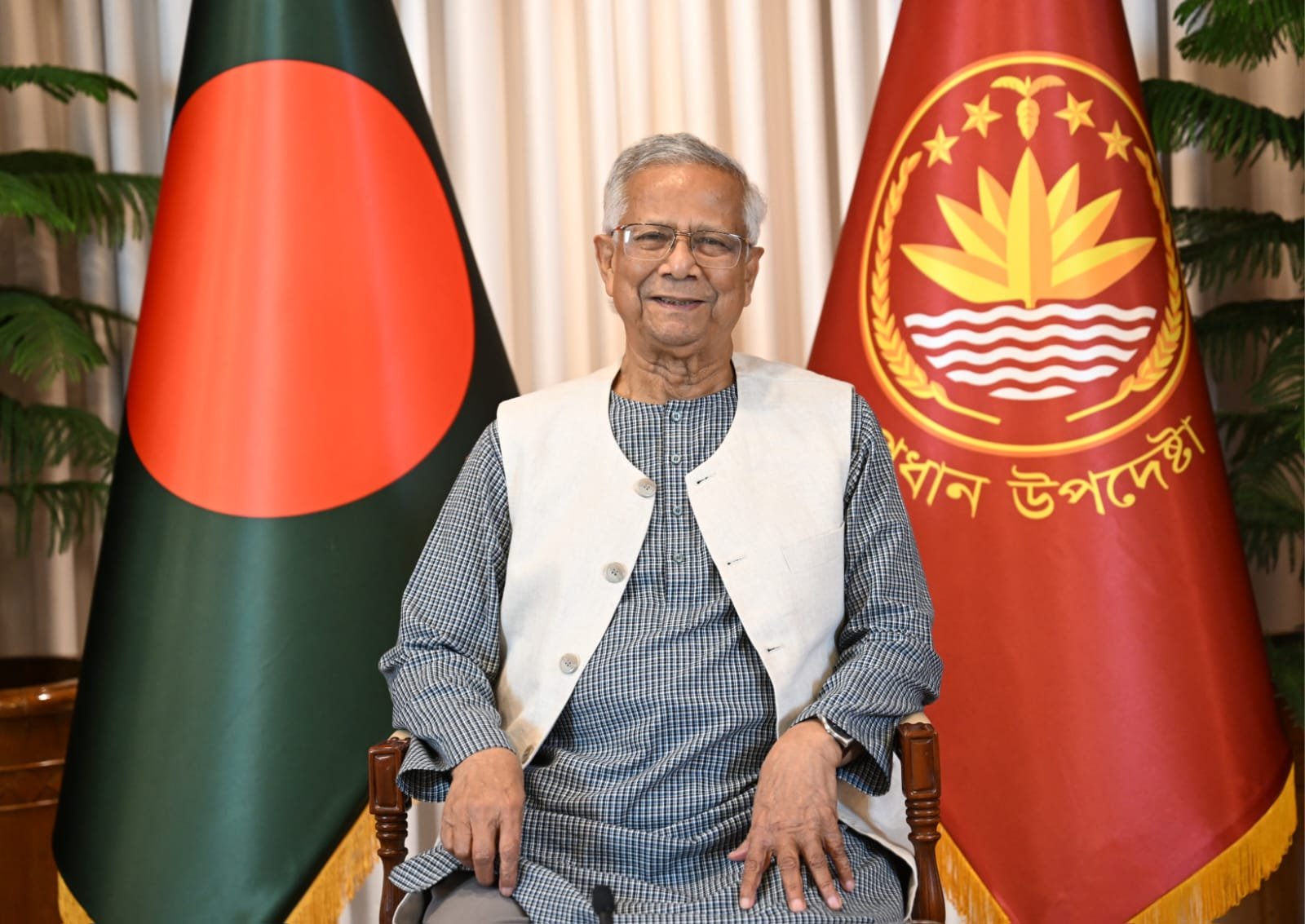
In his farewell address to the nation on Monday (February 16, 2026) after the 18-month tenure of the interim government, Principal Advisor Professor Muhammad Yunus said that after 17 long years, a festive, participatory and peaceful national election has been held in the country, which will be an example for the future. He said that the interim government’s mandate is officially ending with the handover of responsibility to the newly elected government.
In his speech, he recalled the context of the July 2024 mass uprising, when the country was immersed in a deep political and institutional crisis. At that time, he was given the responsibility to bring the country back to normal. There were three main commitments when he took office – reforms, justice and elections. He said that his government has made maximum efforts to implement these three goals.
The Chief Advisor said that the interim government has enacted about 130 new laws and amendments and issued about 600 executive orders, most of which have already been implemented. Important steps have been taken to strengthen and strengthen the independence of the judiciary, such as the formation of a separate secretariat, introducing a transparent framework for the appointment of judges, and recognizing enforced disappearance as a crime against humanity. He said that multiple tribunals are working to keep the judicial process transparent and impartial, and verdicts in several cases have already been announced.
Regarding the improvement in the law and order situation, he said that the situation was very fragile when he took office; the police stations were almost devoid of police and there was a crisis of trust among the people. That situation has been changed step by step. Initiatives have been taken to develop the police as a people-friendly and accountable force, and effective measures have been taken to stop the culture of extrajudicial killings.
Regarding the economic situation, he said that when he took office, the banking sector was weak and the economy was in a state of turmoil due to money laundering. Stability has been restored through structural reforms in the revenue, tax policy, currency management, and financial sectors. He mentioned that the foreign exchange reserves have now increased to $34 billion. He also claimed that inflation has decreased due to increasing the supply of essential commodities, strengthening market supervision and expanding the activities of the TCB.
Regarding foreign policy, the chief advisor said that a balanced diplomacy has been followed by prioritizing the sovereignty and national interests of Bangladesh. He said that the reciprocal tariff has come down from 37 percent to 19 percent as a result of an important trade and customs agreement with the United States. He also highlighted the strengthening of economic and strategic partnerships with Japan and China. He also mentioned that the issue of the Rohingya crisis has attracted renewed attention in the international arena.
He mentioned the “July Charter” as the biggest achievement of the interim government, which received overwhelming support in the referendum. In his words, if this charter is fully implemented, the path to the return of dictatorship or fascism will be closed forever. He expressed hope that the implementation of this charter will be completed within the stipulated time.
On the eve of his departure, he urged the countrymen not to disrupt the trend of democracy, accountability, freedom of speech and the exercise of rights that has begun. Calling on everyone to remain united to build a just, humane and democratic Bangladesh regardless of party, opinion, religion or caste, he said, “Please pray for me. May Allah Almighty help us all. Allah is the Protector.”