Desk Report:
The interests of the country are much bigger than personal interests. Some people in charge caused huge losses to the country and the people due to jealousy and greed. A steel mill has been the victim of such an incident.
According to the news, a steel mill has lost about 2,958 crore taka before it could go into production due to anger. Thousands of crores of taka were invested in setting up that industrial enterprise. Imported equipment worth about 500 crore taka arrived at the port. The equipment in 275 containers was stuck for a long time before reaching the factory. This has resulted in port and shipping damage, increased interest on bank loans, increased dollar value and project costs.
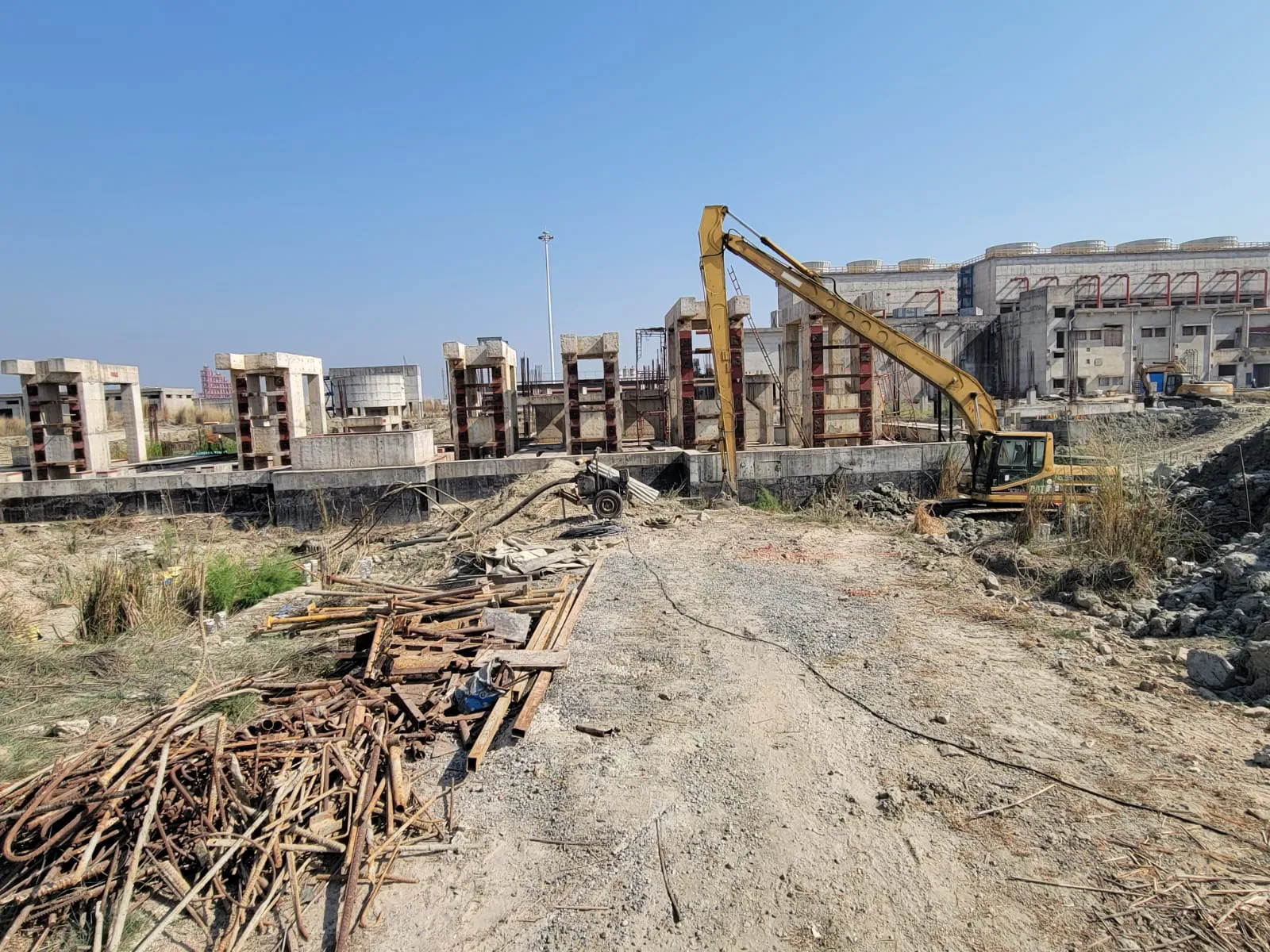
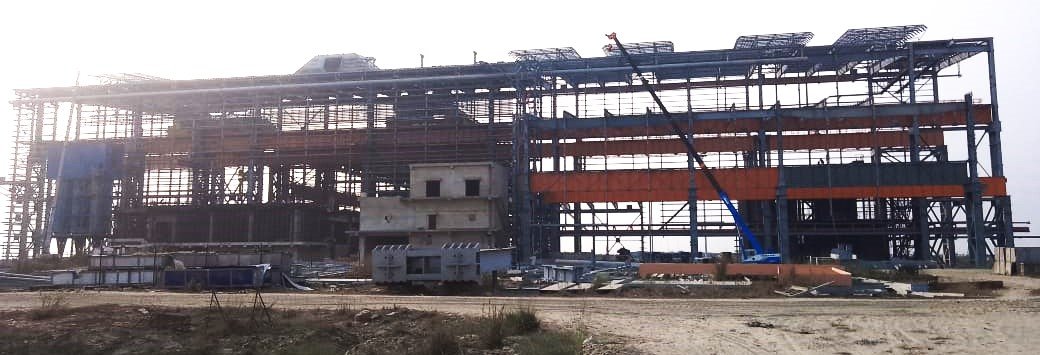
This is the mega steel project of Bashundhara Multi Steel Industries Limited (BMSIL) under construction in the Mirsarai Economic Zone. This factory is expected to be built with a capacity of producing about 1.25 million tons of steel per year. Once the project is launched, it is expected to directly employ about 7,000 people and indirectly about 100,000 people. At the same time, there was a plan to reduce import dependence by producing rebar coils and wire rods for the first time in Bangladesh.
But the scheduled commissioning is far from 2024, and it is almost finished by August 2026. Now it is expected that if the work progresses after overcoming all the complications, the factory can go into production by the end of 2027.
According to project-related sources, BMSIL was given permission to build this steel factory on about 70 acres of land in the Mirsarai Special Economic Zone in 2022. The project was designed keeping in mind advanced technology and comparatively low operating costs. The aim was to produce high-quality steel as well as reduce carbon emissions.
At that time, LCs of about Tk 550 crore were opened through syndicated term loans from several banks for the import of capital machinery. Later, equipment worth about Tk 500 crore came to the country in 275 containers.
But new complications arose after the equipment arrived. BMSIL sources claim that due to a directive from the central bank, the LC documents were blocked, considering various institutions named Bashundhara as the same borrower. As a result, containers are lying at the port one after another.
Project stakeholders claim that due to the containers being lying, the port and shipping-related damages alone have increased to about 950 crore taka. In other words, while the import value of the equipment is about 500 crore taka, later the damages and related expenses alone become much higher.
The project’s financial crisis, however, started even earlier. When the LCs were opened in 2022, the dollar was worth about 84 to 86 taka. Due to the impact of the Ukraine-Russia war, the dollar value increased significantly and the taka depreciated by about 40 percent.
The banks paid the dues to foreign suppliers by 2022-23. However, since BMSIL had a 360-day payment facility, the money was not collected from it at that time. In early 2024, the banks demanded a one-time payment of about Tk 850 crore from BMSIL.
According to project stakeholders, an additional liability of about Tk 850 crore was created due to currency depreciation and inflation against equipment worth about Tk 500 crore. Although BMSIL arranged to pay this amount, the bank later objected to the handover of documents, the company’s officials claim.
According to them, if the documents had been handed over at that time, it would have been possible to clear the containers from customs and take the equipment to the factory. But since that was not done, the project was further delayed.
A BMSIL official, on condition of anonymity, said that the LCs were opened for the import of capital machinery, not for raw materials. According to him, while it is possible to repay the liability through production and sale of raw materials within a few months, the matter is completely different in the case of a rolling mill.
He said that this was a pre-revenue project. Therefore, imposing such charges was not consistent with the conventional project financing system. He claimed that the damage accumulated in the next 13 months was not due to the depreciation of the currency or any action by BMSIL.
Officials involved in the project claimed that despite arranging the money demanded by the bank, the containers could not be released due to lack of documents. In the meantime, the port and shipping damage reached about Tk 400 crore. At the same time, the interest on the loan also started increasing.
In April 2026, Agrani Bank was informed by the central bank to consider BMSIL separately from that instruction, according to the concerned people. However, by that time, a major financial pressure had been created on the project.
A consortium of eight banks led by Agrani Bank was formed to finance the project. Along with Agrani Bank, it includes Sonali Bank, Janata Bank, Rupali Bank, Bangladesh Development Bank, Mutual Trust Bank, Bank Asia and SBAC.
This consortium approved a total syndicated term loan of Tk 2,350 crore. Of this, only Tk 576 crore has been disbursed, which is 24.51 percent of the approved loan. The remaining Tk 1,774 crore is still with the banks.
As of June 30, 2026, the project’s interest and excise duty stood at Tk 858 crore. Of this, Tk 246 crore was spent on the disbursed portion of the syndicated loan and Tk 611 crore on ‘forced loans’. This expenditure is still increasing.
BMSIL is reported to have paid Tk 411 crore so far. This money was provided from the company’s sponsor equity and internal sources.
When the project was taken up, the total investment target was around Tk 4,160 crore. But due to the appreciation of the dollar, loan interest, delays and other financial pressures, the cost has now increased to around Tk 7,118 crore.
That is, the cost of the project has increased by around Tk 3,000 crore before the start of production.
According to the BMSIL authorities, the main areas of financial pressure on the project of around Tk 2,958 crore are – around Tk 850 crore due to currency depreciation and inflation against the settled LC, around Tk 950 crore including port damage and container detention, bank interest and excise duty till June 30, 2026 of Tk 858 crore and an additional Tk 3 billion for the speedy implementation of utility infrastructure.
Another major problem of the project was gas, electricity and water connections. The company claims that although the government and the Bangladesh Economic Zone Authority (BEZA) are responsible for establishing these utility infrastructures within the economic zone, BMSIL has had to spend a large amount of money in this sector as well.
In the first phase, Bashundhara paid an advance of about Tk 2.9 billion for gas, water and electricity connections for 50 years. Later, as BEZA could not provide sufficient funds and a specific time frame for the speedy implementation of the utility connections, BMSIL spent another Tk 3 billion on the construction of the infrastructure from its own funds.
Of this, about Tk 2.5 billion was spent on power transmission lines, Tk 40 billion on gas connections and Tk 10 billion on water lines.
Karnaphuli Gas Distribution Company approved the supply of 3 million standard cubic feet of gas per day. BEZA and the Bangladesh Rural Electrification Board also approved the water and electricity connections. However, those involved in the project said that BMSIL had to build the physical infrastructure necessary for the implementation of the supply from its own funds.
An official said, “We paid money twice. Once for the duration, once for quick implementation. Even then, we have delayed for reasons that were completely beyond our control.’
Bangladesh Textile Mills Association (BTM) President Shawkat Aziz Russell said he does not see an opportunity to blame a single businessman. According to him, the industrial sector has suffered huge losses due to the dollar rate and it is having to buy dollars at a higher rate even during loan repayments.
He also commented that there was a deficiency in policy formulation during the interim government. He alleged that effective policies were not adopted for the economy and trade during that time and domestic businessmen were also under pressure due to the impact of various international agreements.
In his words, businessmen are now in a lot of trouble due to the reduced flow of money in the economy. He believes that normal circulation of money in the market is essential for a vibrant economy.
According to those involved in the project, the launch of BMSIL could bring major changes in the country’s steel sector. Especially if rebar coils and wire rods are produced in the country, the import dependence of these products will be reduced. This has the opportunity to save foreign exchange as well as strengthen the supply system of the domestic industry.
According to the plan of the project, up to 3 thousand taka can be saved in the production of each ton of rod. The concerned people also hope that it will be possible to produce at a comparatively low operating cost due to advanced technology.
According to the opinion of people involved in the industry, if the supply chain constraints, port congestion and volatility in raw material prices can be controlled, the steel industry of Bangladesh can achieve an annual growth rate of 11 to 15 percent in the second half of the decade.
According to them, if domestic entrepreneurs incur major losses due to policy complications or uncertainty in the implementation of large industrial projects, it will also send a negative message to foreign investors. This risks discouraging future investments.
Shahed Zahid, Chief Operating Officer of Safwan Bashundhara Global-SBG, said that the investment in the project is aimed at producing rebar coils and wire rods in the country using advanced and low-emission technology. In addition to producing high-quality steel at a lower cost than conventional production methods, it also aims to reduce carbon emissions.
He said that the project will create employment opportunities for engineering graduates and skilled professionals. But the project cost has increased from Tk 4,160 crore to Tk 7,118 crore. At the same time, the commissioning time has also been postponed from the end of 2024 to the end of 2027.
According to Shahed Zahid, despite investing thousands of crores of taka, the group now faces a very uncertain future. Every additional delay increases the cost of the project, weakens its financial capacity and at the same time increases the pressure on both parties – investors and lenders.
Project stakeholders say that BMSIL is not just a steel factory in terms of investment volume, employment and production capacity; This is a major initiative for the country’s industrialization. But the project has been delayed by at least three years due to policy decisions, banking complications, LC-related issues, port damage and utility infrastructure delays.
Meanwhile, the current government is talking about creating an investment-friendly environment and is taking initiatives to attract foreign investment. According to industry stakeholders, the big need now is to remove the complexity of existing projects, simplify the banking and LC system and ensure a stable and predictable policy environment for investors. Because the delay of a major industrial project is not just a loss for an institution; it is associated with employment, revenue, production, import expenditure and the overall economy.