Desk Report:
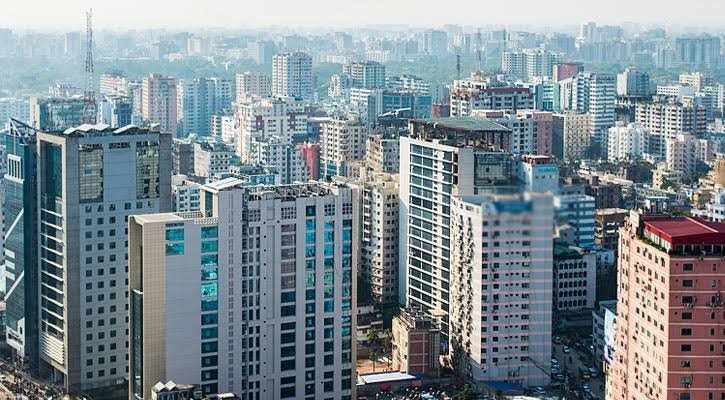
Initiatives have been taken to formulate master plans—extending from major cities down to the Upazila level—to bring the country’s unplanned urbanization and housing systems under a unified, integrated plan. Simultaneously, measures are being strengthened to ensure the integration of architectural, structural, and electrical plans during the approval process for building construction, as well as to mandate the issuance of occupancy certificates upon completion.
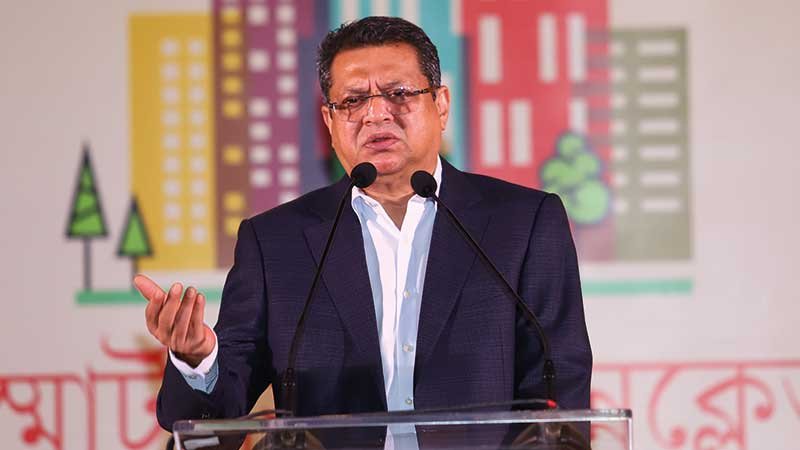
Housing and Public Works Minister Zakaria Taher disclosed this information. He stated that several initiatives are already underway to develop urban and housing systems in a planned manner. Efforts are now focused on integrating architectural, structural, and electrical planning into a comprehensive, unified framework.
He emphasized the need to ensure that the approved design is strictly followed during the actual construction of a building. To this end, a system will be implemented requiring relevant designers to certify—at the time of issuing the occupancy certificate—that the building was constructed in accordance with the approved plan.
Zakaria Taher noted that, under the Prime Minister’s guidance, significant work regarding urban development and housing management has been carried out over the past seven months. Proposals submitted by various stakeholders are being seriously considered, and steps are being taken to implement them.
The Urban Development Directorate (UDD) has adopted a 10-year plan for the first time. Through this initiative, planned urban development will be carried out across the country in phases. Priority is initially being given to metropolitan cities. Subsequently, initiatives will be taken to formulate realistic master plans for every area, ranging from major cities down to the Upazila level.
He further explained that zoning would be implemented by considering the specific needs and potential of each area, thereby determining the designated use for various sites—such as residential zones, commercial areas, or other facilities.
In his words, conducting development activities without a master plan is akin to shooting four arrows at a target; one might hit the mark, but it lacks precision. However, there is no scope to proceed in this manner when it comes to planned development; work must be carried out based on specific plans. For this reason, efforts are underway to strengthen the Urban Development Directorate (UDD) and prioritize its operations.
He further noted that adequate and reliable data is crucial for proper planning. However, the country’s last census took place quite some time ago. Consequently, a new, comprehensive census is required to obtain an accurate picture of the current situation regarding population, settlements, housing, and urbanization. Future planning can be executed more effectively based on such data.
Regarding building construction approvals, he mentioned that RAJUK has approved building designs for areas under its jurisdiction—as well as that of the Ministry of Housing and Public Works—including the capital’s Dhanmondi area. However, buildings have been constructed in many other areas without approved plans, and work is currently underway to identify these structures.
He also stated that long-term initiatives have been undertaken to address environmental issues in the capital’s Gulshan, Banani, Baridhara, and Hatirjheel areas. Zakaria Taher added that the Prime Minister has held six meetings with relevant officials regarding this matter.
Housing and Public Works Minister Zakaria Taher noted that there are approximately 4,300 houses in Gulshan, Banani, and Baridhara. An estimated 70 to 80 percent of these homes lack the septic tanks and soak wells that were supposed to be installed during construction. Similarly, despite constructing buildings, many prominent developers failed to provide sewage treatment plants (STPs) for waste management.
He mentioned that, alongside raising awareness among the concerned parties, multiple meetings have been held with the Gulshan, Banani, and Baridhara societies. These meetings were attended by the RAJUK Chairman, the State Minister for Housing and Public Works, the State Minister for Local Government, the Managing Director of Dhaka WASA, and other relevant officials.
Zakaria Taher emphasized that areas like Gulshan and Baridhara are vital and specialized zones within the country. He noted that if the water quality of the lakes and the environmental standards in these areas cannot be maintained, improving environmental management across the rest of the country will become even more difficult. He stated that the government has taken initiatives for urban development and is receiving directives from the Prime Minister in this regard. The elected government is keen to adopt any necessary and effective suggestions for the country’s welfare and has called for cooperation from all relevant stakeholders.
Zakaria Taher also announced the formation of new development authorities to strengthen urban management. He noted that, modeled after RAJUK, six new development authorities have been established over the past seven months in Mymensingh, Sylhet, Cumilla, Narayanganj, Rangpur, and Barishal; four such authorities already existed previously. Similar initiatives are being undertaken in phases for other areas, including Bogura.
The Minister for Housing and Public Works explained that in the absence of a development authority, City Corporations often have to shoulder the responsibility of approving and implementing building designs. This situation can lead to a lack of effective checks and balances—instances of which can be found in various parts of Dhaka. There have even been cases where building designs were approved at the Union Parishad level in areas like Basila. Initiatives are now underway to bring these matters under a comprehensive legal framework.
He stated that work is underway to formulate new regulations regarding buildings constructed without approved designs or structures built in violation of approved plans. These regulations could be presented to the Cabinet within the next month. He expressed hope that once approved, these rules would enable more effective enforcement of laws governing building construction and supervision.
Highlighting the need for long-term financing in the housing sector, Zakaria Taher emphasized the crucial role financial institutions play in ensuring widespread housing for the middle and lower-middle-class populations. Many developed nations offer 30-year mortgage facilities; similarly, in Bangladesh, ensuring housing on a large scale is difficult without such long-term financing systems.
He added that the government would extend its support if the private sector stepped forward in this regard.
Zakaria Taher also spoke about bringing changes to the policies governing the private housing sector. He noted that new policies have been formulated following consultations with relevant stakeholders. Under these new policies, private housing projects must be implemented strictly within the parameters of the approved plans and conditions. Furthermore, the approval of future plans will depend on whether previous projects were executed properly.
He mentioned that initiatives are being taken to bring the private housing sector under a legal framework to curb unplanned urbanization.
Regarding Dhaka’s livability, Zakaria Taher noted that the city ranks 171st out of 173 cities globally. Consequently, the government must work simultaneously across various sectors to make the capital more livable. However, the task is far from easy due to extreme population density. Success in this endeavor is difficult to achieve without proper planning and the coordinated participation of various sectors.
Housing and Public Works Minister Zakaria Taher recalled that on October 5—observed as World Habitat Day—the Prime Minister had highlighted the realities of housing in Bangladesh. He acknowledged that ensuring safe and sustainable housing for all citizens is far more challenging in a densely populated country like Bangladesh compared to the developed world. Nevertheless, to survive with dignity in a competitive global landscape, the country must move forward by confronting and overcoming these challenges. Zakaria Taher stated that the government will make every effort to implement policies focused on environmental protection, planned urbanization, and people-friendly housing. At the same time, citizen awareness and responsible participation are essential. If people change their mindset and play their respective roles, it will be possible to build a planned, safe, and livable city.