Desk Report:
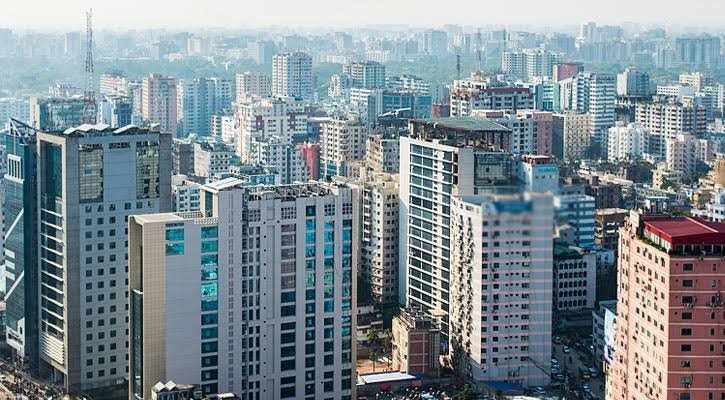
A city’s modernity cannot be defined solely by high-rise buildings, wide roads, or state-of-the-art technology. A city becomes truly smart and sustainable only when it offers adequate, affordable, and eco-friendly housing for its residents. In the context of urbanization in Bangladesh, housing is not merely a civic amenity; it has emerged as a major structural challenge.
Dhaka, in particular, has long grappled with a housing crisis. According to World Bank data, a backlog of approximately 250,000 to 300,000 new housing units accumulates in the country annually. Consequently, addressing this crisis requires more than just increasing construction; alongside ensuring an adequate supply, equal importance must be given to making housing smart, eco-friendly, and cost-effective in the long run.
Urban development experiences from various countries offer valuable lessons. War-torn Japan has achieved remarkable progress over the last five or six decades, while Seoul and Singapore have transformed into modern, livable cities despite limited resources and various adversities. These examples can serve as inspiration. However, rather than directly replicating their models, we must devise realistic strategies tailored to Bangladesh’s economic capacity, resource constraints, and ground realities.
We have been discussing smart cities and smart housing for years, yet the reality is that progress remains limited compared to expectations. In some areas, the situation has actually become more complex. Therefore, mere talk of plans or policies is no longer sufficient; we must move towards increasing housing supply and improving quality through actionable measures.
Energy management plays a crucial role in this regard. The residential sector consumes nearly one-third of the total energy produced in the country. Consequently, making residential buildings smarter, greener, and more energy-efficient could lead to significant energy savings at the national level. “Smart housing” should not be defined merely by the use of modern technology, solar panels, or various digital gadgets. The core philosophy of smart housing should center on designing a building that allows for ample natural light and ventilation, minimizes water and electricity consumption, and ensures low maintenance and operational costs throughout the building’s entire lifecycle.
To achieve this, emphasis must be placed on passive design strategies from the very beginning. Aspects such as proper building orientation, natural lighting and airflow, and thermal control can all be ensured during the design phase. RAJUK, other development authorities, and relevant professionals need to play a more effective role in making these measures mandatory.
Alongside this, steps such as utilizing solar energy, conducting energy audits, and reducing electricity and water consumption can be adopted. Many of these measures can be implemented incrementally without requiring massive technological investment. What is primarily needed is proper planning, policy prioritization, and effective implementation.
However, a building cannot be deemed “smart” based solely on its internal features; its location is equally important. Even if a residential building is eco-friendly, if it is situated far from workplaces, educational institutions, markets, healthcare facilities, or other essential services, residents will face long commutes. This leads to increased transportation costs, higher fuel consumption, and greater carbon emissions.
Therefore, transportation and infrastructure must be integrated into smart housing planning. The proximity of essential daily services and the ability to reach necessary locations from residential areas on foot or via convenient transport are also crucial indicators of a sustainable city.
Another significant factor here is financing. The role of finance is vital in realizing smart cities and sustainable housing. In Bangladesh, mortgage financing amounts to only 1.898 percent of the GDP. In contrast, this figure stands at approximately 30 percent in China and over 50 percent in Malaysia. This gap highlights the critical importance of the link between housing and urban development and long-term financing.
In other words, merely planning for housing construction is insufficient; we must also enhance the purchasing power of the general public, expand long-term housing finance and mortgage systems, and facilitate access to financing on favorable terms. If housing becomes unaffordable for the average person, achieving the goal of sustainable urbanization will prove difficult.
We can draw valuable lessons from the experiences of Seoul, Japan, or Singapore—demonstrating that significant transformations in urban management are possible even with limited resources through sound policies, long-term planning, and pragmatic measures. Similarly, we must set our priorities based on our own realities.
Bangladesh already possesses some of the necessary frameworks in this regard. We have the BNBC guidelines and institutions like SREDA dedicated to sustainable and renewable energy. Furthermore, there are strategies for greening and reducing carbon emissions under the NDC. Thus, it is not as if the essential foundation for planning, measurement, and implementation is entirely absent.
The core challenges lie in implementation, large-scale application, and financing. While policies and guidelines exist, the critical question remains: how effective are they in actual practice?
Therefore, our primary task regarding smart and sustainable housing should be to ensure an adequate supply of housing units. Subsequently, these homes must be developed to be energy-efficient, eco-friendly, and affordable, while also aligning with people’s daily lifestyles. Aspects such as housing, financing, transportation, infrastructure, and the environment should not be viewed in isolation but rather considered as integral parts of a unified urban planning strategy.
Smart urbanization is not a luxury concept; it is a necessity for future urban living. To lay the foundation for that future, we must adopt a strategic and pragmatic approach from the very beginning. The sooner we strengthen the link between planning and implementation—as well as the connection between housing and financing—the faster Bangladesh will be able to advance towards sustainable and livable urbanization.