Diplomatic Desk:
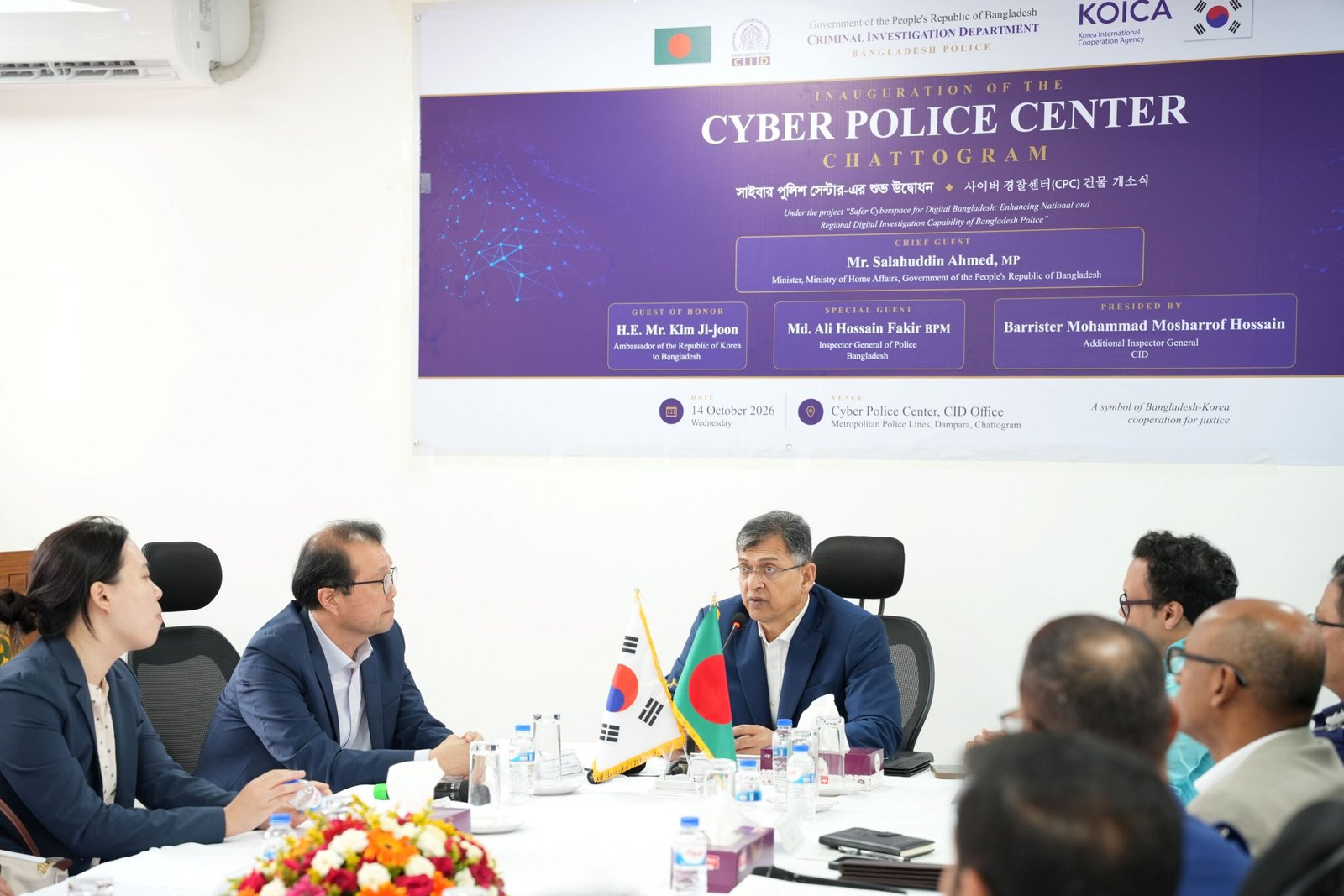
The Criminal Investigation Department (CID) of the Bangladesh Police has inaugurated a modern Cyber Police Center (CPC) in Chattogram to strengthen efforts in combating cybercrime, conducting digital investigations, and performing digital forensics. The four-story facility, located at the Dampara Police Lines in Chattogram, was established with the support of the Korea International Cooperation Agency (KOICA), South Korea’s international development agency.
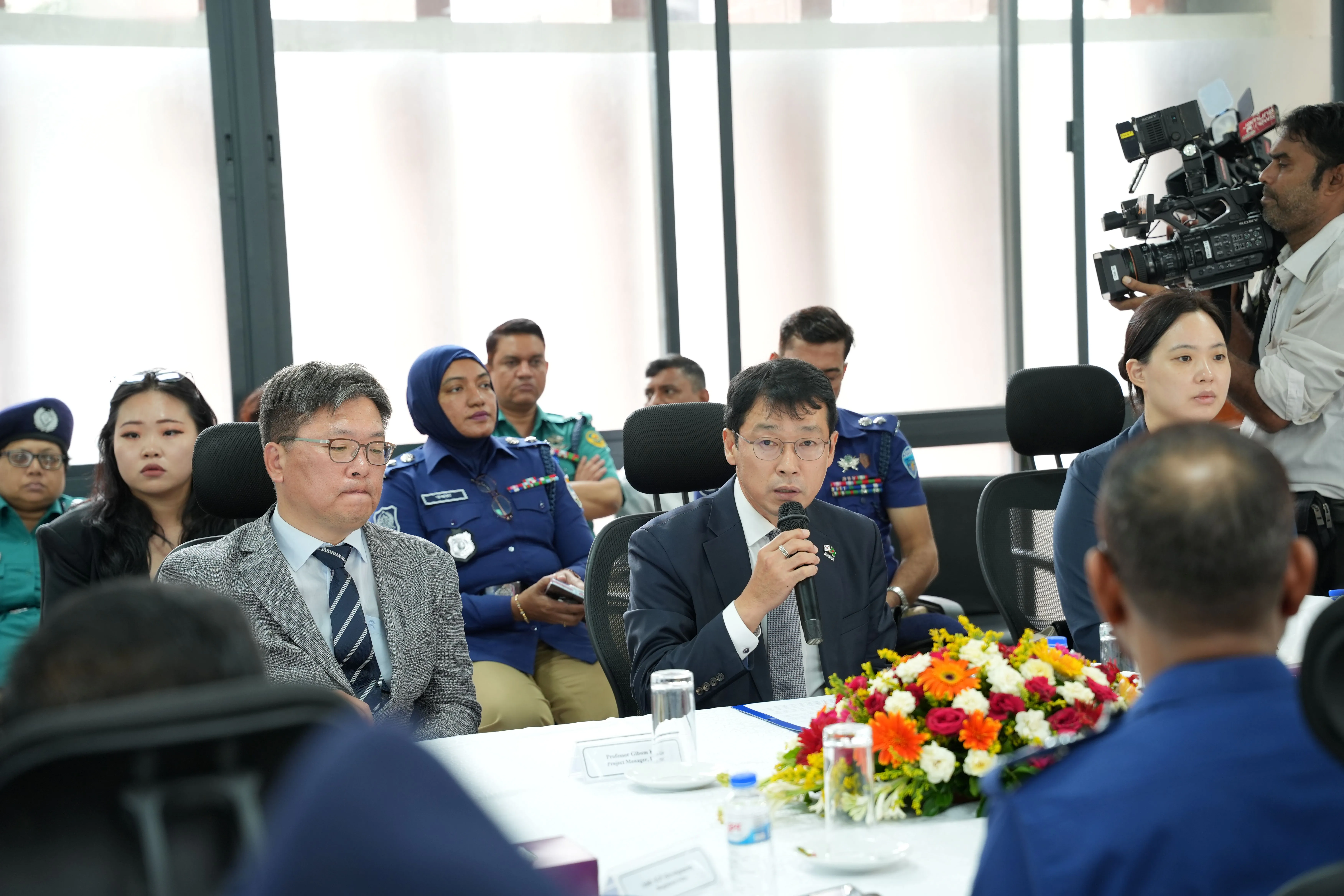
Home Minister Salahuddin Ahmed, MP, attended the inauguration ceremony held on Wednesday (October 14) as the chief guest. South Korean Ambassador to Bangladesh, Kim Ji-jun, was present as a special guest. Other notable attendees included Jihoon Kim, Country Director of the KOICA Bangladesh Office; Inspector General of Police (IGP) of Bangladesh, Md. Ali Hossain Fakir (BPM); Manjur Morshed Chowdhury; and Sayed Al Noman, Member of Parliament for the Chattogram-10 constituency. The event was presided over by Barrister Mohammad Mosharraf Hossain, Chief of the CID and Additional IGP.

Spanning approximately 1,640 square meters, the center has been specifically designed to facilitate cybercrime investigations and digital forensic operations at a regional level. It will serve as a complement to the CID’s central capabilities in Dhaka, while providing technical and operational support to officers tasked with investigating cybercrimes in the Chattogram and Cox’s Bazar regions.
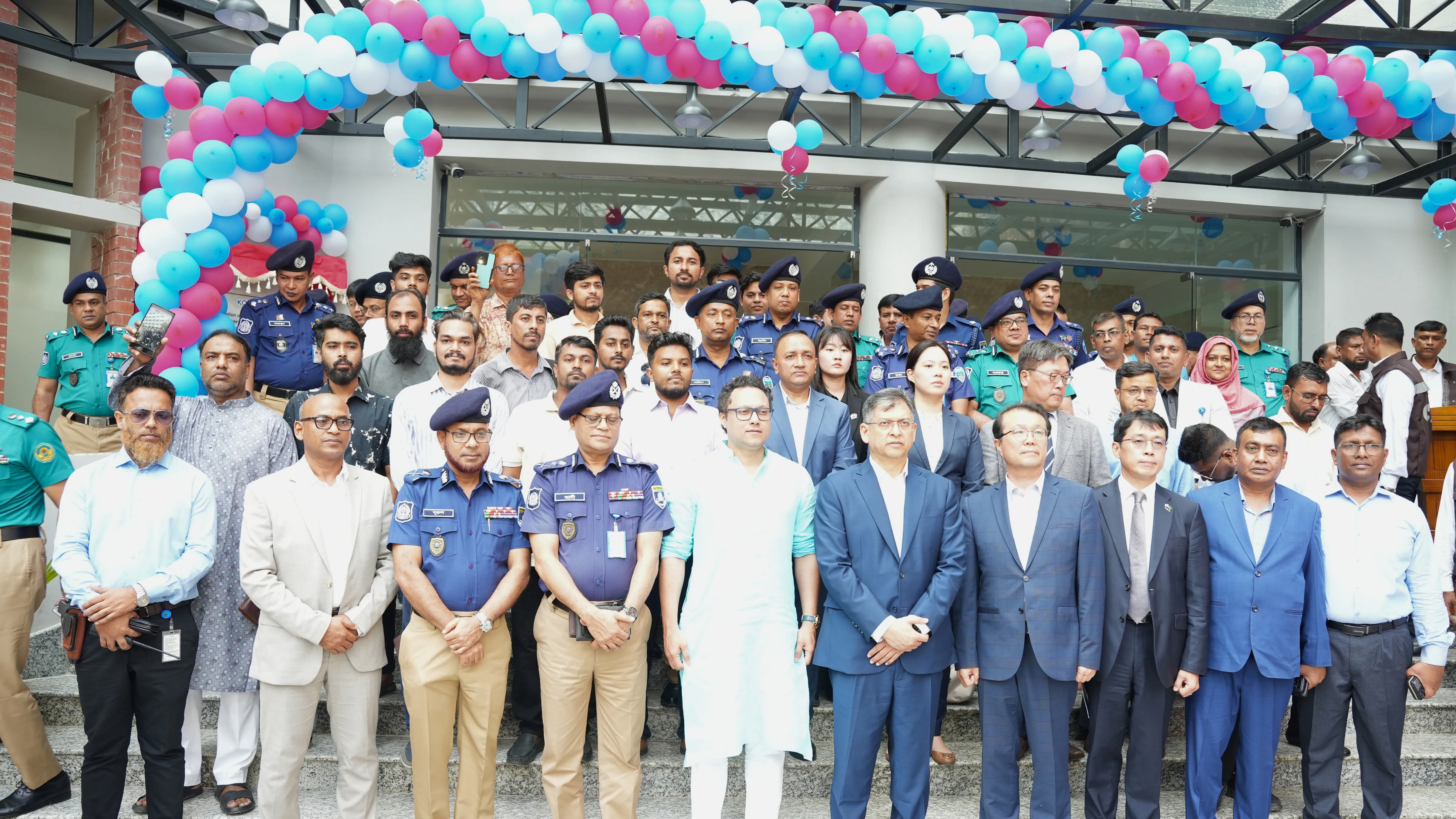
During the inauguration, Home Minister Salahuddin Ahmed highlighted KOICA as one of Bangladesh’s major development partners. He urged the agency to extend its support and cooperation toward establishing similar Cyber Police Centers in other divisions across the country.
South Korean Ambassador Kim Ji-jun emphasized that ensuring robust cybersecurity is essential alongside digital transformation. He described the establishment of this center in Chattogram as a significant milestone in the development cooperation between Bangladesh and South Korea. Through this facility, local law enforcement agencies will gain advanced digital forensic capabilities, enabling them to play a more effective role in addressing emerging cyber threats. He further stated that investment requires confidence, and security is a fundamental pillar of that confidence. The Cyber Police Center established in Chattogram is a concrete initiative to address this need. It will help ensure cybersecurity by remaining accessible to businesses, working professionals, and the general public in the region.
Jihun Kim, Country Director of the KOICA Bangladesh Office, noted that the true success of the center will depend on its effective utilization. Its effectiveness will be evaluated based on metrics such as the number of crimes solved, the number of victims protected, and the level of expertise gained by police officers. He added that KOICA’s support will continue until the project concludes later this year.
The center was established under the project titled “Safer Cyberspace for Digital Bangladesh: Developing National and Regional Cyber Investigation and Digital Forensics Facilities for Bangladesh Police.” The project commenced following a ‘Record of Discussion’ signed in January 2021, under which KOICA pledged a grant of up to 4.8 million US dollars.
The primary objective of the project is to enhance the capabilities of the Criminal Investigation Department (CID) by expanding the use of digital investigation and forensic technologies, thereby strengthening evidence-based policing. As part of this initiative, KOICA has provided forensic workstations, computer and mobile forensic kits, write blockers, malware analysis tools, and other essential technical equipment to CID offices in Dhaka, Chattogram, and Cox’s Bazar.
In addition to building technical infrastructure, the project has placed significant emphasis on enhancing the skills of police officers. Experts from South Korea have collaborated with CID officials on investigative consulting, human resource management strategies, the development of training curricula, and the facilitation of various workshops.
Furthermore, 78 police officers from Bangladesh have completed eight specialized training courses in South Korea. These training programs cover areas such as strategic cyber leadership, digital investigation management, train-the-trainer initiatives, hacking and network forensics, malware analysis, Open Source Intelligence (OSINT), and advanced computer and mobile forensics.
It is expected that the integration of modern technology, a skilled workforce, and sophisticated investigative systems will enhance the capacity to investigate various forms of cybercrime—including online fraud and account hacking—within the Chittagong region. Furthermore, the collection, analysis, and preservation of digital evidence will streamline evidence-based criminal investigations.