Mohammad Shajibul-al-Rajib:
Artificial Intelligence (AI) is no longer just a technological tool; it has become an important component of national capability, security, economy and geopolitics. Therefore, Bangladesh should not lag behind in using AI but should move forward gradually based on caution, public involvement, data privacy and appropriate policies, said Md. Ismail Zabiullah, Advisor to the Honorable Prime Minister in the Ministry of Public Administration.
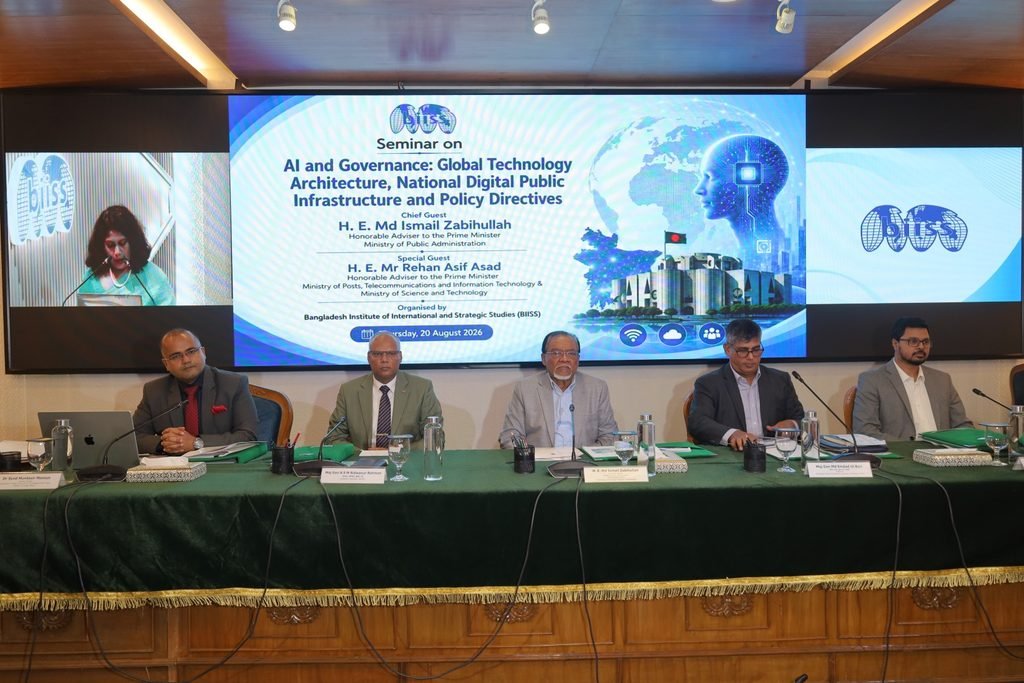
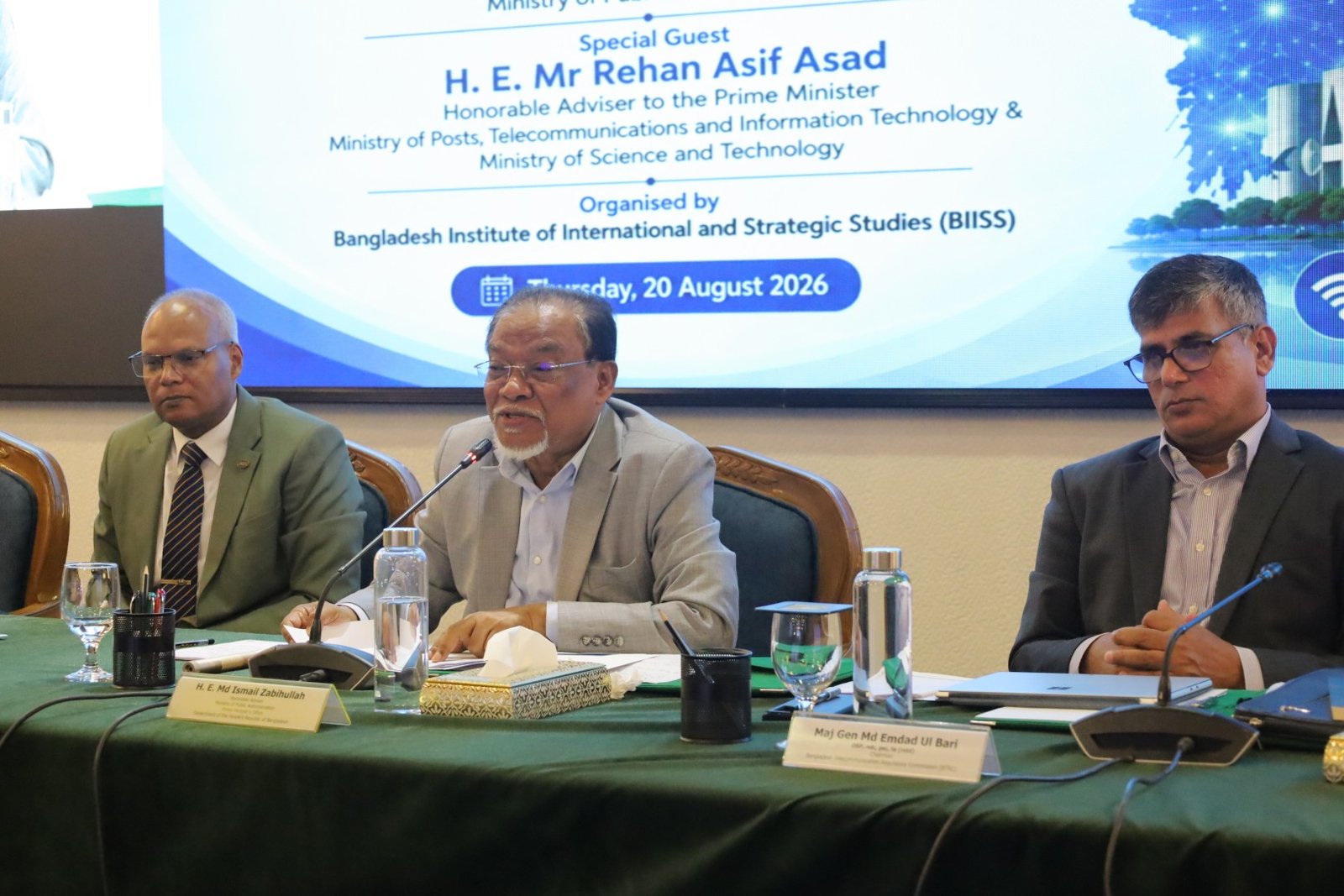
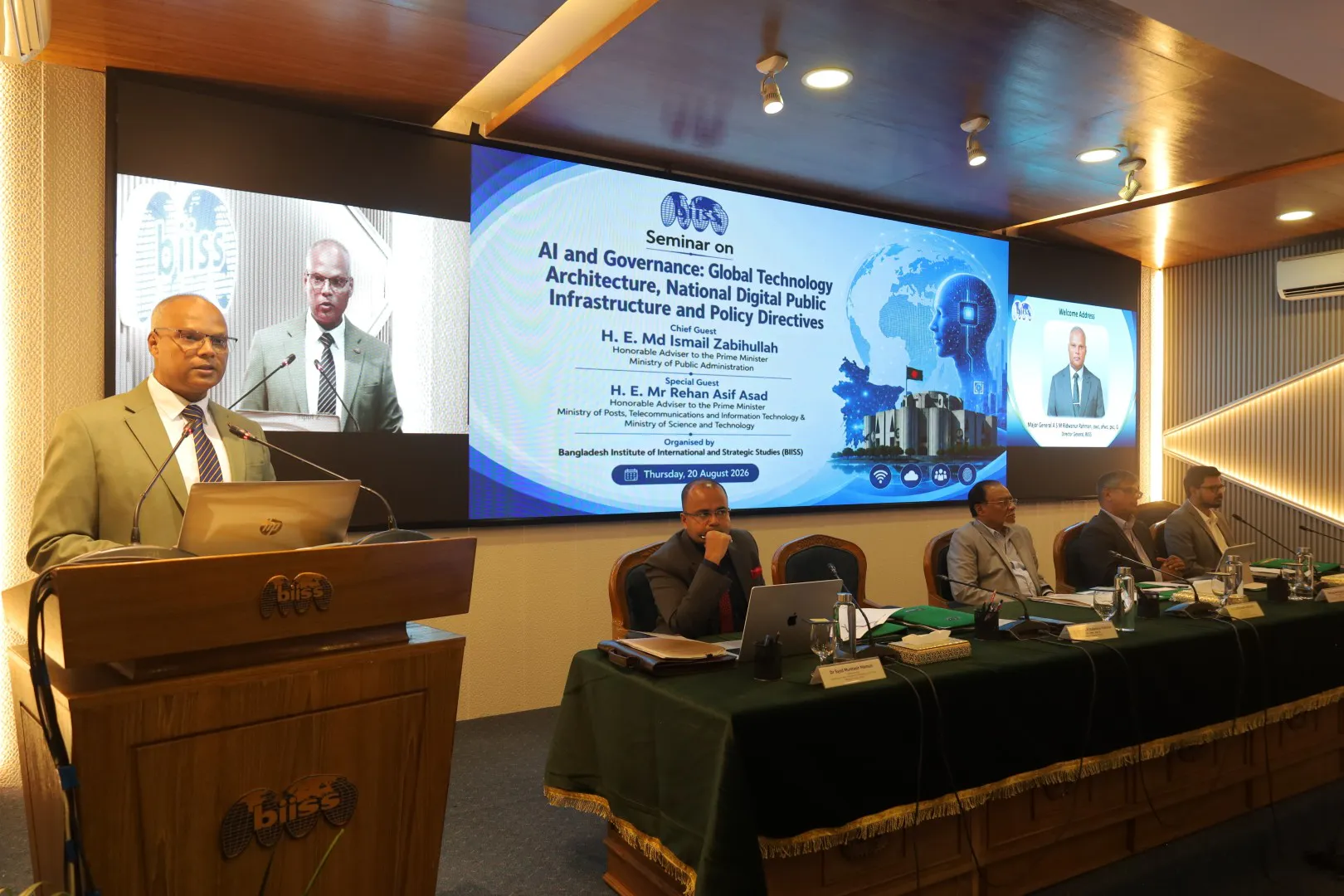
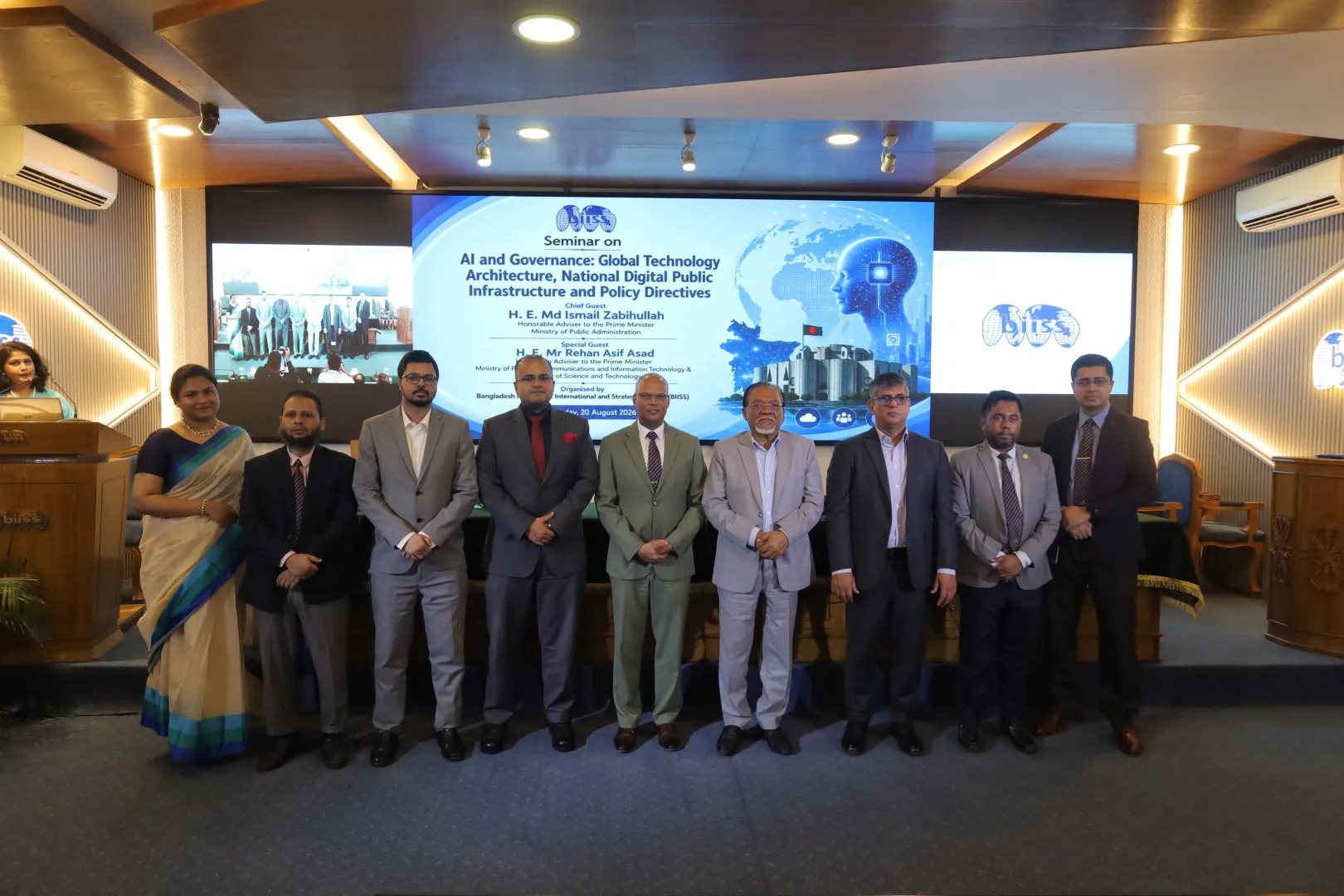
He said these things while delivering the chief guest’s speech at the seminar titled ‘AI and Governance: Global Technology Architecture, National Digital Public Infrastructure and Policy Directives’ organized at the Bangladesh Institute of International and Strategic Studies (BIISS) Auditorium in Dhaka on Thursday (August 20, 2026).
Md. Ismail Zabiullah said, although ‘artificial intelligence’ seemed like an unrealistic concept to the general public at the beginning of the 21st century, it has been taught in engineering universities in the Western world and Bangladesh University of Engineering and Technology (BUET) for many years. Currently, AI is capable of writing, analyzing, diagnosing, predicting, coding, researching and solving various problems within a few seconds.
He said, AI has now become an important element of national power, security and geopolitics in different countries of the world. China and the United States are leading two competitive AI ecosystems. At the same time, the use of AI in intelligence activities, surveillance, target setting and precision operations is gradually increasing in modern battlefields.
Highlighting the position of Bangladesh, the Prime Minister’s Advisor said, there is no shortage of talented people in Bangladesh. However, national capacity is not created by talent alone. Talent must be transformed into technology, technology into institutions and institutions into national power. He also gave examples of how Israel, despite being a small country, has created a technological impact by establishing a large number of AI companies.
He said that Bangladesh has a large population, talented people and numerous problems to solve. But an effective ecosystem is needed to transform these advantages into AI capabilities.
Citing public administration as one of the main areas of AI transformation, Md. Ismail Zabiullah said that instead of government officials and employees searching for files, calling other offices or waiting for a long time for a decision, it is possible to get information quickly with AI assistance from approved government databases. AI can increase efficiency in government work by providing necessary information including relevant rules, circulars, precedents and sources.
He said that the UK has already arranged AI training for government officials at various levels. Bangladesh also does not have the opportunity to wait any longer. AI can be used effectively in government expenditure, procurement activities, recruitment, healthcare, tax management, social security and file management.
Stating that the Planning Commission and the Finance Department can use AI to formulate projects, verify the rationality of expenditure and monitor the progress of projects, he said that this can save both the government’s time and money. Similarly, there is scope for using AI in various government services at the district level, including assistance at the initial stage of treatment, passports and driving licenses.
However, the Prime Minister’s Advisor warned that the potential impact on employment with the use of AI must also be seriously considered. He said that due to AI, one person may be able to do the work that five or ten people used to do before. As a result, the need for employment may decrease. Since the social value of employment in Bangladesh is very high, a balanced decision is needed in this regard.
He said that inefficiency should not be preserved just because it creates employment. The goal should be ‘AI-assisted government, not human-free government’—that is, not a human-free government, but an AI-assisted government system. In this case, an acceptable way must be found through effective compromise, coordination and ‘win-win’ solutions.
He also brought up the issue of energy and information security in the use of AI. He said that AI requires a huge amount of electricity to operate. Therefore, the energy strategy must be considered in conjunction with the formulation of Bangladesh’s AI strategy.
Warning about data privacy, he said that ensuring information security in the digital world is very difficult. A clear decision is needed on what type of information and at what level of information can be shared in the AI system. AI can also create opportunities for new types of fraud due to lack of public awareness.
For this reason, he mentioned that there is a need for a legal basis, cybersecurity framework, information classification and widespread public consent for the use of AI in public administration.
Highlighting the growing role of AI in national security, Md. Ismail Zabiullah said that AI is being used in intelligence collection, surveillance, automated systems, target determination assistance and precision operations in modern military systems. Countries that control advanced computing capabilities, information and algorithms will have greater influence on the future strategic balance.
He said that along with soldiers, robots, AI, robotics and modern optical technology are being used on the India-China border. As a result, there is no scope to separate AI from modern state systems and security strategies.
At one point in his speech, he explained the potential and risks of AI, saying that just as a match can be used to cook food, it is also possible to burn down a house. AI is like that—it can improve government services, but it can also create new risks; it can increase prosperity, but it can also increase inequality; it can empower citizens, but it can also make citizen information open.
He said that the main difference is not the difference in technology, but its driver or user. Therefore, in the use of AI, the public interest, especially of academics, military-civilian bureaucrats, researchers and policymakers, must be given utmost importance.
Urging Bangladesh to gradually adopt AI, the chief guest said that where government services are expensive and time-consuming, services should be made easy and modern using AI. AI should be adopted on the basis of public consent. It is not possible to stop technological progress; rather, its benefits should be ensured through a combination of appropriate policies, security and public interest.
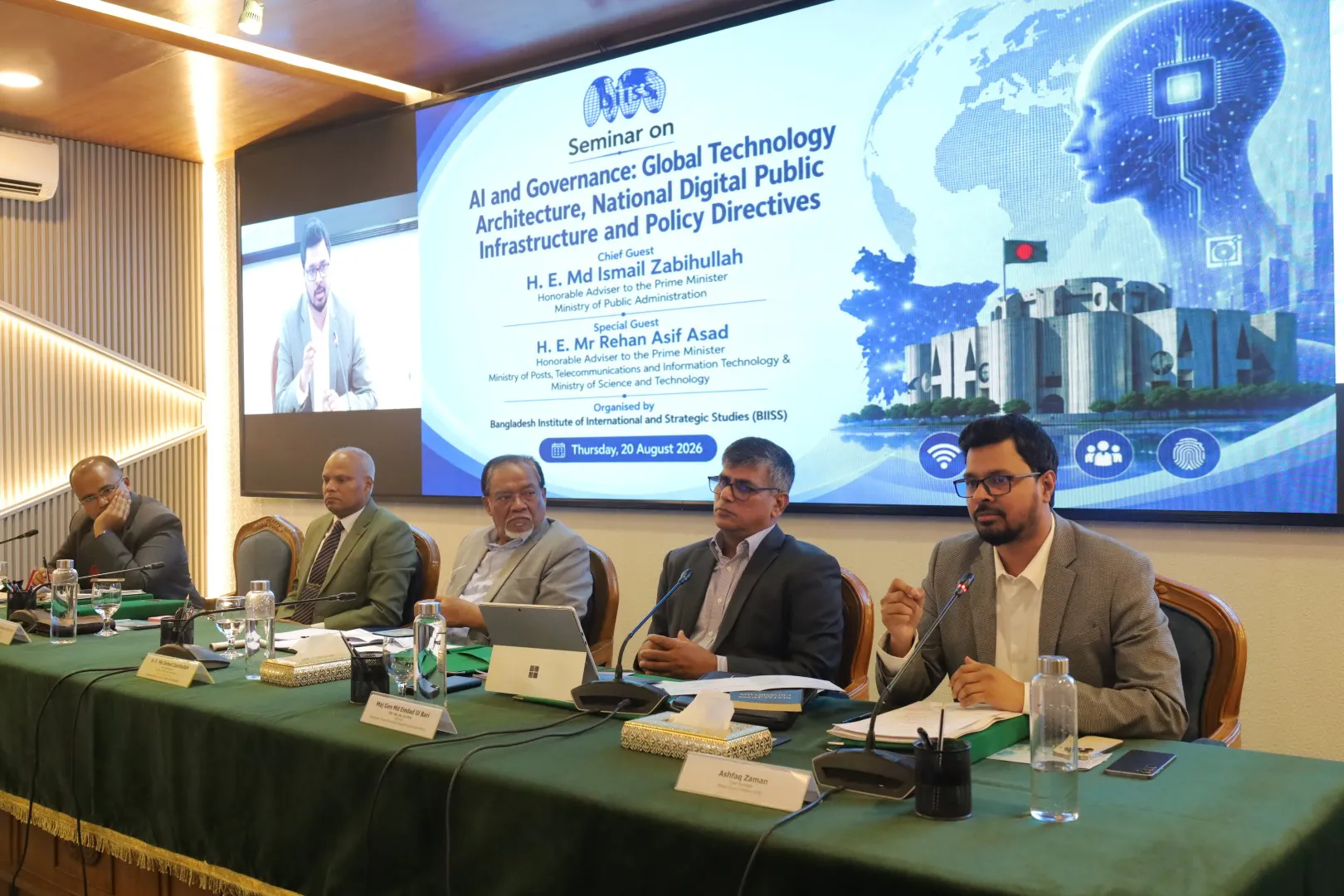
The seminar was welcomed by the Director General of BIISS, Major General ASM Ridwanur Rahman, AWC, AFWC, PSC, G. The seminar was presided over by the Chairman of Bangladesh Telecommunication Regulatory Commission (BTRC), Major General Md. Emdad Ul Bari, OSP, NDC, PSC, TE (Retd).
The keynote address was delivered by Dr. Syed Muntasir Mamun, Director General of International Trade, Investment and Technology and ICT Division, Ministry of Foreign Affairs, Government of the People’s Republic of Bangladesh. Ashfaq Zaman, Chief Strategist, Dhaka Forum Initiative, also presented a paper.
In his speech, the Director General of BIISS, Major General ASM Ridwanur Rahman, emphasized on making innovation human-centric and accountable. He highlighted the need for Bangladesh’s active participation in the global AI discussion and the need to utilize technological advancements for public welfare.
BTRC Chairman Major General Md. Emdad-ul-Bari emphasized the need for a national interoperability framework, clear data-consent processes, and transparent AI procurement policies. He also emphasized Bangladesh’s active role in international AI and digital public infrastructure initiatives.
The open discussion held after the chief guest’s speech included a detailed exchange of views on the opportunities and challenges of AI adoption, the role of local demand in formulating AI-related policies and standards, and the growing role of AI in cyber operations and modern warfare.
Senior officials from various ministries and government agencies, representatives of regulatory agencies, development partners, technology and financial sector representatives, academics, researchers, policymakers, and students participated in the seminar.