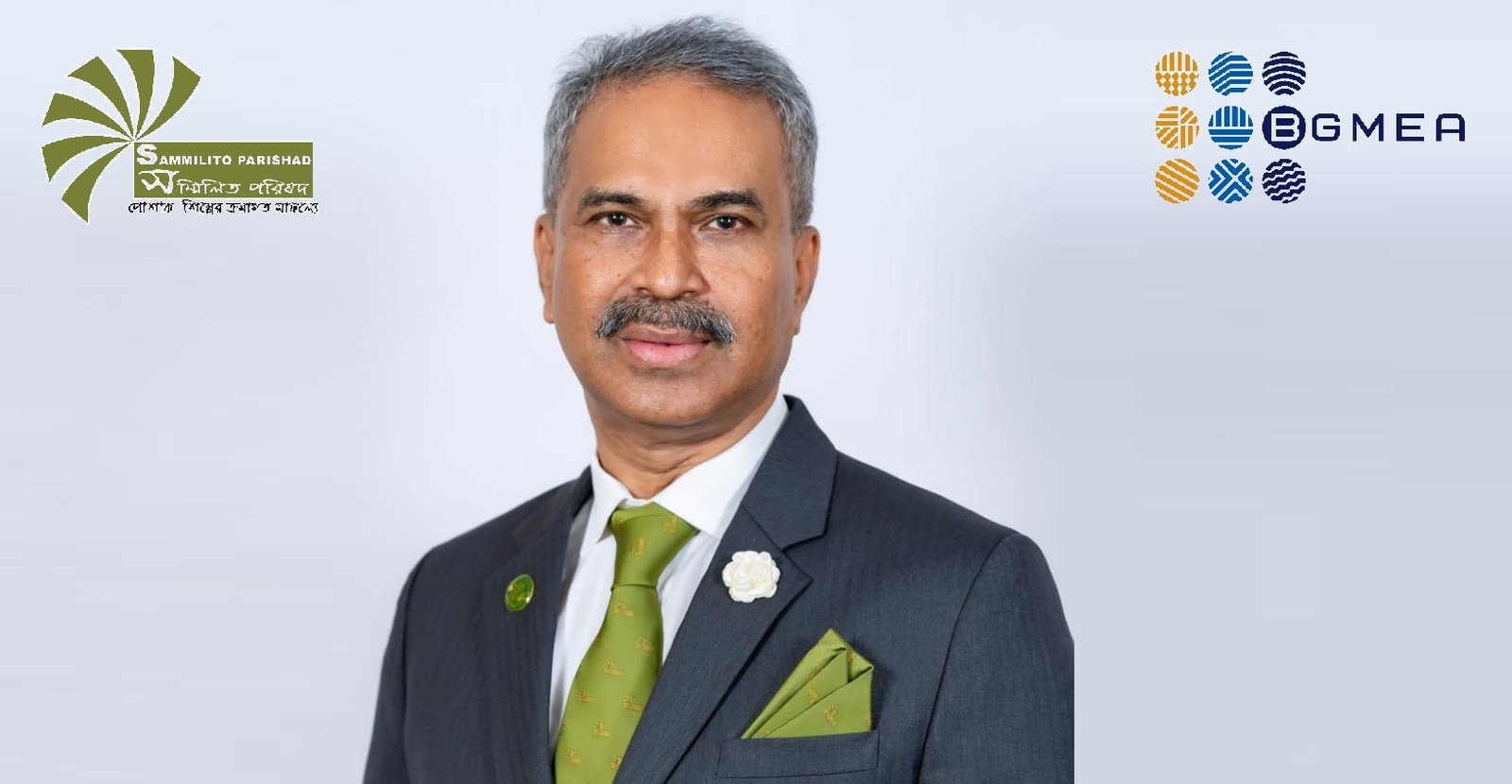
The Ready-Made Garment (RMG) industry has been the backbone of Bangladesh’s economic ascent—its story one of resilience, transformation, and global recognition. Among the key figures who shaped and accelerated this journey, Faruque Hassan stands out as a visionary leader, reformer, and ambassador of the country’s apparel sector on the world stage.
Although the hosiery industry began in Pabna many decades ago, the journey towards international markets truly took off in the 1960s when pioneers like Yarjish Hossain and Halim Hosiery made the first export attempts. In 1967, they successfully exported T-shirts to Libya—marking the beginning of Bangladesh’s knitwear export history.
In the 1990s, as the industry was still in its youth, a new generation of entrepreneurs emerged to modernize the sector and introduce it to global markets. Among them was Faruque Hassan, then a director of Northern Corporation. His name soon became synonymous with innovation, expansion, and leadership in the evolving apparel industry.
Faruque Hassan committed himself to the garment industry at a young age. With time, he accumulated hands-on experience across every level of the business. His efforts culminated in the founding of Giant Textiles Ltd., now one of the country’s leading apparel enterprises.

Recognized for his integrity and strategic vision, he was elected President of BGMEA for the 2021–2024 term. Under his leadership, Bangladesh achieved landmark success—including becoming the global leader in green garment factories with 243 LEED-certified units. His tenure also saw major strides in worker welfare, health services, safety, and global branding through initiatives like the “Made in Bangladesh Week.”
Currently serving as the Chief Election Coordinator for the Sammilito Parishad panel for the upcoming 2025–2027 BGMEA election, Faruque Hassan is leading a team of second-generation, proven and professional entrepreneurs. They are committed to navigating the apparel sector through new challenges like LDC graduation, global conflicts, trade tariffs, and economic slowdowns.
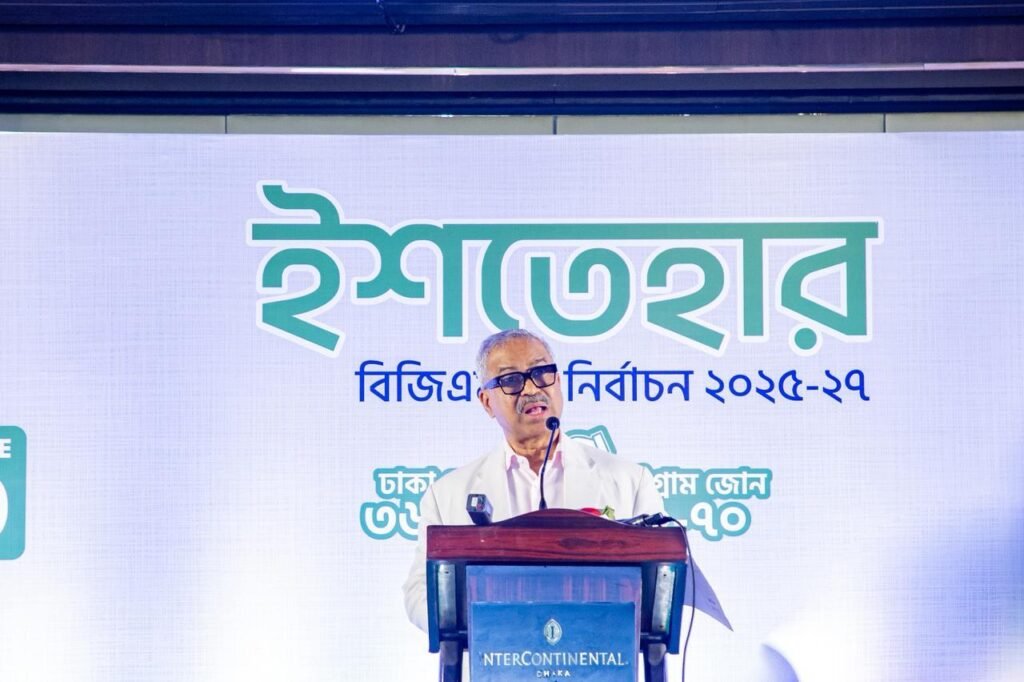
Hassan believes that just as past challenges were converted into opportunities, the future too can be shaped with foresight, experience, and unity.
As part of his vision for a forward-looking, inclusive, and resilient garment industry, Faruque Hassan has identified nine strategic pillars:
- People – Ensuring worker welfare, fair wages, healthcare, and safety
- Inclusion – Promoting women’s empowerment and participation of marginalized communities
- Transparency – Maintaining integrity and adherence to global compliance standards
- Infrastructure – Investing in green, safe, and modern factories
- Innovation – Adopting technology and digitization to enhance productivity
- Circular Economy – Encouraging recycling, waste reduction, and resource efficiency
- Global Connectivity – Entering new markets and building international partnerships
- Bangladesh Branding – Promoting “Made in Bangladesh” as a global symbol of quality and ethics
- Environmental Sustainability – Focusing on water conservation, renewable energy, and carbon reduction
Faruque Hassan’s impact extends beyond the garment sector. He serves as the Honorary Consul General of Greece, Chairman of the Board of Trustees of BGMEA University of Fashion & Technology (BUFT), President of the Bangladesh Volleyball Federation, and President of the social organization Manabik Shahajya Sangstha (MSS). He is also a board member of the International Apparel Federation (IAF) and former President of the Dutch-Bangla Chamber of Commerce & Industry.
With over 40 years of industry experience, a legacy of leadership, and a deep commitment to sustainability, innovation, and inclusivity, Faruque Hassan is more than an entrepreneur—he is a visionary. As the garment industry prepares for a new phase of global competition and change, his leadership remains vital to steering Bangladesh toward continued prosperity and global prominence.