Desk Report:
Minister for Commerce, Industry, Textile and Jute Khandaker Abdul Muktadir has said that to maintain the long-term competitiveness of Bangladesh’s ready-made garment and textile industry, utmost importance must be given to sustainable production systems, innovation, research and product diversification.
He said, “Sustainability is no longer just a slogan; it is an essential condition for the existence and future survival of the industry.”
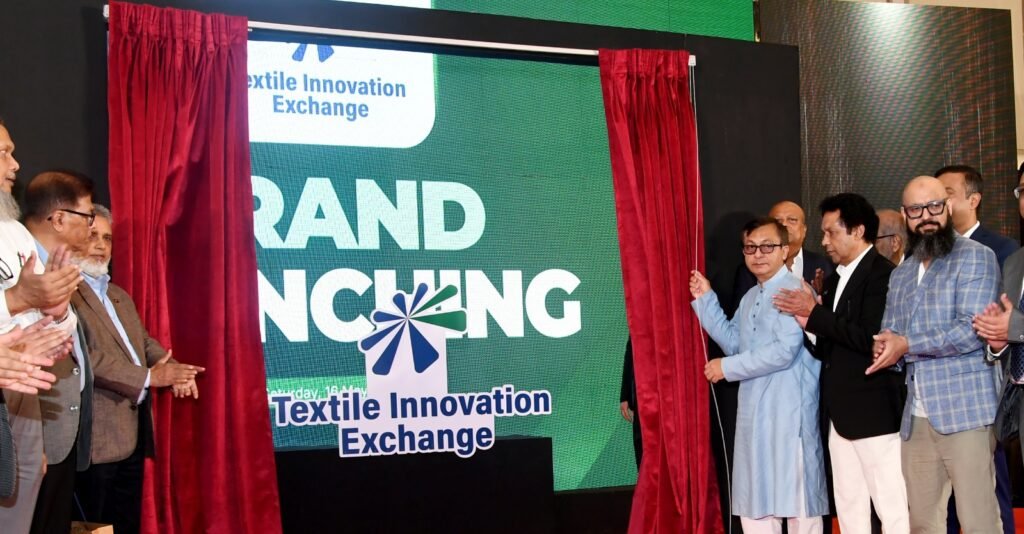
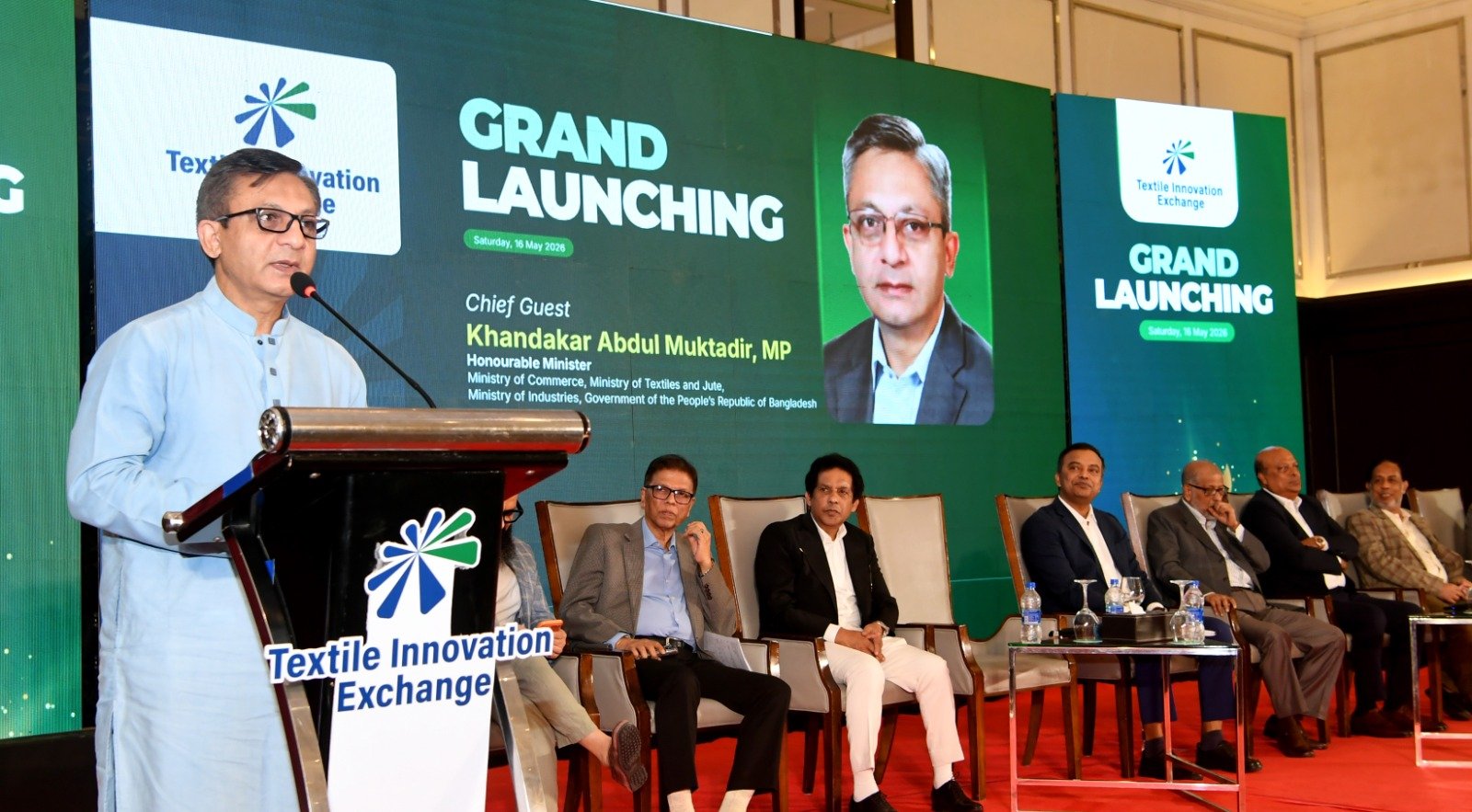
He said these things while speaking as the chief guest at the “Grand Launching Event of Textile Innovation Exchange” held at Le Méridien Dhaka in the capital today, Saturday (May 16, 2026).
The minister said that Bangladesh’s natural resources are limited. Electricity, gas and water are all very valuable resources. Therefore, the best use of each resource must be ensured through energy conservation, water reuse, circular production systems and efficient management in the industry.
Khandaker Abdul Muktadir said that although the country’s ready-made garment industry has achieved remarkable success in the last few decades, its exports are still mainly dependent on a limited number of products. If it cannot move quickly into high-value-added products including sportswear, man-made fiber-based clothing, and technical textiles, it will be difficult to stay ahead of global competition.
He said that to maintain competitiveness in the European Union market and to face potential post-LDC transition challenges, Bangladesh will have to be more active in diversifying products and exploring new markets. At the same time, the industry will have to be taken to new heights through research, design development, skill enhancement, and the use of modern technology.
The minister said that the contribution of the textile sector in the history of Bangladesh’s economic development is very important. By creating massive employment with little capital, this sector is working as the main driving force for the country’s industrialization and export growth. With proper planning and innovation, the horizon of this sector’s potential is still very wide.
Regarding the government’s reuse of closed factories, he said that money will not be spent on inefficient factories by leaving old equipment unchanged. Rather, industrial parks will be established through industry-specific solutions, while new investments will be attracted through public-private partnership (PPP) or lease. In this process, decisions will be taken in consultation with experienced entrepreneurs from the private sector.
He further said that potential sectors including leather, light engineering, shipbuilding will be revived through modern technology, skill development and international cooperation.
Welcoming the initiative of the Textile Innovation Exchange, the Commerce Minister said that the country’s textile industry will become more modern, environmentally friendly and competitive through industry-academia cooperation and mutual exchange of experiences between entrepreneurs. The government will always support such initiatives.
Professor Dr. Engineer Md. Julhas Uddin spoke as the guest of honor at the event. Enamul Haque Khan, Professor Dr. Engineer Ayub Nabi Khan, Md. Abdul Hamid and Engineer Md. Enayet Hossain spoke as special guests.
Engineer Md. Shamsuzzaman. In addition, Dr. Md. Hasib Uddin and Tarek Amin spoke. Engineer Ehsanul Karim Kaysar delivered the closing speech of the program.
Later, Khandaker Abdul Muktadir inaugurated the Innovation Textile Exchange Platform and visited various stalls.