Staff Correspondent:
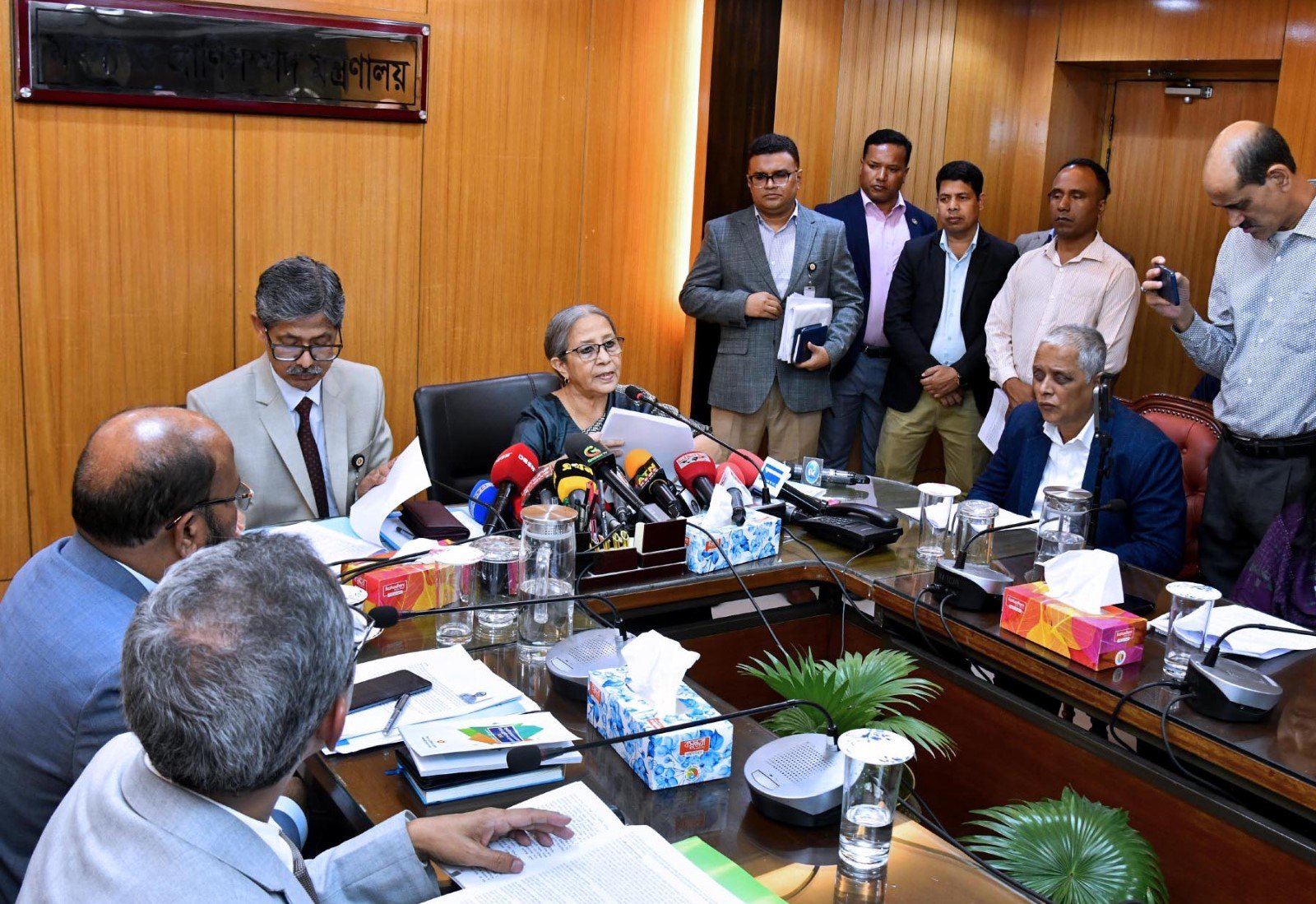
Breakthrough progress has been achieved in increasing sustainable production in fisheries and livestock sector, conserving natural resources, protecting public health, and protecting the interests of marginal farmers and fishermen in the short period of the interim government, said Advisor to the Ministry of Fisheries and Livestock Farida Akhtar.
She made these remarks at a press conference organized to highlight the activities and achievements taken in the fisheries and livestock sector during the interim government’s tenure at the conference room of the ministry on Tuesday (February 10, 2026) morning.
Advisor Farida Akhtar said that a policy decision has been taken to provide a 20 percent rebate on electricity bills for farmers and a subsidy of Tk 100 crore in the fisheries and livestock sector to reduce production costs. In addition, initiatives have been taken to increase the number of registered fishermen benefiting from VGF benefits from 13,26,486 to 1.5 million under the social security program. For the first time, fishermen from the Sundarbans and Haor areas are coming under the VGF benefits during the ban.
He said that 6 sanctuaries in the Padma-Meghna basin and 7,000 square kilometers in the Bay of Bengal have been identified as breeding grounds to conserve Hilsa resources. 669 sanctuaries are being operated across the country to conserve endangered indigenous fish. In addition, the Halda River has been declared a ‘fishery heritage’, due to which the river is contributing more than Tk 800 crore to the national economy annually. However, he expressed concern that although fish production has increased in the seven sanctuaries of Kaptai Lake, the lake is at risk due to illegal encroachment and pollution.
Highlighting the government’s progress in disease control in the livestock sector, the advisor said that more than 36.1 million doses of vaccines have been administered to eradicate PPR in cattle and about 46 lakh doses to control foot and mouth disease. In addition, about 57 crore doses of vaccines have been produced in the country against 17 diseases of poultry and cattle.
Stewardship guidelines and standard treatment guidelines have been introduced to prevent antimicrobial resistance (AMR) to protect public health. At the same time, a specialized veterinary public health laboratory has been set up to detect ‘zoonotic’ diseases, he said.
To ensure the comfort of the common people, it has been decided to sell products at affordable prices through mobile sales centers for 26 days during the upcoming month of Ramadan. In this, dressed broiler will be sold at Tk 245 per kg, beef at Tk 650, milk at Tk 80 per liter and eggs at Tk 8 per piece. The number of these sales centers will be increased in phases.
Referring to the ministry’s involvement in the international arena, Advisor Farida Akhtar said that the Ministry of Fisheries and Livestock participated for the first time in the COP-30 conference held in Brazil. A coordinated global and national initiative is needed to address the severe risks posed to the fisheries and livestock sector due to climate change.
She also said that the fisheries and livestock sector has been deprived of many opportunities and benefits since it has been considered a ‘sub-sector of agriculture’ until now. Therefore, a proposal has been sent to the Chief Advisor and the Planning Commission to recognize the sector as a ‘full-fledged sector’.