Desk Report:
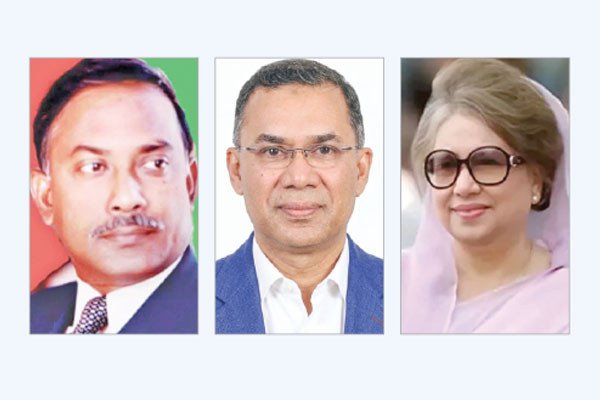
Some days in the political history of Bangladesh are not just calendar dates; Crossing the boundaries of time, those days merged with the political course of the nation. November 7 is one such day. The change initiated by the sepoy-janata coup in the turbulent political situation of 1975 has had a long-lasting impact on the politics of democracy, nationalism and independence-sovereignty in Bangladesh. In that continuity, a historical continuity between BNP and its supporters is said about the political role of Ziaur Rahman, Begum Khaleda Zia and later Tariq Rahman.
After the coup d’état of August 15, 1975, Bangladesh fell into a deep political uncertainty. Meanwhile, another counter-coup took place on November 3, led by Brigadier Khaled Musharraf. While there was talk of restoring order and chain of command in the army, the situation became more complicated. From 3rd to 6th November, a deadlock was created in the state power structure.
In this critical situation, after midnight on 6th November, sepoys revolt started in Dhaka Cantonment. One of their main steps was to free the then army chief Major General Ziaur Rahman from house arrest. Later, the sepoys came out on the streets of Dhaka with tanks. A section of common people also came down the street with them. ‘Naraye Takbeer, Allahu Akbar’, ‘Bangladesh Zindabad’, ‘Ziaur Rahman Zindabad’ and ‘Sipah-Janatar Biplab Zindabad’ – the streets were filled with slogans.
In the course of events of November 7, Ziaur Rahman once again rose to the center of state power. He was reinstated as Chief of Army Staff and assumed duties as Deputy Chief Martial Law Administrator. Although President Justice Abu Sadat Mohammad Sayem was constitutionally in charge of the head of state, Ziaur Rahman gradually took on important political and administrative roles.
Later, under the leadership of Ziaur Rahman, initiatives were taken to re-establish a multi-party political system. The scope of activities of political parties widened and a new political reality began in the country. Bangladesh Nationalist Party (BNP) was established in this context. As a result, November 7 is considered by BNP and its supporters as an important turning point to break the political stalemate.
Ziaur Rahman’s political activities were not limited to changing the state structure. During his time various initiatives were taken to speed up the economy. Emphasis was placed on programs such as exporting manpower abroad, laying the foundations for the development of the ready-made garment industry, increasing agricultural production and digging canals. His political followers believe that these initiatives play an important role in the economic progress of Bangladesh in the future.
However, his political life ended with the death of Ziaur Rahman on May 30, 1981. Then his wife Begum Khaleda Zia was not active in politics directly. Justice Abdus Sattar was elected President after Zia’s death. But in a short time on March 24, 1982, the then army chief Lieutenant General Hussain Muhammad Ershad seized power through a military coup.
Begum Khaleda Zia gradually began to play an important role in the movement to restore democracy against Ershad’s military rule. After joining the BNP as an ordinary member in 1982, within a short period of time he rose to an important position in the leadership of the party. Vice-Chairman in 1983 and Chairperson of BNP in August 1984.
After that, he led from the front in the anti-military regime movement. Ershad led the movement against the government by forming a seven-party alliance. He was arrested and detained several times due to the decision to boycott the 1986 elections and the series of agitations. At one stage of the long movement, the demand for the restoration of democracy under the leadership of BNP became stronger.
The success of the nationalist students in various student councils also strengthened the movement organizationally. At one stage, the anti-dictatorship movement turned into a mass movement with the participation of people from all walks of life. Ershad’s downfall on December 6, 1990 culminated in that movement. Begum Khaleda Zia came to be known as the ‘uncompromising leader’ for leading this long struggle.
After that, a new chapter of parliamentary democracy began under the leadership of Begum Khaleda Zia when the BNP formed the government through the 1991 elections. His leadership became important in the transition from a presidential system to a parliamentary system of government.
But the political crisis of Bangladesh did not stop there. The political unrest of 2007 and the military-backed caretaker government created a new crisis in the country’s political system. Later, after Awami League came to power, BNP raised allegations of curtailment of electoral system, democratic rights, human rights and political freedom.
At this time, Tariq Rahman came forward as one of the most important political faces of the new generation under the leadership of BNP. After Ziaur Rahman and Khaleda Zia, his leadership is highlighted as the next chapter in BNP political continuity. Despite staying abroad for a long time, he played an important role in party activities and anti-government movements.
Following the abolition of the caretaker government system in 2011, the BNP intensified its movement concerning the electoral system and democratic rights. According to the party, Tarique Rahman—despite residing abroad—remained active in organizing party members and providing guidance for anti-government movements. The BNP has long alleged that he has been targeted through numerous legal cases, political harassment, and pressure exerted on his family.
The political movement took on a new dimension during the events of July–August 2024. A student-led protest demanding quota reform evolved into a broader movement against discrimination, eventually drawing in people from various walks of life. The situation escalated further due to conflicts, loss of life, and direct confrontations between the protesters and the government. Ultimately, on August 5, 2024, the then-Prime Minister Sheikh Hasina resigned and fled the country, leading to a major political shift.
In its political narrative, the BNP attributes significant importance to the long-standing efforts and guidance of Tarique Rahman as a driving force behind this mass uprising. The party maintains that the events of July–August 2024 were not isolated incidents, but rather the culmination of a protracted political struggle for voting rights and democracy. The BNP asserts that, even while abroad, Tarique Rahman provided encouragement and support to party members and the protesters.
The BNP views this political trajectory as being linked to the leadership of three generations of the Zia family. They frame the sequence of events—Ziaur Rahman’s declaration of independence in 1971, his role surrounding the events of November 7, 1975; Khaleda Zia’s leadership in the movement against the Ershad regime; and Tarique Rahman’s political stance during the 2024 mass uprising—as interconnected parts of a single, continuous legacy.
In the case of Ziaur Rahman, his political legacy is rooted in his declaration of independence in 1971, his governance of the state, his contributions to economic development, and his initiative to establish multi-party politics. For Khaleda Zia, the focus lies on her role in the movement against military rule and her efforts to establish parliamentary democracy. As for Tarique Rahman, emphasis is placed on his long-term anti-government activism and his political leadership during the 2024 mass uprising. While the role of the Zia family in Bangladeshi politics is a subject of political debate, for the BNP and its supporters, it represents a clear political legacy. In their view, at every critical juncture in the nation’s history, members of the Zia family have stood at the forefront, championing the rights of the people, democracy, independence, and sovereignty.
Consequently, as Ziaur Rahman is commemorated on the occasion of the ‘National Revolution and Solidarity Day’ (marking the uprising of soldiers and the public on November 7), the roles of Khaleda Zia and Tarique Rahman—as his successors in the country’s political history—also come to the fore. The BNP views the entire political trajectory from November 7 through to the mass uprising of 2024 as a sustained struggle, led by the Zia family, to establish democracy and secure the rights of the people in Bangladesh.