Diplomatic Desk:
Emphasis has been placed on further strengthening cooperation between Bangladesh and South Korea in the areas of trade, investment, industry, technology, and development.
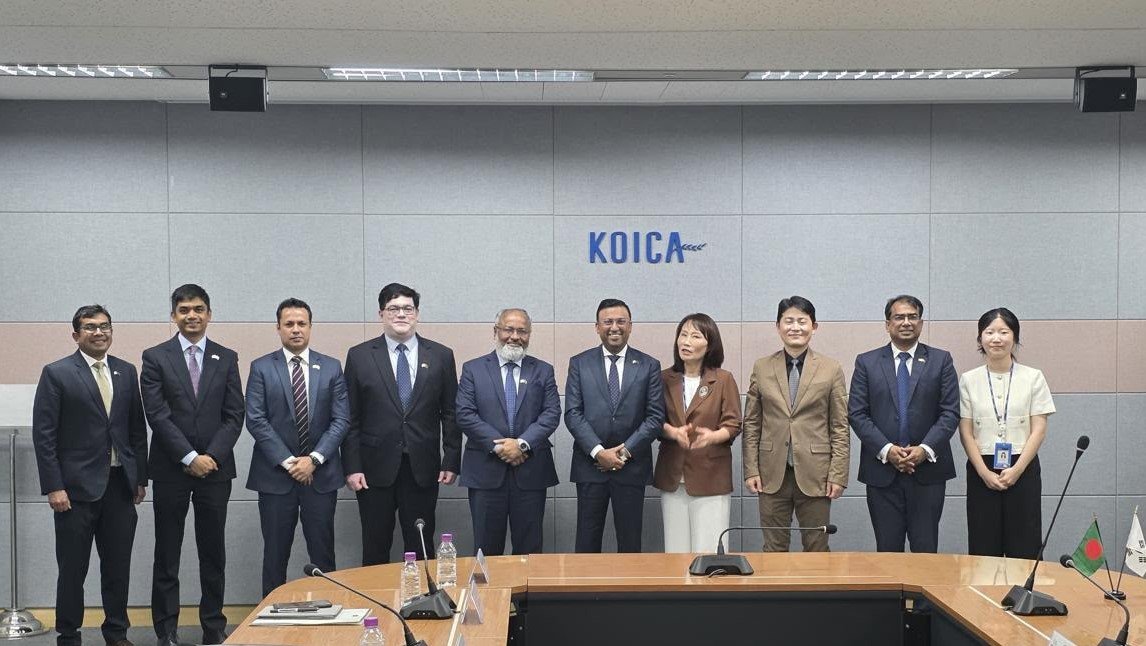
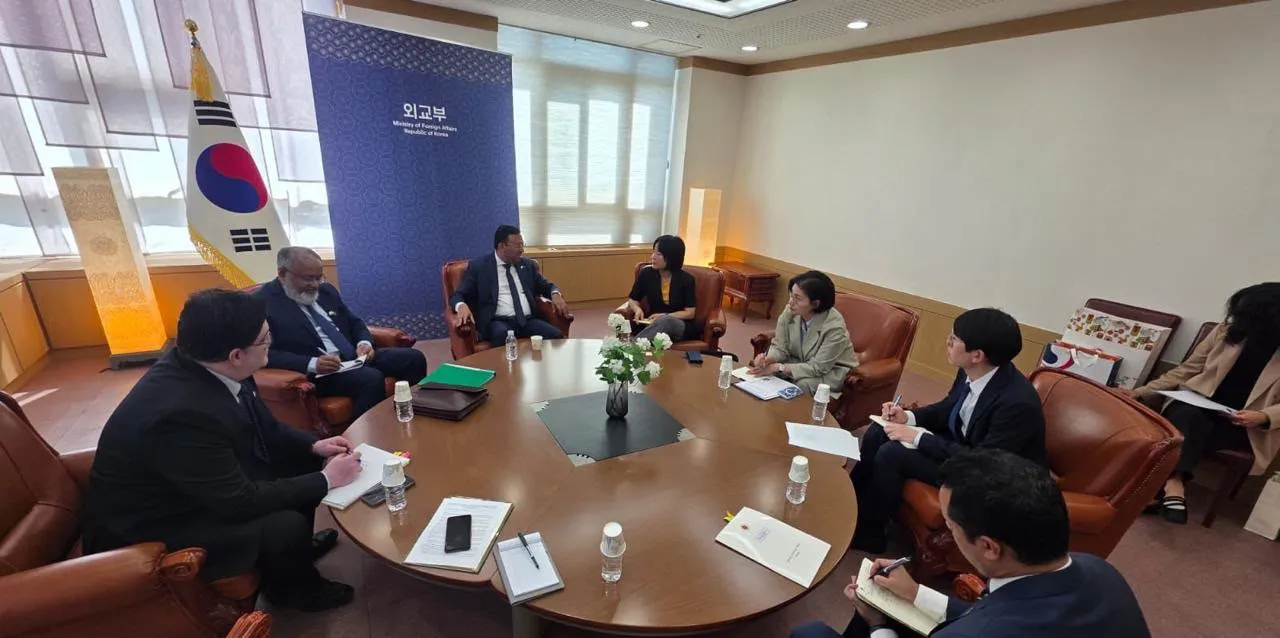
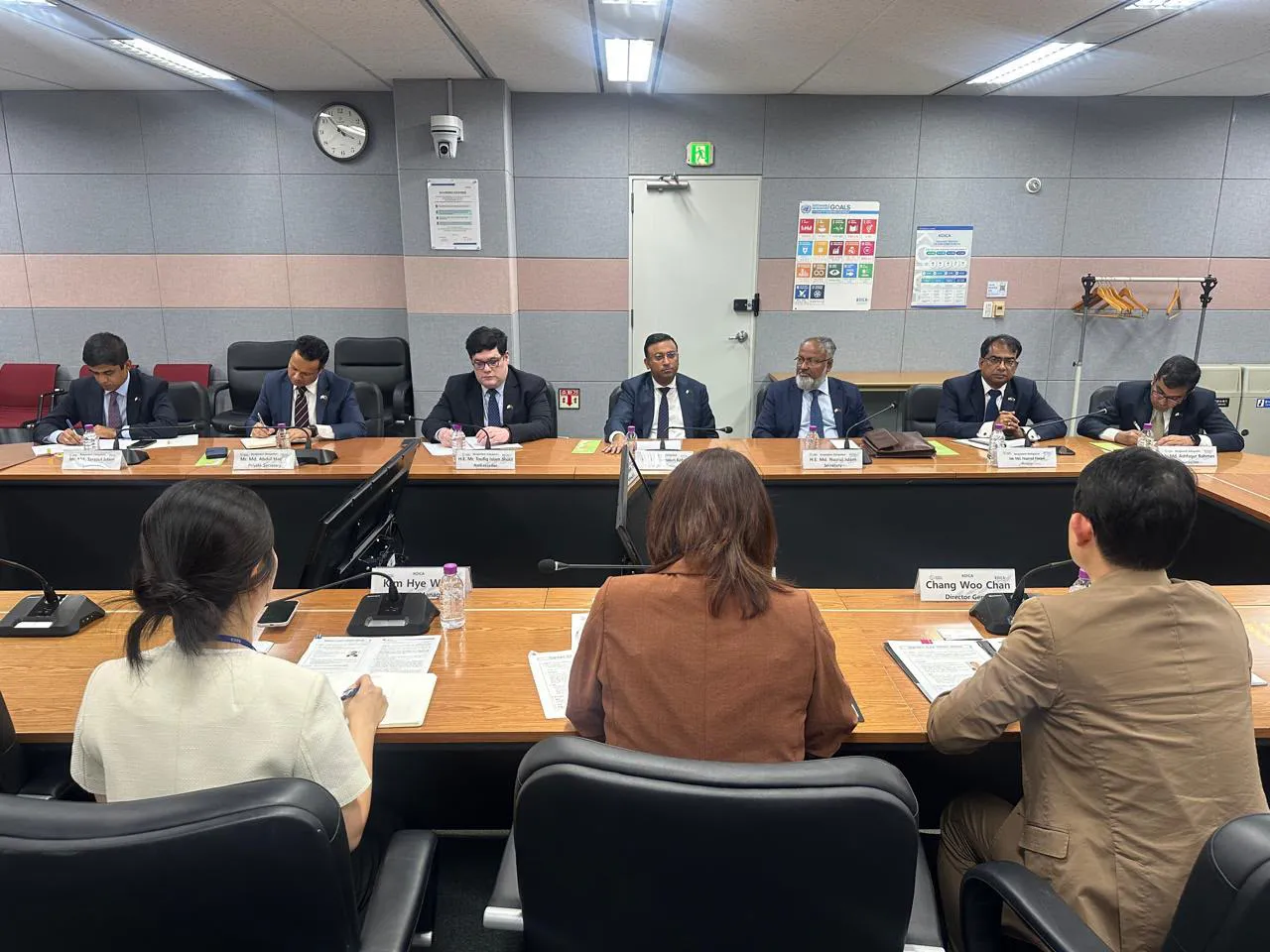
On Thursday (October 1, 2026), in separate meetings held in Seoul, South Korea, Bangladesh’s State Minister for Foreign Affairs, Humayun Kabir, met with South Korea’s Deputy Minister for Trade Negotiations, Hyjin Kwon, and the Vice President of the Korea International Cooperation Agency (KOICA), Doh Young-ah. Various aspects of bilateral cooperation were discussed during these meetings.
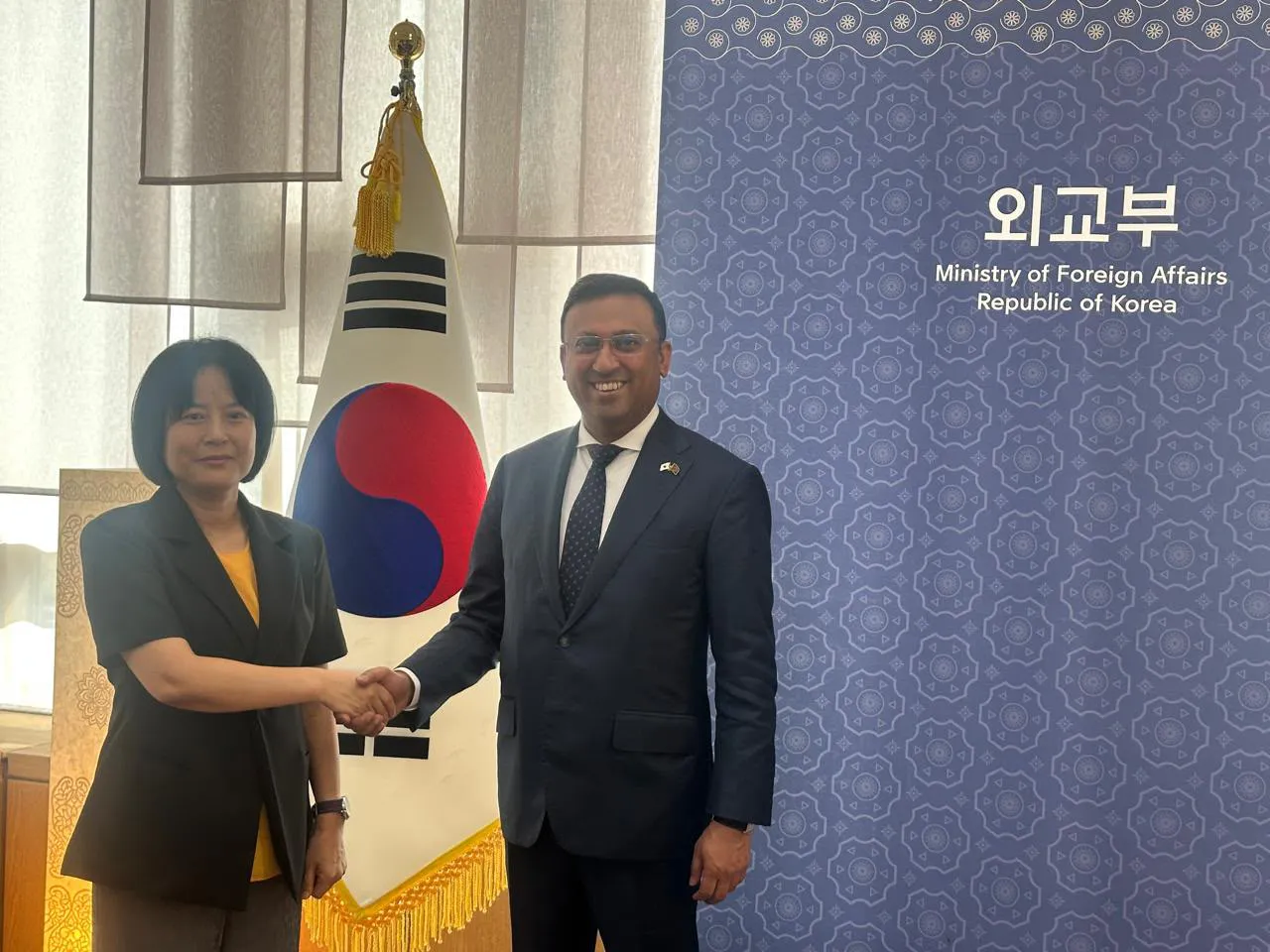
In his meeting with Deputy Minister Hyjin Kwon, State Minister Humayun Kabir commended South Korea’s long-standing cooperation regarding Bangladesh’s economic transformation and industrial development. He conveyed Bangladesh’s keen interest in further expanding the existing cooperation between the two nations.
Expressing satisfaction over the recent successful conclusion of the Bangladesh-South Korea Comprehensive Economic Partnership Agreement (CEPA), the State Minister noted that this agreement could play a pivotal role in integrating Bangladesh more deeply into Korean and regional supply chains following its graduation from the Least Developed Country (LDC) status.
He also expressed hope that the CEPA would be formally signed during the proposed visit of the South Korean President to Bangladesh, once the necessary internal procedures are completed.
The issue of increasing bilateral trade was also highlighted during the meeting. The State Minister called for effective measures to facilitate easier access for Bangladeshi goods and services to the South Korean market and urged for a gradual reduction of the trade deficit. Simultaneously, he requested the simplification of food safety inspections and quarantine procedures for Bangladeshi agricultural, fishery, and food products.
Furthermore, the State Minister sought South Korea’s support regarding Bangladesh’s inclusion in the Regional Comprehensive Economic Partnership (RCEP). He encouraged major Korean industrial conglomerates as well as small and medium-sized enterprises (SMEs) to explore investment opportunities in Bangladesh, emphasizing the importance of boosting investment through joint ventures and government-level cooperation. In response, South Korean Deputy Minister Haijin Kwon welcomed the progress in economic relations between Bangladesh and South Korea. She conveyed Korea’s interest in further expanding trade, investment, and industrial cooperation between the two nations under the CEPA framework.
Separately, during a meeting with KOICA Vice President Doh Young-ah, the State Minister expressed gratitude for KOICA’s long-standing contributions to Bangladesh’s socio-economic development. He commended KOICA’s role in Bangladesh’s development activities through grant assistance, capacity building, technical cooperation, and knowledge sharing.
The State Minister also expressed appreciation for KOICA’s $39 million ‘Saemaul Plus End Poverty Programme.’ Additionally, he sought further cooperation in areas such as water security and climate resilience, skills development, employment-oriented technical education, and digital healthcare.
Humayun Kabir expressed interest in undertaking larger, integrated, and transformative programs for the next phase of Bangladesh-Korea development cooperation. He particularly emphasized expanding cooperation in sectors such as digital transformation, artificial intelligence (AI), and digital public services.
The State Minister also requested a speedy decision regarding Korean financing—alongside the Asian Development Bank (ADB)—for the Metro Rail (MRT) project in Dhaka.
KOICA Vice President Doh Young-ah welcomed the interest in expanding development cooperation and expressed readiness to work on new areas and programs aligned with Bangladesh’s development priorities and Korea’s experience in development cooperation.