Desk Report:
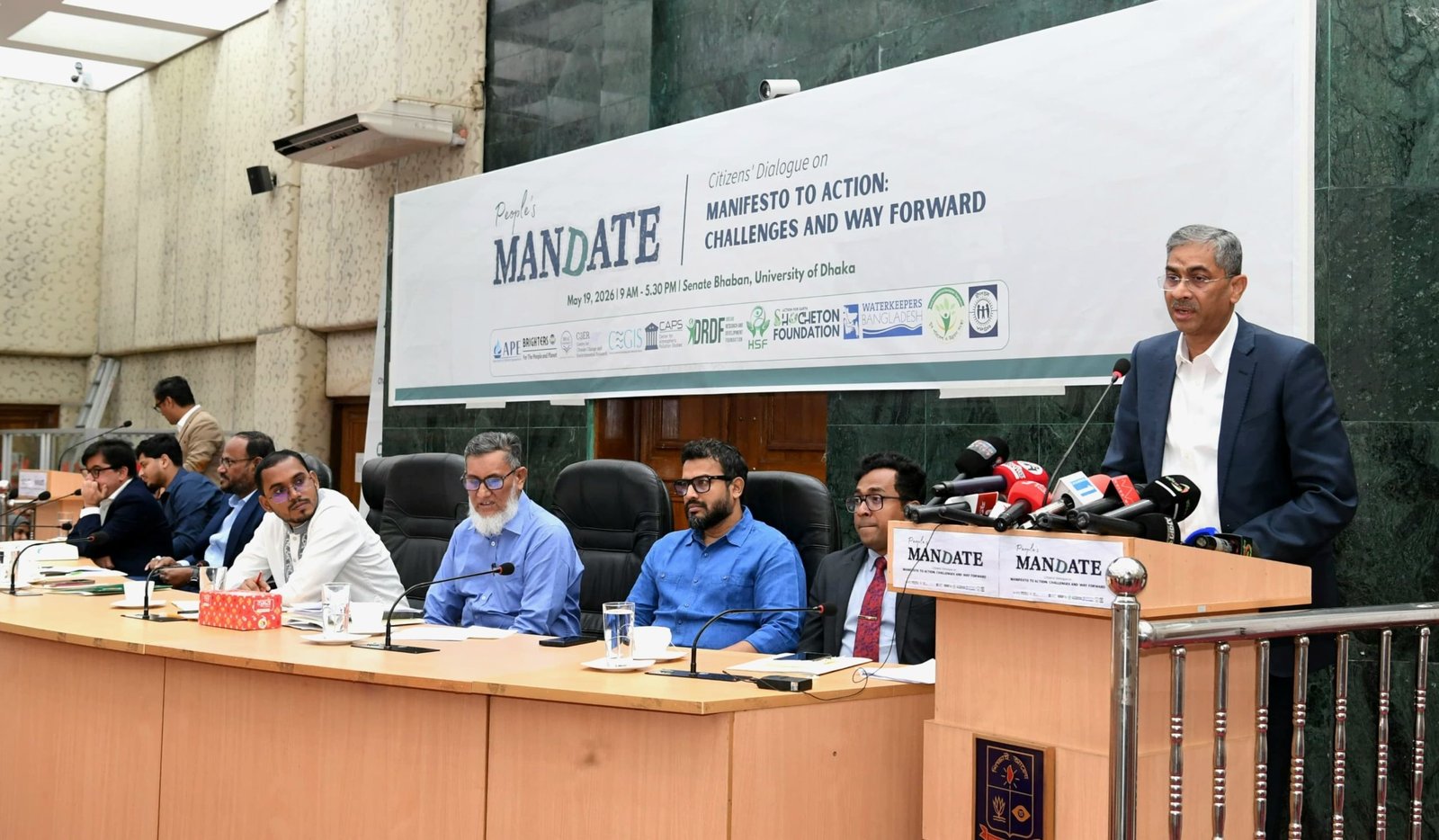
Water Resources Minister Md. Shahiduddin Chowdhury Annie said that the government is working to revive the rural economy along with preserving the environmental balance by digging and re-dug canals, increasing water flow and increasing fish production. He further said that the government is emphasizing on sustainable water resource planning and management, addressing climate risks and development of agriculture and farmers.
He said these while speaking at a dialogue organized on the water, river and agriculture commitments and their implementation in the election manifesto titled ‘Manifesto Action: Challenges and Way Forward’ at the Nawab Nawab Ali Chowdhury Senate Building of Dhaka University on Tuesday (May 19, 2026). State Minister for Fisheries and Livestock Sultan Salahuddin Tuku was present at the time.
The minister said that according to the election manifesto, Prime Minister Tarique Rahman is undertaking development activities by giving highest priority to public welfare. In the next 5 years, 20,000 kilometers of canals, rivers and reservoirs will be excavated and re-excavated. He also said that measures are being taken to prevent illegal encroachment and pollution of canals along with canal excavation.
Regarding student politics, Shahiduddin Chowdhury Annie said that if talented people come to student politics, competent leadership will be created and the country will benefit. He commented that it is necessary for talented people to come to student politics for national welfare and public interest.
The minister also said that the Padma Barrage project has already been passed. As a result of the construction of the Padma Barrage, the balance of livelihood, agriculture, fisheries and environment of 24 districts in the southwestern and northwestern regions of the country will be preserved and navigability will be restored in the river. He also assured of quick approval of the project once the expert opinion and survey of the Teesta Master Plan are completed.
Noakhali-6 MP Abdul Hannan Masud, Mir Mohammad Ali, CEGIS Executive Director Md. Motaleb Hossain Sarkar, and others were present as discussants in the dialogue.