Desk Report:
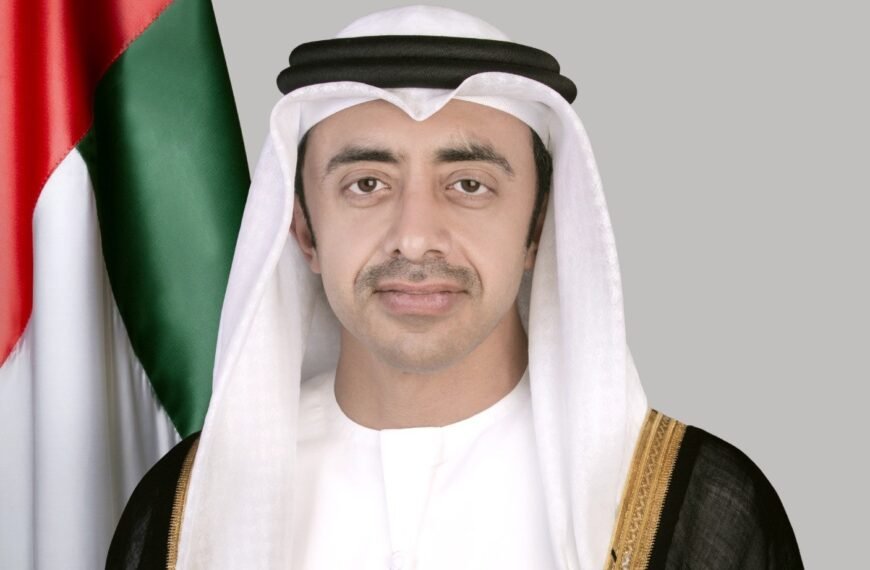
Md. Ismail Zabiullah, Advisor to the Prime Minister on Public Administration (with the rank of Minister) and a member of the BNP’s National Standing Committee, has called upon HR professionals to identify talented individuals and play an effective role in developing their potential and skills. He stated that to address future challenges, drive Bangladesh’s economic progress, and enhance competitiveness on the global stage, it is essential to cultivate a workforce skilled in artificial intelligence (AI) and modern technology. In this regard, HR professionals must play a pivotal role in properly valuing and nurturing talent.

He made these remarks while serving as the chief guest at the ‘8th National Human Resource Conference 2026,’ organized by the Federation of Bangladesh Human Resource Organizations (FBHRO) at Hotel Sheraton in Banani, Dhaka, on Saturday (November 28, 2026). The theme of the conference was ‘Human Resources and Artificial Intelligence: Reshaping Skills for the Future.’
The Public Administration Advisor noted that artificial intelligence, automated technologies, and digitalization are transforming every sector—including manufacturing, healthcare, education, commerce, and public administration. While technology serves as a driving force for progress, it is ultimately people who create genuine advancement. Therefore, alongside technological integration, equal emphasis must be placed on enhancing human skills and capabilities.
Highlighting the national employment landscape, he mentioned that approximately 2 million young people enter the labor market in Bangladesh every year. According to the 2024 Labour Force Survey by the Bangladesh Bureau of Statistics (BBS), the unemployment rate among youth aged 15 to 29 is approximately 8.5 percent, while for the highly educated youth, this figure reaches nearly 25 percent. To address this, he emphasized the need to align education and training systems with the demands of the labor market. He asserted that the primary objective should not merely be to produce a large number of graduates, but rather to cultivate a young generation that is job-ready, productive, and equipped with innovative skills. In this context, he noted that the election manifesto includes a commitment to allocate 5 percent of the GDP to the education sector. Fulfilling this pledge requires placing special emphasis on human resource development.
Citing the examples of Israel and Germany, the advisor stated that investments in research, advanced technology, technical education, and a skilled workforce can play a pivotal role in a nation’s economic transformation. To achieve this, effective coordination must be established between universities, technical educational institutions, and the industrial sector, ensuring that students acquire skills aligned with the actual demands of the labor market.
He pointed out that productivity in the country’s various manufacturing sectors—including the ready-made garment industry—could be enhanced through the increased adoption of automated technologies, smart production systems, digital supply chains, and AI-driven quality control. Simultaneously, the country must bolster its capabilities in software development, cybersecurity, business process outsourcing, and AI-based services. Bangladesh needs to progress beyond merely supplying labor to the international market; it must also advance in the realms of skilled professional services, technology-driven solutions, and innovation. In this regard, it is essential to ensure that rural youth have equal opportunities to participate in the digital economy.
Highlighting three key priorities for human resource development, he noted: First, it is essential to ensure continuous training and opportunities for acquiring new skills, both within educational settings and the workplace. Second, the responsible and ethical use of artificial intelligence must be guaranteed to safeguard personal privacy, individual rights, and social inclusion. Third, alongside technology-driven transformations, there must be a focus on fostering human-centric leadership, integrity, empathy, and emotional intelligence.
Referring to Jensen Huang, CEO of NVIDIA, he remarked that exceptional talent, skill, and foresight empower an individual to exert a significant influence not only on an organization but on the global economy as well. Consequently, one of the most critical responsibilities for human resource professionals is to identify capable and talented individuals, nurture their skills, and cultivate a work environment that enables them to adapt effectively to change. He further stated that to achieve economic diversification, enhance productivity, and gain a competitive edge globally, investment in human resource development must be accorded the same priority as investment in roads, ports, power, and other physical infrastructure. We must build a Bangladesh where every young person has the opportunity to acquire skills, every worker can gain new competencies throughout their career, and every organization possesses the capacity to adapt to innovation and change.
The keynote paper at the conference was presented by Dr. Md. Mosharraf Hossain, the founding president of the organization. The event saw the participation of renowned experts, academicians, and professionals in the field of human resource management and development from both home and abroad. Notable attendees included Mr. Michael A. Potter, founder of Michael A. Potter International (UK); Prof. Dr. Daniel W. Lund (Canada); Prof. Dr. T. V. Rao, former professor at the Indian Institute of Management (IIM), Ahmedabad, and Chairman of TVRLS (India); Dr. M. H. Raja, former national president of the National Institute of Personnel Management (NIPM, India); Mr. Surit Shome, Chairman of the Kolkata Chapter of the Indian Society for Training and Development (ISTD, India); Dr. Neil Bogahalande, President of the Chartered Institute of Personnel Management (CIPM, Sri Lanka); Prof. Dr. Ajantha Dharmasiri, a senior university professor and former president of CIPM (Sri Lanka); and Prof. Dr. Jude Williams Genilo (Philippines).
It is worth noting that the Federation of Bangladesh Human Resource Organizations (FBHRO) is the apex body for 25 non-profit organizations in Bangladesh dedicated to human resource management and development. The organization works to represent human resource professionals in the country, contribute to policy-making, and strengthen mutual networking and collaboration.