Diplomatic Desk:
Prime Minister Tarique Rahman has invited Japanese companies to invest in five priority sectors in Bangladesh. These sectors include: motor vehicle manufacturing; energy; technology and space cooperation; railways and logistics; and agricultural product processing and manufacturing.
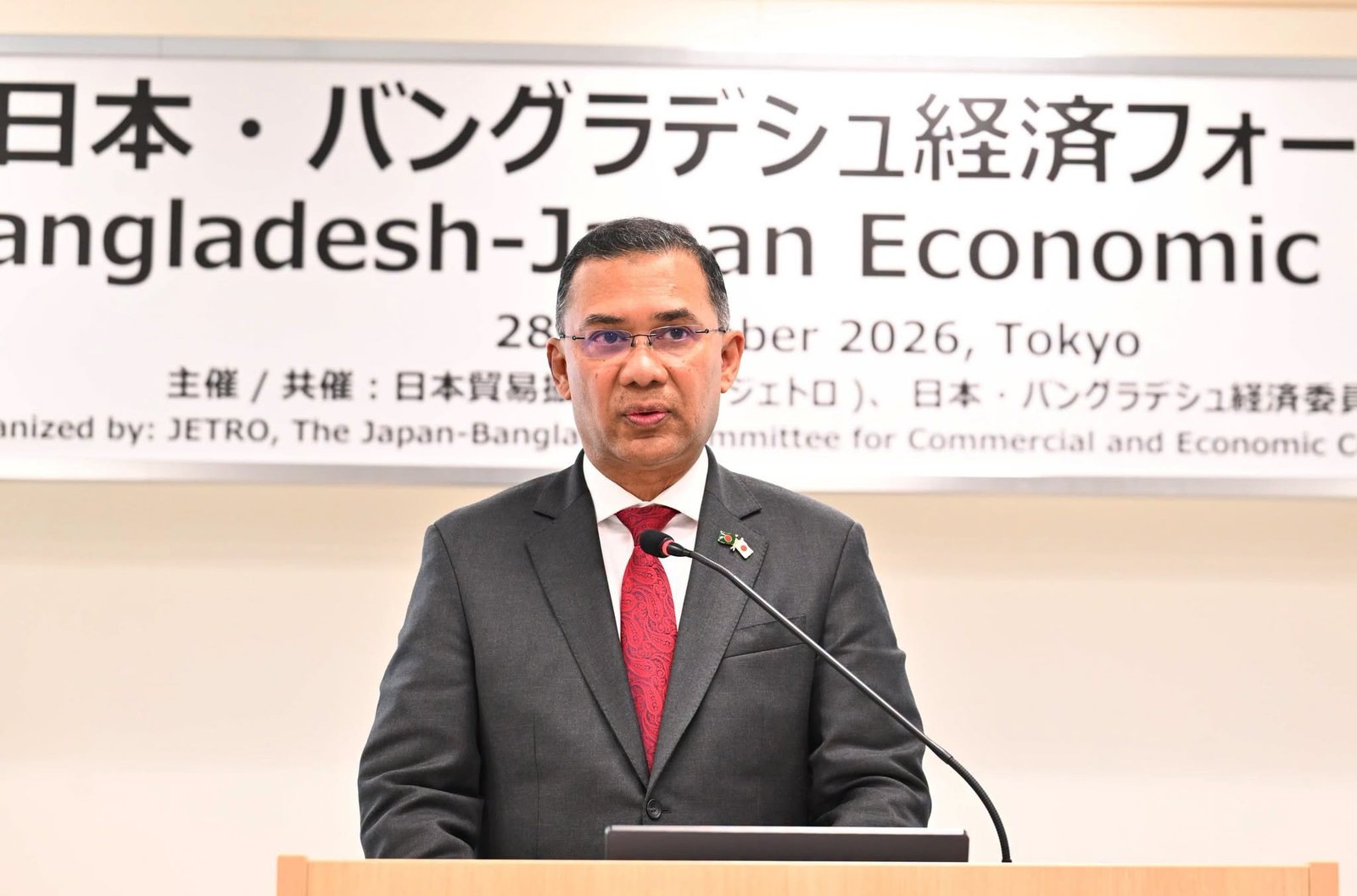
He made this call during his keynote address at the Bangladesh-Japan Economic Forum dialogue, held on Wednesday afternoon (October 28, 2026) at the Japan External Trade Organization (JETRO) hall in Tokyo, Japan.
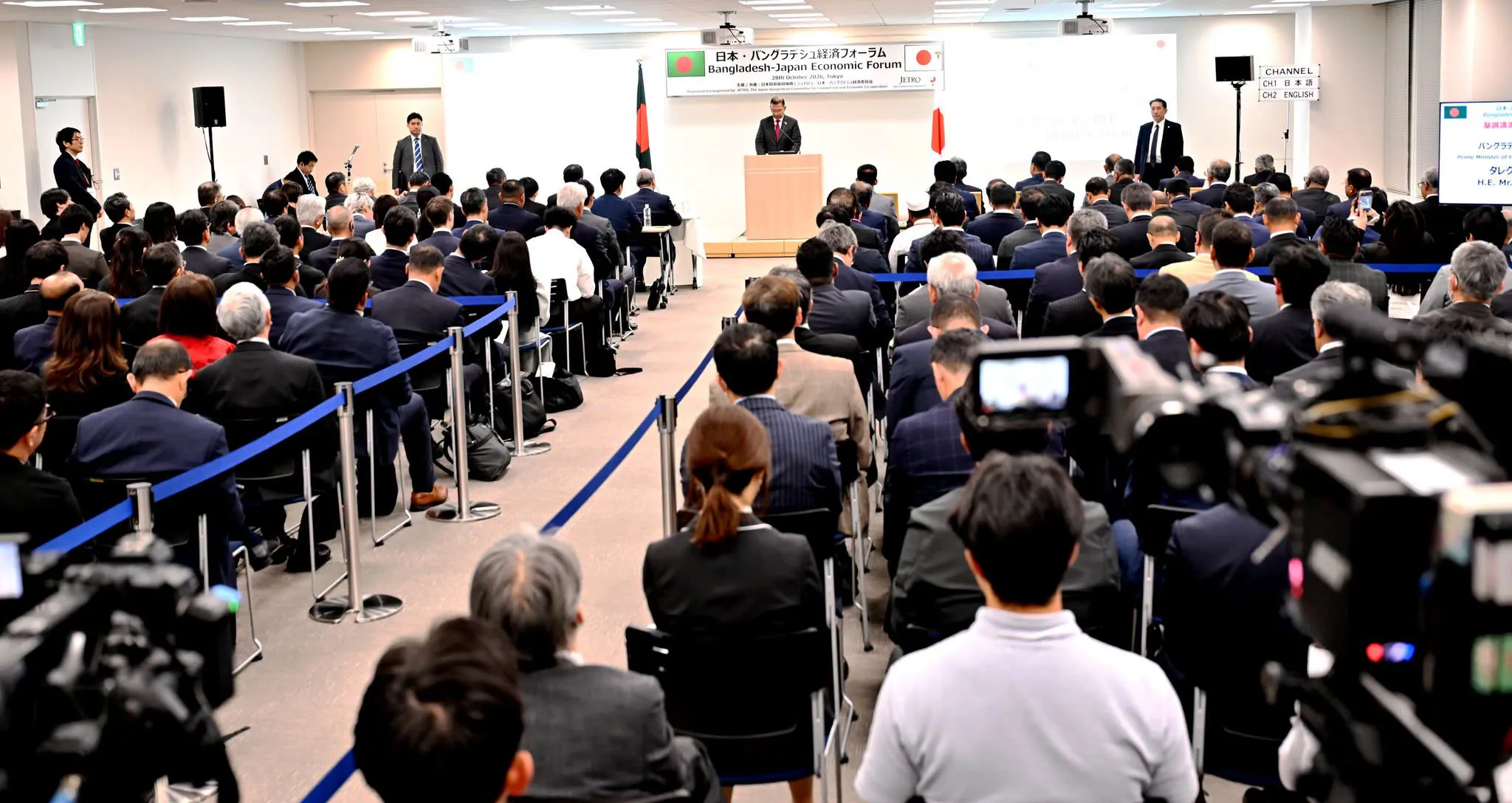
The Prime Minister stated that Japanese companies should consider these five key sectors to foster future cooperation and create new business opportunities based on mutual interest and benefit.
Highlighting the potential for economic relations between Bangladesh and Japan, Tarique Rahman noted that approximately 350 Japanese companies are currently operating in Bangladesh. However, the total volume of Japanese Foreign Direct Investment (FDI) in Bangladesh remains below 500 million US dollars.
He mentioned that in the last fiscal year, Bangladesh’s export earnings from Japan stood at 1.36 billion US dollars, while Bangladesh’s imports from Japan during the same period amounted to 2.16 billion US dollars.
The Prime Minister emphasized that it is time to move beyond the traditional scope of development cooperation and elevate the bilateral relationship to a higher level centered on trade and investment. To achieve this, the existing economic partnership should be leveraged to expand mutual benefits and long-term collaboration.
Tarique Rahman pointed out that the Bangladesh-Japan Economic Partnership Agreement (EPA) has created new opportunities for expanding commercial ties between the two nations. He noted that this agreement, signed this year, marks the first such economic partnership agreement that Bangladesh has entered into with any country.
Under the terms of the agreement, 7,379 Bangladeshi products will gain duty-free access to the Japanese market. Conversely, various Japanese goods—including steel, motor vehicle parts, and electronic components—will receive preferential market access in Bangladesh. According to the Prime Minister, this agreement will deepen the business relationship between the two nations and create new opportunities for Bangladeshi exporters in the Japanese market.
Highlighting the immense potential of the Bangladeshi market, the Prime Minister noted that a population of over 180 million—comprising a dynamic, youthful demographic with an average age of 27, alongside a growing middle class—serves as one of the country’s greatest assets.
She expressed optimism that by 2030, Bangladesh will emerge as one of the world’s top 10 consumer economies. This, in turn, could open up significant opportunities for Japanese investors across sectors such as manufacturing, technology, energy, transport, and agro-based industries.
Among five priority sectors, Tareq Rahman specifically highlighted motor vehicle manufacturing. He mentioned that earlier this month, Toyota announced plans to begin the process of establishing a vehicle manufacturing plant in Bangladesh.
Such initiatives could play a pivotal role in enhancing local manufacturing capacity, facilitating technology transfer, and generating industrial employment in Bangladesh.
The Prime Minister’s call reflects an aspiration to evolve the Bangladesh-Japan relationship—moving beyond mere development cooperation toward a broader partnership encompassing trade, industrialization, and investment. Increased participation by Japanese companies in this new chapter of economic partnership could pave the way for the expansion of Bangladesh’s manufacturing sector, export capabilities, and employment opportunities.