Desk Report:
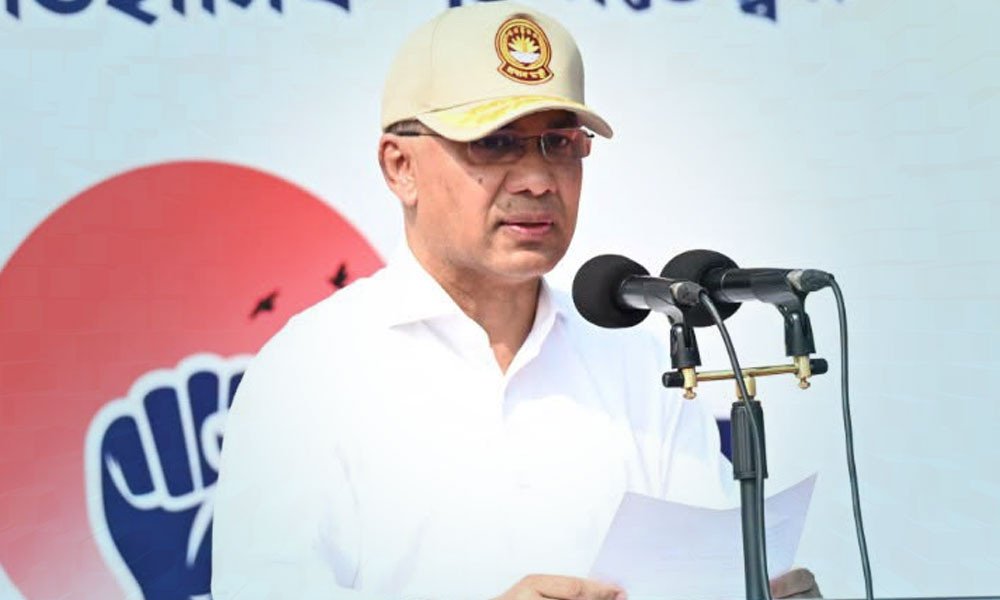
Prime Minister Tarique Rahman has called for a unified response to any attempts to destabilize the nation through sabotage and conspiracy, taking advantage of the current political and economic unrest. He asserted that no conspiracy—whether originating from within or outside the country—can hinder the unity and progress of the people. He emphasized the importance of all parties working together in the national interest.
Speaking as the chief guest at a rally held ahead of a procession marking the historic ‘National Revolution and Solidarity Day’ (November 7) on Saturday, he stated that any domestic or foreign conspiracy would be met with a united front. He added that the people of Bangladesh have never bowed to malevolent forces in the past, and they will not do so in the future.
This statement comes at a time when reports of sabotage, crude bomb (cocktail) explosions, arson, and heightened tensions surrounding political activities are emerging from various parts of the country. Furthermore, concerns have been reignited by labor unrest in the garment sector, anti-government programs organized by the opposition, and conflicting rhetoric from various political factions.
The government alleges that a certain political group is exploiting the discontent among garment workers to create instability in the country. Government ministers, advisors, and political leaders have accused the now-banned Awami League—along with its affiliated organizations and fugitive members—of inciting the labor unrest.
However, stakeholders point out that the labor unrest is not driven solely by political factors; it also stems from the workers’ specific demands, economic pressures, and internal challenges within the industrial sector. Consequently, there is ongoing debate regarding the extent to which political influence versus the workers’ genuine grievances is driving the recent unrest.
Several government ministers have alleged that a specific group is manipulating workers to pressure the administration, with an eye toward the upcoming month of December. They have questioned whether the labor protests are truly focused on securing workers’ rights, or if there is an underlying political agenda. The government has further alleged that members of the banned political party have been infiltrating labor protests in areas like Mirpur, Ashulia, and Gazipur, where they are allegedly instigating violence and chaos. Citing information from the Ministry of Home Affairs and intelligence agencies, the government has stated that former Prime Minister Sheikh Hasina—currently residing in India—along with former Awami League ministers, MPs, and some of their followers, are playing a role in the ongoing instability. It is further alleged that members of the now-banned Awami League, Sramik League, and Chhatra League are attempting to incite violence, arson, and vandalism by exploiting labor unrest.
Given this situation, the government believes that unity among political parties has become increasingly essential. However, the government also contends that the anti-government programs organized by the main opposition party and its allies are further complicating the situation.
An 11-party alliance led by Jamaat-e-Islami is conducting a series of “long marches” across various regions of the country, pressing for a seven-point list of demands. These include the implementation of a referendum mandate, justice for the “July genocide,” and the resolution of crises concerning electricity, fuel, gas, and fertilizers. The campaign began on September 5 with a march toward the Dhaka-Chittagong route. This was followed by a second phase in Rangpur on September 19, and a third phase on October 31, covering the Dhaka-Khulna-Kushtia route.
During these events, senior leaders from the alliance—including Jamaat-e-Islami Ameer Dr. Shafiqur Rahman—have delivered speeches. Beyond criticizing specific government policies, these addresses have featured harsh anti-government rhetoric, with some speakers even calling for the ouster of the government and the launch of new movements. Similar programs are planned for the Barishal, Rajshahi, Sylhet, and Mymensingh divisions.
In this context, a question has emerged within the political sphere: why is the opposition adopting such a hardline stance only months after the current government took office? There is also ongoing discussion regarding the political message the opposition intends to convey through these sustained, extra-parliamentary movements.
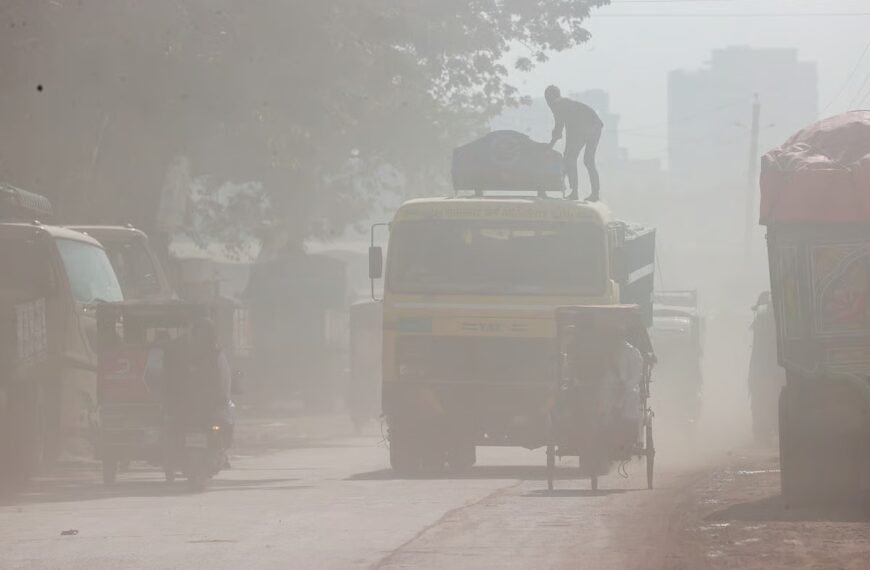
Some political analysts warn that the confrontational stance between the government and the opposition could create an opening for exiled political forces or other vested interest groups to instigate instability. They view recent incidents—such as the detonation of crude bombs (cocktails), the torching of buses, and other acts of sabotage in various parts of the capital—with significant concern. From Friday evening until late at night, several crude bomb (cocktail) explosions occurred in the capital’s Adabar, Shahbag, Airport, Khilgaon, and Kalshi (Mirpur) areas. During the same period, a passenger bus belonging to ‘Baishakhi Paribahan’ was set on fire on Pragati Sarani in Baridhara.
The previous day, an explosion and fire occurred in a courier service’s covered van in front of the Krishi Market in Rayerbazar, leaving the driver injured. An attempt was also made to set fire to a passenger bus in the Mirpur-12 area; however, police reported that the fire was quickly brought under control thanks to the prompt actions of the bus staff and local residents.
These multiple explosions and acts of arson across various parts of the capital in a single night have sparked widespread public alarm. Maintaining law and order, while identifying and bringing those involved in these acts of sabotage to justice, has now become a major challenge.
According to political analysts, any escalation in conflict and division within the country’s current political landscape could be exploited by various factions. If the political and social unity that emerged around the July movement were to weaken, it could potentially hinder the nation’s democratic progress. Furthermore, growing political instability could have adverse effects on the economy, industry, and public life.
Against this backdrop, there have been calls to set aside political differences and remain united in the national interest—specifically to counter acts of sabotage, violence, and any anti-state activities. This need for unity was also emphasized by Tarique Rahman in his remarks at the November 7 rally.
It has become clear that political parties, social forces, and the general public must all play a responsible role in maintaining the nation’s peace, stability, and democratic environment. To effectively address sabotage and conspiracies, a unified stance—prioritizing the national interest over internal divisions—is essential for bringing the situation under control.