
Desk Report:
Fakir Mahbub Anam, Minister of Posts, Telecommunications and Information Technology, and Science and Technology, has stated that ensuring cybersecurity is essential for keeping government operations secure, uninterrupted, and citizen-friendly.
He emphasized that to protect government data, Critical Information Infrastructure (CII), and digital services, it is necessary to enhance technical capabilities, foster institutional coordination, develop a skilled workforce, and formulate effective policies.
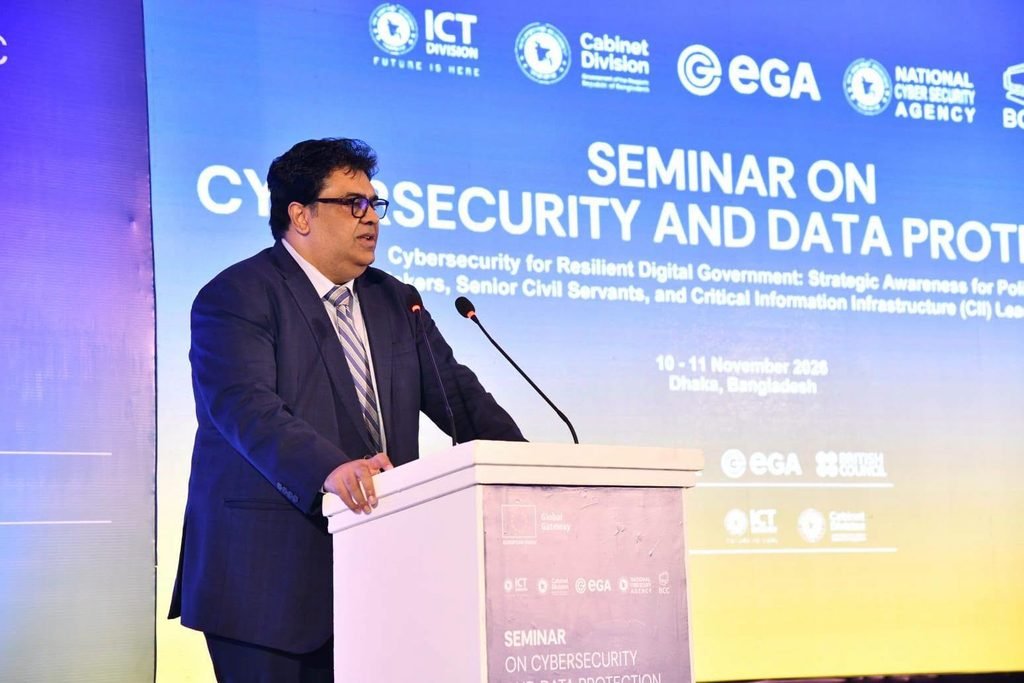


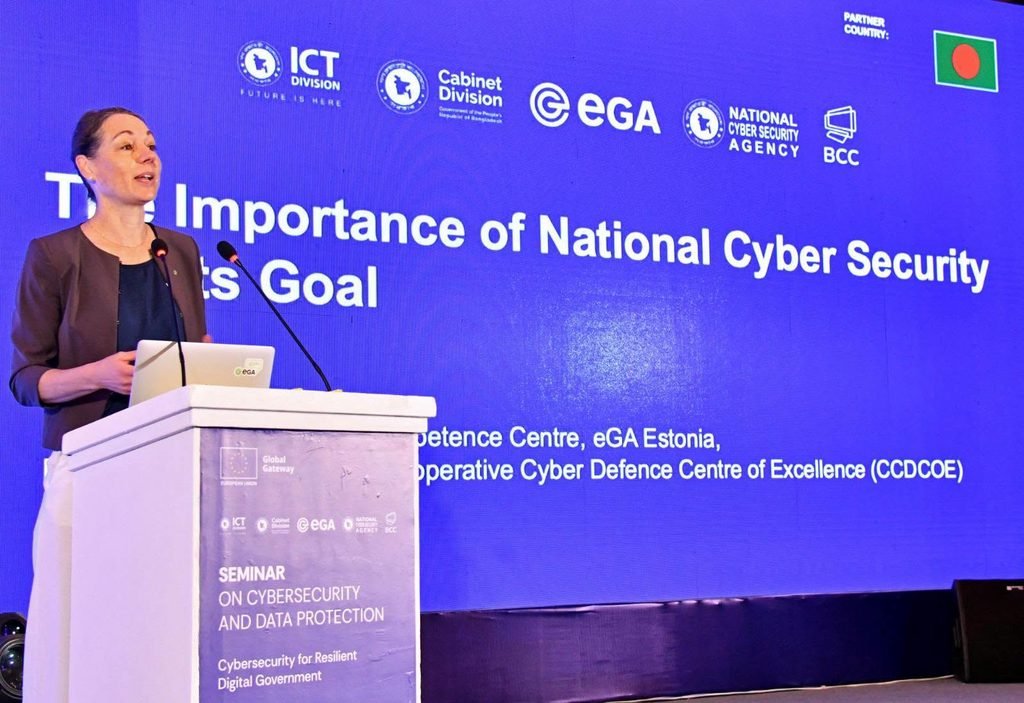
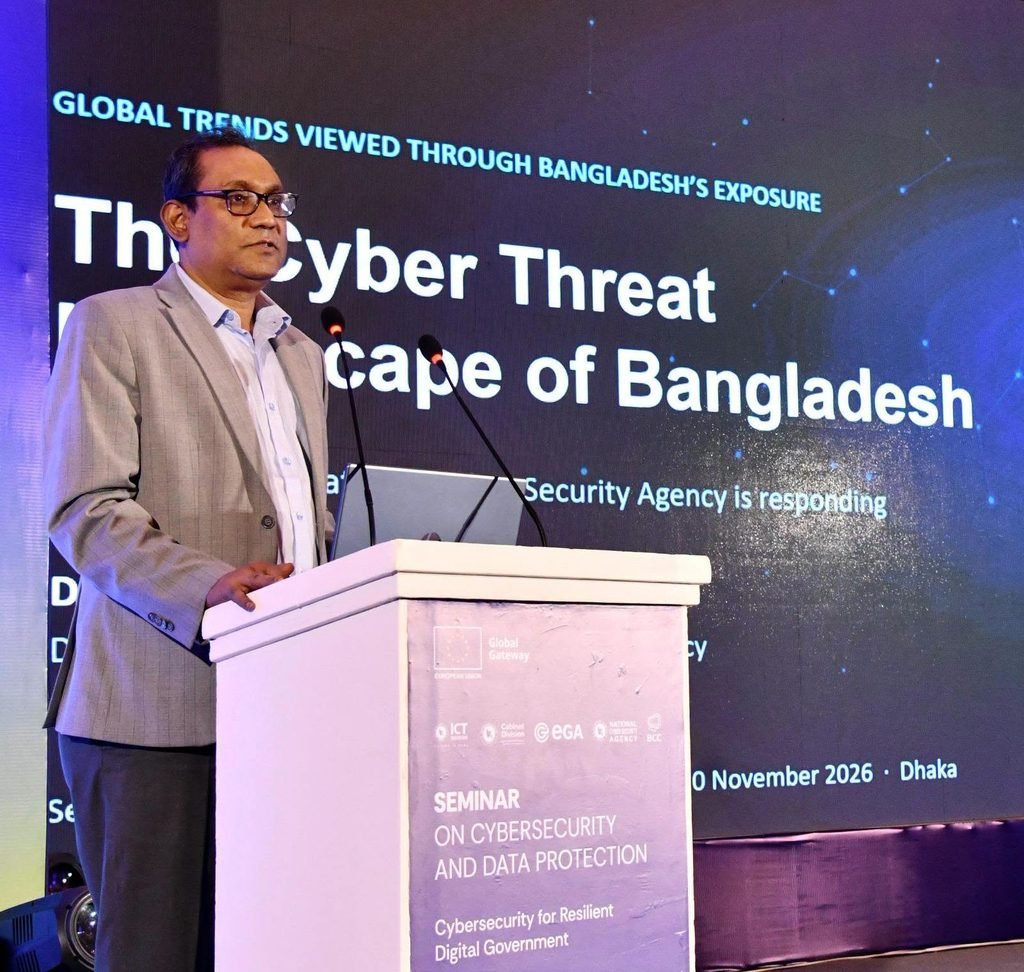
The Minister made these remarks while serving as the chief guest at the inauguration of a two-day seminar titled “Cybersecurity and Data Protection,” held on Tuesday (November 10, 2026) at the Hotel Pan Pacific Sonargaon in the capital. The theme of the seminar was “Cybersecurity for Resilient Digital Government: Strategic Awareness for Policy-Makers, Senior Civil Servants, and Critical Information Infrastructure (CII) Leaders.”
The Minister noted that under the leadership of Prime Minister Tareque Rahman, Bangladesh is advancing rapidly toward digital transformation. From digital banking and mobile financial services to the “One Citizen – One Identity – One Wallet” initiative, everything now relies on digital platforms. While this progress creates new opportunities, it has simultaneously increased the risk of cyber threats.
In this context, the Minister highlighted three key priorities. He stated that to ensure the protection of the nation’s Critical Information Infrastructure, cybersecurity must be given the highest priority from the very beginning of the design phase for infrastructure and technological systems. Security should not be treated as an afterthought, but rather as a fundamental component of infrastructure development.
He further added that safeguarding the personal and sensitive data of citizens is a primary prerequisite for building a digital state. To achieve this, an effective data protection framework must be developed and implemented, while also fostering public trust and confidence in digital services.
The Minister stressed that cybersecurity must be integrated as an essential element of institutional planning, policymaking, and budgeting. In this context, it is essential to develop a skilled and trained workforce, enhance institutional capacity, and ensure effective leadership. Through coordinated efforts, a safe, reliable, and sustainable digital environment must be established.
He stated, “We aim to move beyond a reactive mindset and foster a proactive, preventive cybersecurity culture. We will move forward by leveraging Estonia’s experience and fostering international cooperation.”
The Minister called upon the National Cybersecurity Agency to develop a clear roadmap for implementing the outcomes of the seminar and formally inaugurated the event.
Rehan Asif Asad, Advisor to the Prime Minister, emphasized that protecting digital sovereignty is as crucial today as safeguarding geographical borders. Ensuring cybersecurity requires robust infrastructural preparedness, the absolute protection of citizens’ data, and the proper nurturing of the younger generation’s talent.
He further noted that the rise of artificial intelligence (AI) is continuously increasing cyber risks. To counter cybercriminals, we must be equally prepared, utilizing advanced technology. A secure and stable digital ecosystem can be built by effectively harnessing the potential of the youth—through the provision of necessary technical tools and training—and by working in coordination with international partners.
The event was chaired by Md. Mamunur Rashid Bhuiyan, Secretary of the Information and Communication Technology Division. The welcome address was delivered by Nahid Sultana Mallick, Executive Director (Additional Secretary) of the Bangladesh Computer Council. Additionally, Ingrid Tunikurg, a representative from Estonia’s e-Governance Academy (eGA), delivered opening remarks. A representative from the European Union delegation was also present as a special guest.
The seminar will cover topics such as the national cybersecurity strategy, the landscape of cyber risks in Bangladesh, the functions of cybersecurity institutions and CERT/CSIRT, the protection of government networks, responses to cyberattacks, post-incident recovery, and the security of critical information infrastructure. In this two-day seminar, cybersecurity experts from Estonia will share their international experience and technical expertise. The event will also feature expert panel discussions on topics such as cybersecurity oversight, cyber diplomacy, countering misinformation and disinformation, and strategies to strengthen Bangladesh’s cyber resilience.
The seminar is expected to play a significant role in enhancing the strategic awareness of policymakers and senior government officials regarding cybersecurity, ensuring the security of government digital services, and building a coordinated capacity to address cyber risks at the national level.
The seminar has been organized under the project “E-ffective Governance: Accelerating e-government and digital public services in Bangladesh,” which is funded by the European Union. Participants include cybersecurity experts from both home and abroad, policymakers, senior government officials, and personnel associated with critical information infrastructure.