Desk Report:
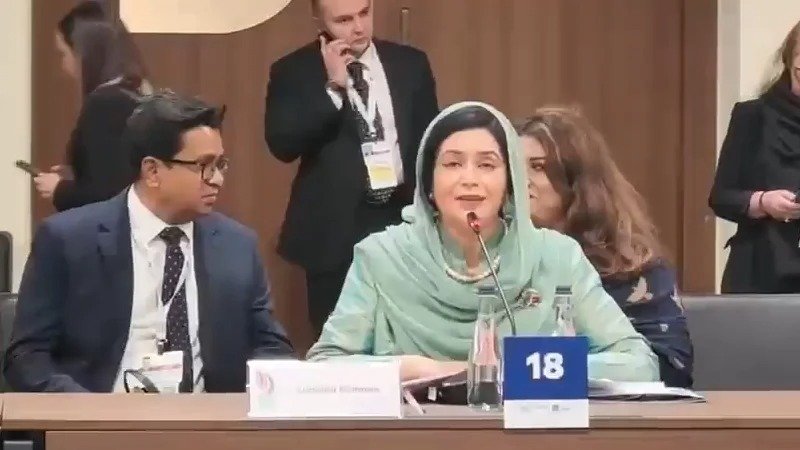
Dr. Zubaida Rahman, the First Spouse of Bangladesh, has emphasized the need for advanced technology, climate finance, and enhanced mutual cooperation to ensure sustainable solutions in waste management. She stated that it is not possible for any single nation to build a waste-free society on its own. In this regard, she highlighted the importance of international cooperation, private sector participation, and ensuring the safety and rights of informal workers engaged in the waste management sector.
She made these remarks on Wednesday (November 11, 2026) while speaking at the ‘Global Zero Waste Alliance’—a high-level meeting for the spouses of heads of state and government, held as part of the UN Climate Change Conference (COP-31) in Antalya, Turkey. The meeting was hosted by the First Lady of Turkey, Emine Erdoğan.
At the beginning of her address, Dr. Zubaida Rahman thanked Emine Erdoğan for organizing the meeting and commended her leadership and initiatives in implementing zero-waste programs.
Dr. Zubaida Rahman stated that Bangladesh welcomes the ‘Global Zero Waste Alliance’ and fully supports its initiatives. She noted that Bangladesh’s goals—aimed at ensuring a clean environment, a healthy population, and a sustainable future—align with the objectives of this alliance.
Highlighting Bangladesh’s waste management efforts, she mentioned that the government is implementing the ‘3R’ (Reduce, Reuse, Recycle) strategy. The country’s solid waste management regulations also prioritize waste segregation and safe disposal. Furthermore, under its Nationally Determined Contributions (NDC 3.0), Bangladesh has set a target to reduce emissions from the waste sector by 1.78 million tonnes of carbon dioxide equivalent by 2035. She stated that priority is being given to initiatives such as waste recycling, compost production, gas extraction from landfills, waste-to-energy generation, and advanced wastewater treatment. Furthermore, measures have been initiated for the segregation, processing, and environmentally sound disposal of waste generated by hospitals and healthcare institutions.
Referring to a waste-to-energy project currently being implemented in Dhaka, Zubaida Rahman explained that the project aims to process 3,000 tonnes of household waste daily to generate 42.5 megawatts of electricity. There are plans to expand such projects to other major cities across the country in the future. The objective is to transform urban waste into clean energy while contributing to environmental protection.
She highlighted jute as a promising alternative for Bangladesh in the effort to reduce plastic pollution. Zubaida Rahman noted that the government is working to promote the use of jute-based products as a substitute for plastic. She also invited conference attendees to visit the ‘Bangladesh Jute Pavilion’ located in the Green Zone of COP-31. Additionally, she outlined various initiatives aimed at keeping the country’s lakes, canals, ponds, and other water bodies clean.
Zubaida Rahman also addressed Bangladesh’s efforts to reduce methane emissions. She mentioned that as a signatory to the ‘Global Methane Pledge,’ Bangladesh is implementing various measures to curb such emissions. This includes promoting climate-smart agriculture and advanced rice cultivation techniques. Simultaneously, initiatives have been launched to produce organic fertilizer and clean energy from organic waste.
She further emphasized the importance of increasing the participation of young people in waste management. In her view, the foundation for environmental awareness must be built within families, schools, and society at large. Young people should be nurtured not only as future leaders but also as vital partners in addressing current environmental challenges. Towards the end of her remarks, Zubaida Rahman stated that instead of leaving waste unused, it should be harnessed as a source of resources and energy. She further emphasized that waste management should be viewed as a new opportunity for economic growth.
She called for transforming waste into resources, pollution into solutions, and global commitments into concrete action plans. Additionally, she affirmed that Bangladesh is prepared to strengthen international cooperation in waste management and to fulfill collective commitments.