Desk Report:
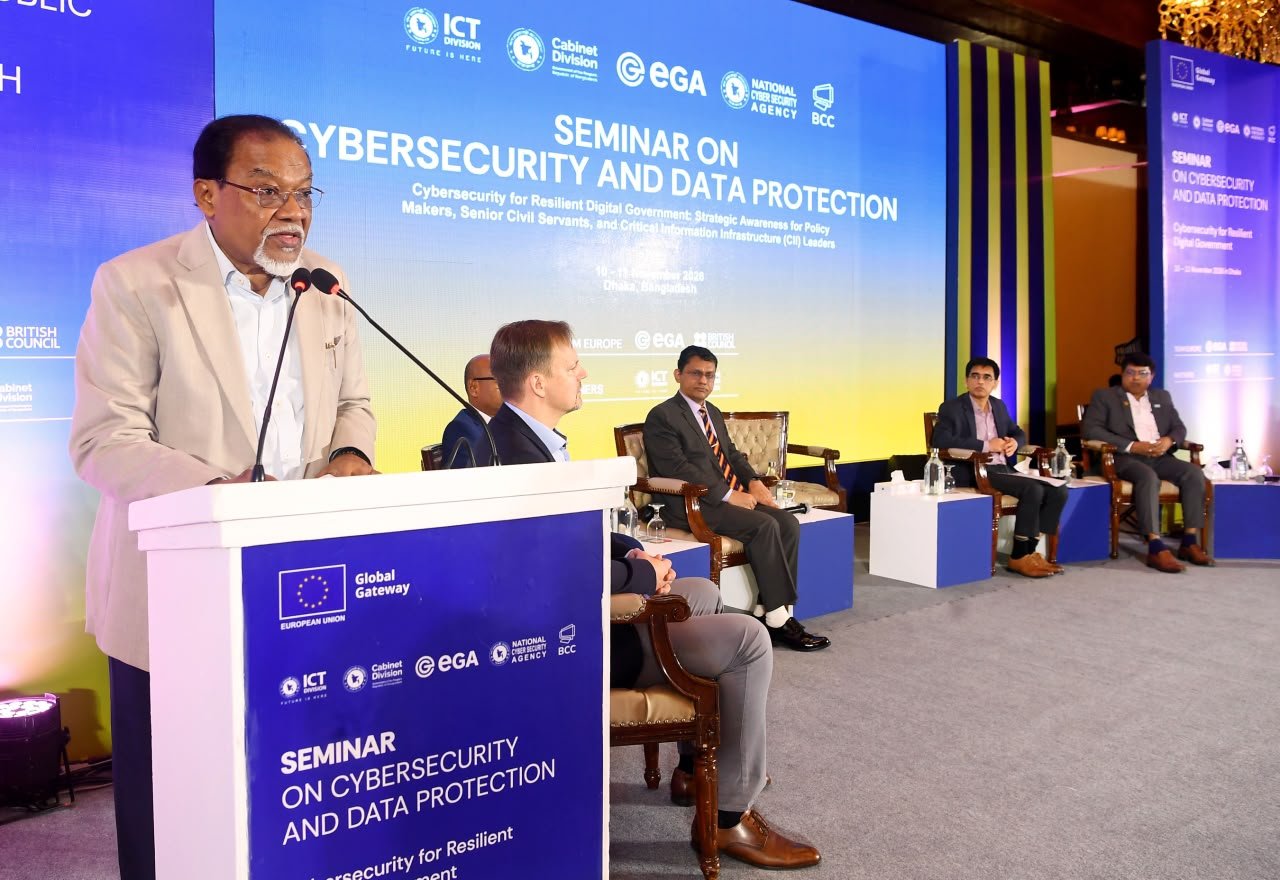
Md. Ismail Zabiullah, Advisor to the Prime Minister on Public Administration (holding the rank of Minister) and a member of the BNP’s National Standing Committee, stated that cybersecurity cannot be viewed merely as a technical matter; rather, it must be treated as a strategic priority for national security. He emphasized the urgent need for long-term planning and effective policies to protect the nation’s critical information infrastructure, citizens’ personal data, and state interests.

On Wednesday (November 11, 2026), a two-day seminar titled “Cybersecurity and Data Protection”—organized by the Information and Communication Technology (ICT) Division—was held at the Hotel Pan Pacific Sonargaon in the capital. Speaking as the session chair during a panel discussion titled “Cyber Resilience for Bangladesh: Priorities and Actions”—part of a seminar themed “Cybersecurity for Resilient Digital Government: Strategic Awareness for Policy-Makers, Senior Civil Servants, and Critical Information Infrastructure (CII) Leaders”—he made these remarks.
The Advisor noted that under the patriotic leadership and independent foreign policy of Prime Minister Tarique Rahman, Bangladesh is advancing toward new possibilities. Having received a mandate from the people with a more than two-thirds majority, the current government is committed to building an inclusive, transparent, accountable, and citizen-centric digital governance system.
Highlighting the nation’s growing reliance on digital systems, he pointed out that approximately 138 million people in Bangladesh currently use the internet, while 122 million use mobile phones. The country is moving forward in areas such as nuclear-powered electricity generation, the expansion of digital financial services, and the establishment of a cashless society. However, these advancements also bring an increase in cybersecurity risks.
He recalled that the past incident involving the theft of Bangladesh Bank’s reserves starkly exposed the vulnerabilities in the nation’s cybersecurity. Furthermore, a recent report by cyber expert Olivier Knox highlighted the risks of cyberattacks on critical infrastructure, including hospital blood banks, food storage facilities, and power plants. Such risks pose a serious concern for national security. Simultaneously, immediate measures must be taken—alongside long-term planning—to ensure the protection of citizens’ National Identity (NID) card data and to prevent phishing, hacking, and financial fraud.
Emphasizing the development of indigenous technology and data security, the Advisor for Public Administration noted that many digital products from the Western world create opportunities for collecting user data and conducting surveillance. Leaving critical state and personal information exposed on foreign platforms poses a risk to national security. Therefore, it is essential to develop homegrown, technology-based platforms for conducting important government meetings and operations. Specifically, there is a need to shift meetings of the Cabinet Committee on Government Purchase (CCGP) from foreign platforms like Zoom to a domestic online platform. Furthermore, the security and functionality of all software used within the country will be rigorously verified.
Calling for the enhancement of law enforcement agencies’ capabilities to combat cybercrime, the Advisor stated that the police and relevant agencies will be strengthened through the integration of modern digital forensic technologies, specialized investigative expertise, and international cooperation. However, surveillance technology must never be used as a tool for the oppression of the public; its deployment must remain under the strict control and accountability of the government.
Regarding the use of Artificial Intelligence (AI) and its impact on employment, the Advisor remarked that while AI presents new possibilities, its application across various sectors must be carefully evaluated—especially given that a large number of young people in Bangladesh are still struggling to secure a livelihood. To achieve the goal set out in the BNP’s election manifesto—to create employment for 500,000 young people over the next five years—a careful balance must be maintained between the adoption of technology and the generation of jobs.
The Advisor further called for a collaborative effort among the public and private sectors, academics, the telecommunications industry, law enforcement agencies, and international partners to build a secure, inclusive, and reliable digital ecosystem. This seminar was organized under the European Union-funded project, “E-ffective Governance: Accelerating e-government and digital public services in Bangladesh.”
Md. Mamunur Rashid Bhuiyan, Secretary of the Information and Communication Technology Division, served as the moderator for the seminar’s panel discussion. Participants in the discussion included Dr. Mohammad Kamruzzaman, NDC, Secretary of the Posts and Telecommunications Division; Barrister Mohammad Mosharraf Hossain, Chief of the Criminal Investigation Department (CID) of the Bangladesh Police and Additional Inspector General of Police; Professor Md. Abdur Razzaque, Chairman of the Department of Computer Science and Engineering at the University of Dhaka; and Raisul Kabir, Chief Executive Officer (CEO) of Brainstation-23.
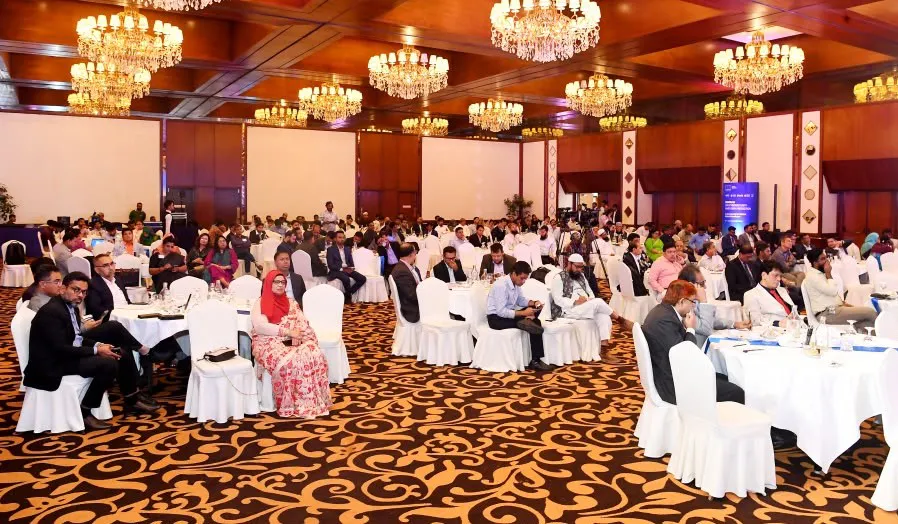
The event was attended by cybersecurity experts from home and abroad, policymakers, senior government officials, and officials associated with critical information infrastructure.