Online Desk:
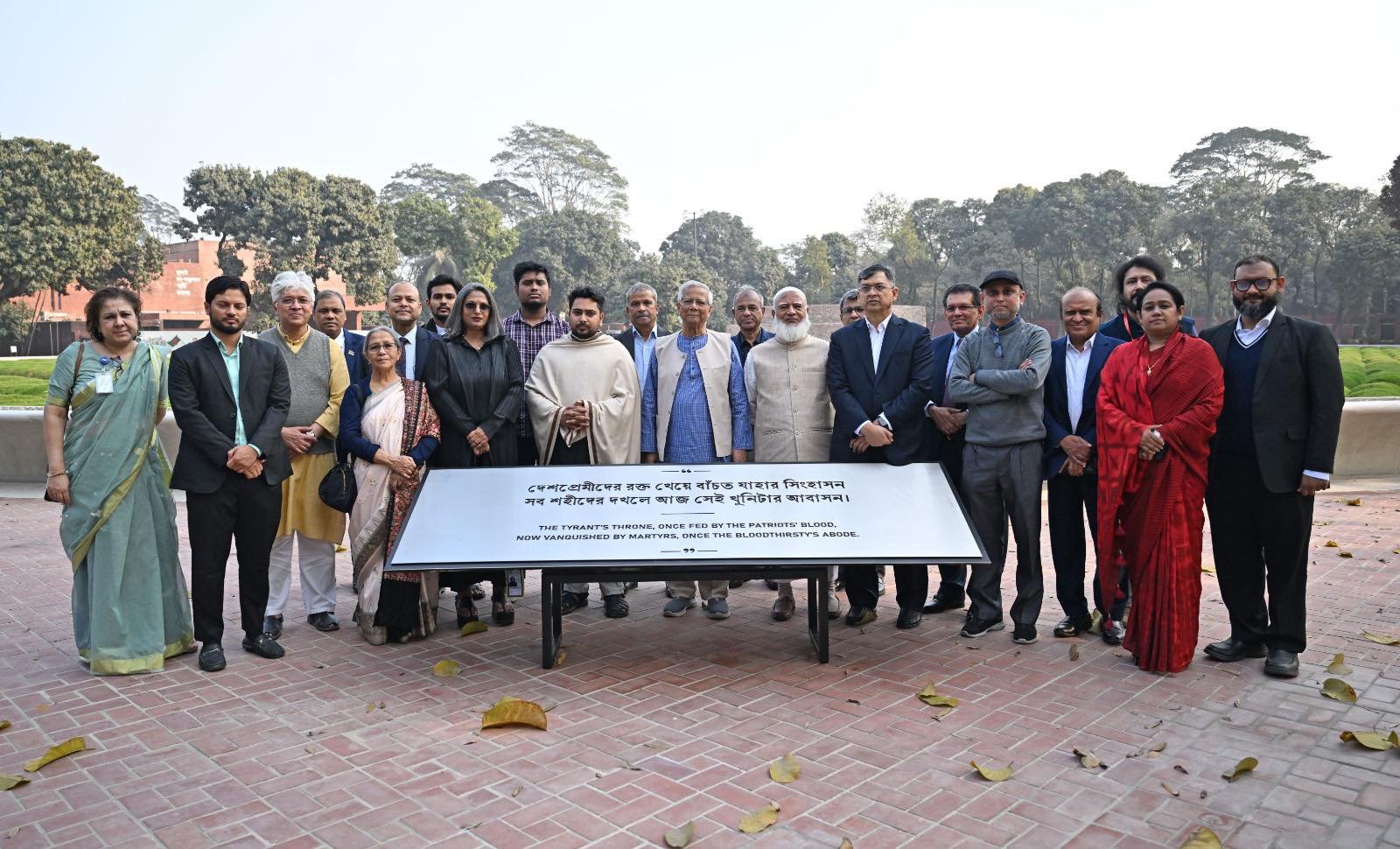
Chief Adviser Professor Muhammad Yunus inspected the progress of the final phase of the July Uprising Memorial Museum at Ganabhaban on Tuesday (January 20, 2026) afternoon.

The Chief Adviser reached the museum around 3 pm on Tuesday and toured the history behind the July Uprising and the images of Sheikh Hasina’s 16-year misrule in the museum.

At that time, the Chief Adviser was accompanied by BNP Standing Committee Member Salahuddin Ahmed, Bangladesh Jamaat-e-Islami Amir Dr. Shafiqur Rahman and Jatiya Nagorik Party Convener Nahid Islam and others.

Among the advisors present were Cultural Advisor Mustafa Sarwar Farooqui, Legal Advisor Dr. Asif Nazrul, Public Works Advisor Adilur Rahman Khan, Home Affairs Advisor Jahangir Alam, Health Advisor Nurjahan Begum, National Security Advisor Dr. Khalilur Rahman, Principal Advisor SDG Coordinator Lamia Morshed, Secretary of the Ministry of Housing and Public Works Md. Nazrul Islam.

Sanjida Tuli, coordinator of the organization of the families of the disappeared, Mayer Daak, and Barrister Mir Ahmed Bin Kasem Arman, a victim who returned from disappearance, student leaders Asif Mahmud Sajeeb Bhuiyan and Hasnat Abdullah, who led the front line in the July Uprising, were present at the time.

Led by Cultural Advisor Mustafa Sarwar Farooqui, museum curator Tanjim Wahab, Marina Tabassum Khan, researchers of the July Museum and other responsible persons showed the visitors around the entire museum.
The July Memorial Museum preserves photographs of the uprising, various memorabilia, martyrs’ clothing, letters, important documents, newspaper clippings of the time, audio-videos and other materials.
In addition, the scene of the escape of the then illegal Prime Minister Sheikh Hasina is also preserved there.

During his visit to the museum, Professor Muhammad Yunus watched a 15-minute documentary, which depicts the disappearances, state-run repression, attacks on opponents and the massacres committed during the July 24 uprising during the fascist regime. The documentary was produced by the Ministry of Cultural Affairs.
During the visit, the Chief Advisor said, ‘This museum has been possible while the blood of the July martyrs is still fresh, this is an unprecedented example in the whole world.’
He said, ‘We do not want there to be a need to build such museums anywhere in the future. If our nation ever gets lost for any reason, it will find its way in this museum.’
The chief advisor said, ‘Every citizen of the country should come here and spend a day, students should come to this museum in groups. By spending a day in this museum, people will know what atrocities this nation had to go through. If anyone wants to stay in the mirror rooms that have been built here, they can stay for some time, a few hours or a day.’
He said, visitors sitting in the mirror rooms can realize what atrocities the prisoners were subjected to!
‘We must keep in mind how we can all be united to prevent such atrocities from happening. We will all be united in this belief that this nation will not go back to such atrocious days,’ he said.
He also said, a brutal incident was happening. The youth, the students stood against it, resisted it. They had no weapons, nothing. That even ordinary people can stand in the face of weapons with such fearlessness and courage – this is our lesson.
The Chief Advisor thanked everyone involved in the museum’s work, including Cultural Advisor Mostafa Sarwar Farooqui.
Cultural Advisor Mostafa Sarwar Farooqui said, ‘It is a record that the work of this museum has reached this stage in a short time. This has been possible due to the tireless work of many children. Many have worked here without pay for eight months. I express my gratitude to all of them.’
‘The work of several more of our sections will be completed in the next few days. And it will be opened to everyone before the elections. The July Museum will stand bearing the marks of history. It will be the anchor of Bangladesh’s past-present-future politics. This museum will also play an important role in future political discourse-education-research, and in art-literary practice,’ he said.
Source: Press Wing of the Chief Advisor.