Diplomatic Desk:
Experts have emphasized the importance of formulating a balanced, pragmatic, and visionary foreign policy aimed at safeguarding Bangladesh’s national interests, maintaining strategic autonomy, and strengthening economic stability amidst the shifting global landscape.
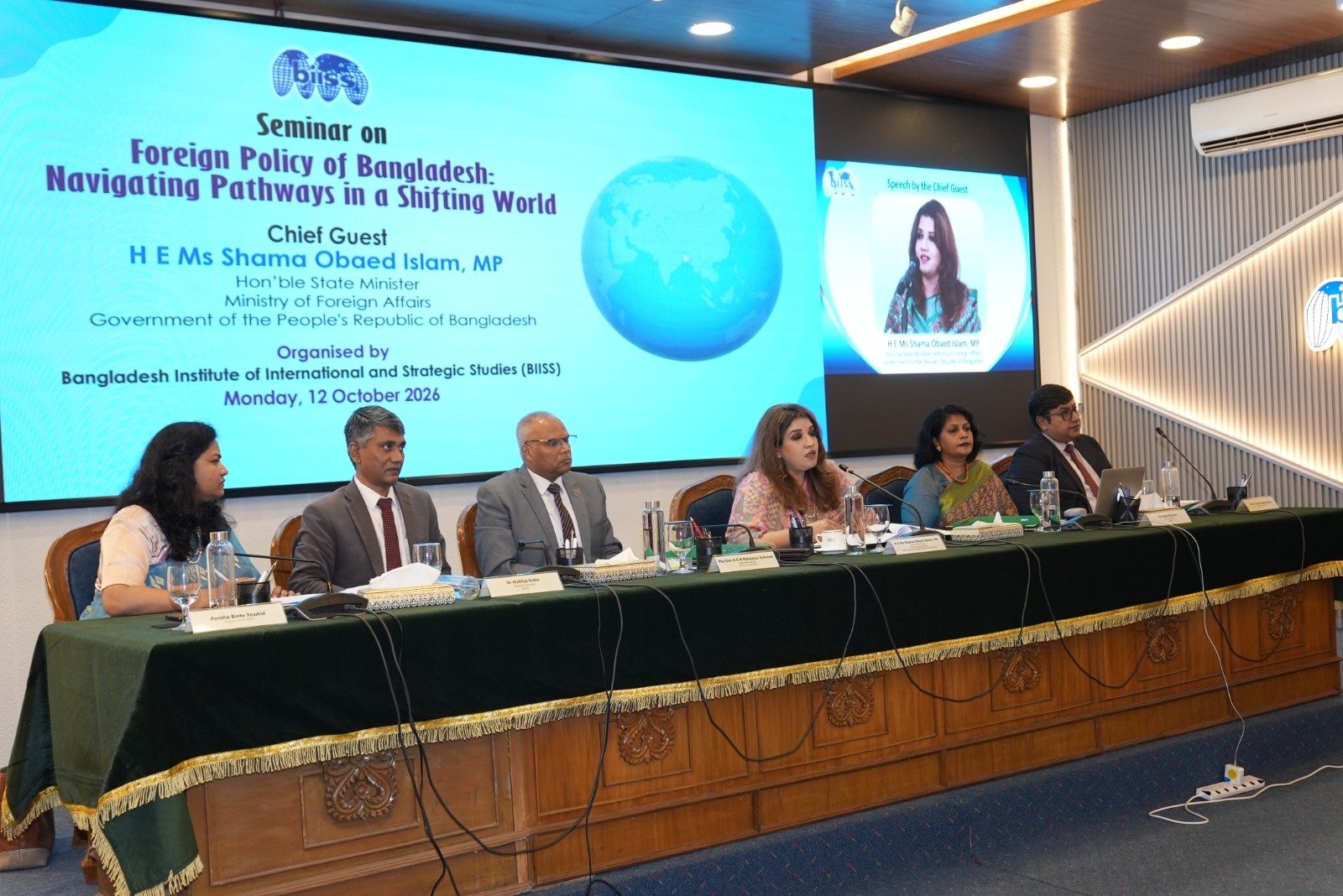
These issues were discussed on Monday (October 12, 2026) at a seminar titled “Foreign Policy of Bangladesh: Navigating Pathways in a Shifting World,” held at the auditorium of the Bangladesh Institute of International and Strategic Studies (BIISS).
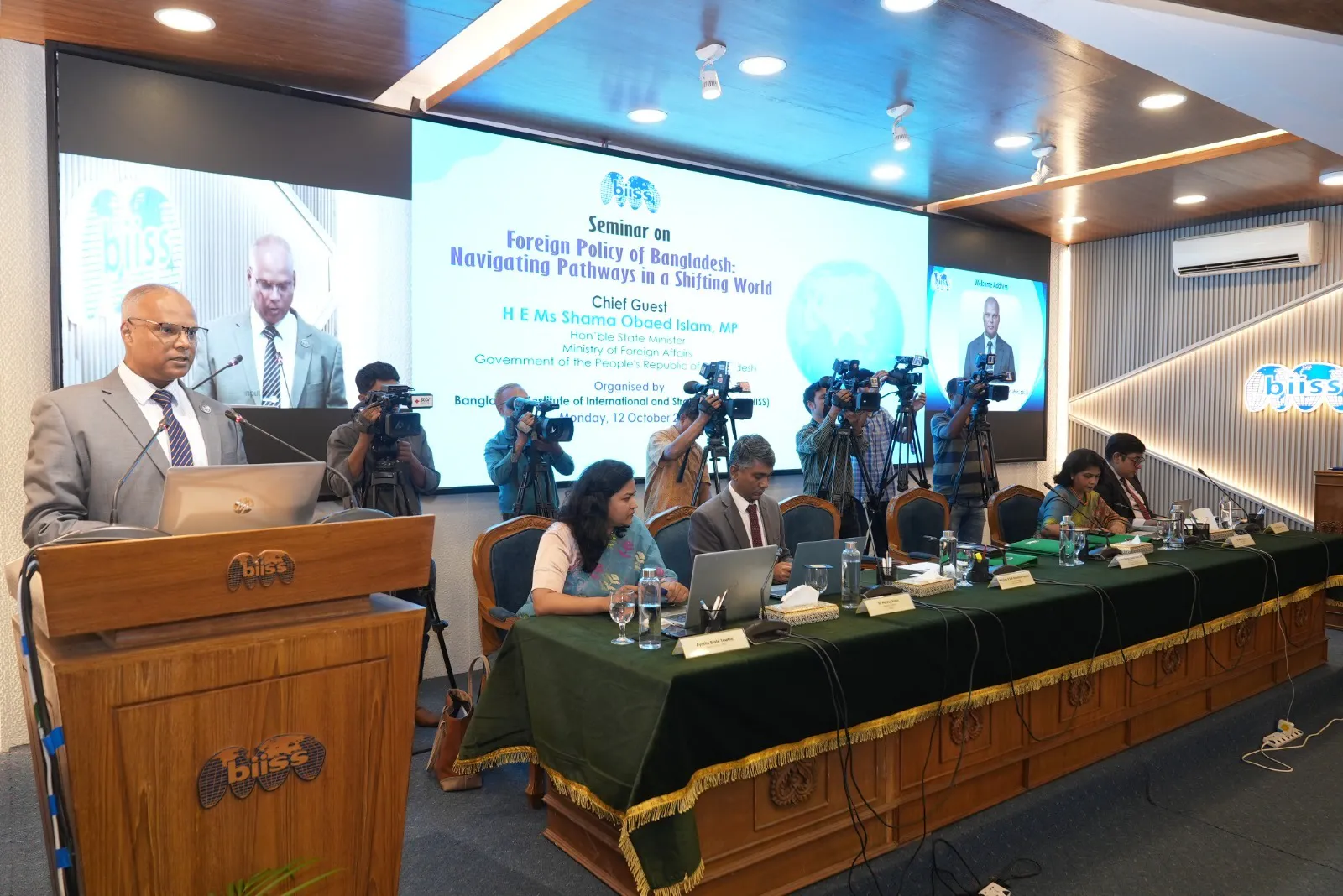
Shama Obaid Islam, MP, State Minister for Foreign Affairs of the Government of the People’s Republic of Bangladesh, attended the seminar as the chief guest. Major General ASM Ridwanur Rahman (AWC, AFWC, PSC, G), Director General of BIISS, presided over the event and delivered the welcome address.
During the seminar, BIISS Research Directors Dr. Mahfuz Kabir and Dr. Sufia Khanam, along with Research Fellows ASM Tarek Hasan Shimul and Ayesha Binte Touhid, presented four research papers in succession.
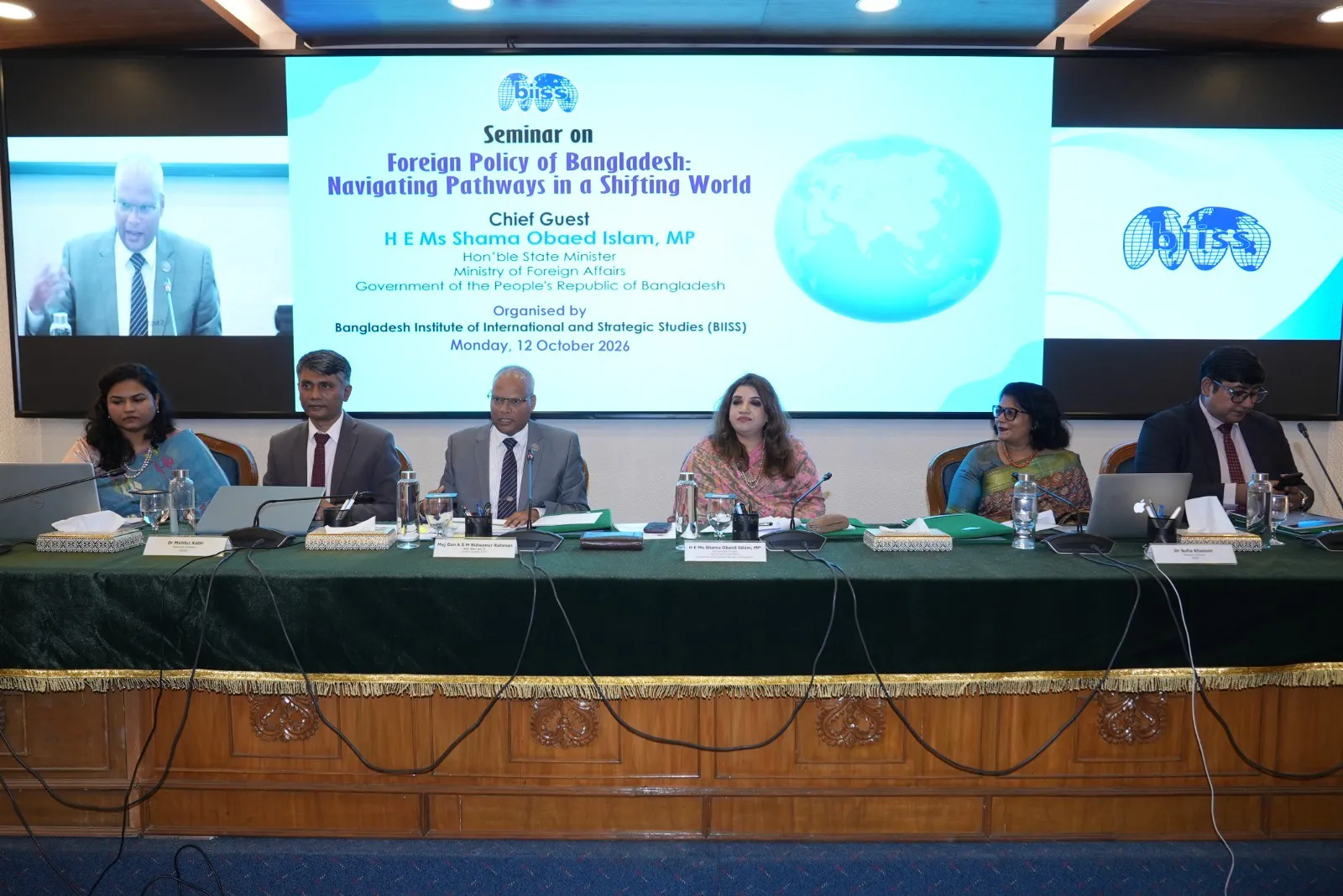
In their presentations, the speakers noted that while formulating Bangladesh’s foreign policy, it is crucial to consider emerging geopolitical realities alongside the preservation of national sovereignty and strategic autonomy. They underscored the need to advance a foreign policy that prioritizes national interests while remaining aligned with the changing international landscape.
The discussion placed special emphasis on integrating contemporary defense and security priorities with the country’s foreign policy to address emerging challenges and maintain regional stability. Simultaneously, the seminar reviewed various aspects of strengthening Bangladesh’s position within the multilateral system and expanding international cooperation amidst growing uncertainties.
Discussions also covered the protection of Bangladesh’s economic interests, the strengthening of economic stability, and the utilization of new opportunities for international cooperation. The need to adapt to shifts in the global economy and international relations—particularly in the context of the rapid advancement of artificial intelligence (AI)—was highlighted.
Furthermore, the presenters emphasized the importance of upholding ideological commitments and principled values to formulate a coherent and credible foreign policy. Their discussions underscored the necessity of a foreign policy that would not only ensure Bangladesh’s national interests and security but also strengthen the country’s role as a responsible state in the international arena.
Senior officials from various ministries, representatives of foreign diplomatic missions, media personnel, business leaders, university faculty and students, researchers, and representatives from various think tanks participated in the seminar. During the open discussion session, participants shared their views, comments, suggestions, and observations, further enriching the seminar’s deliberations.