Mohammad Shajibul-Al-Rajib:
Representatives from Bangladesh and Brazil have expressed a firm commitment to further expand bilateral cooperation in trade, investment, agriculture, education, technology, and sports. Emphasis was also placed on transforming this mutual cooperation into a broader and more long-lasting partnership.
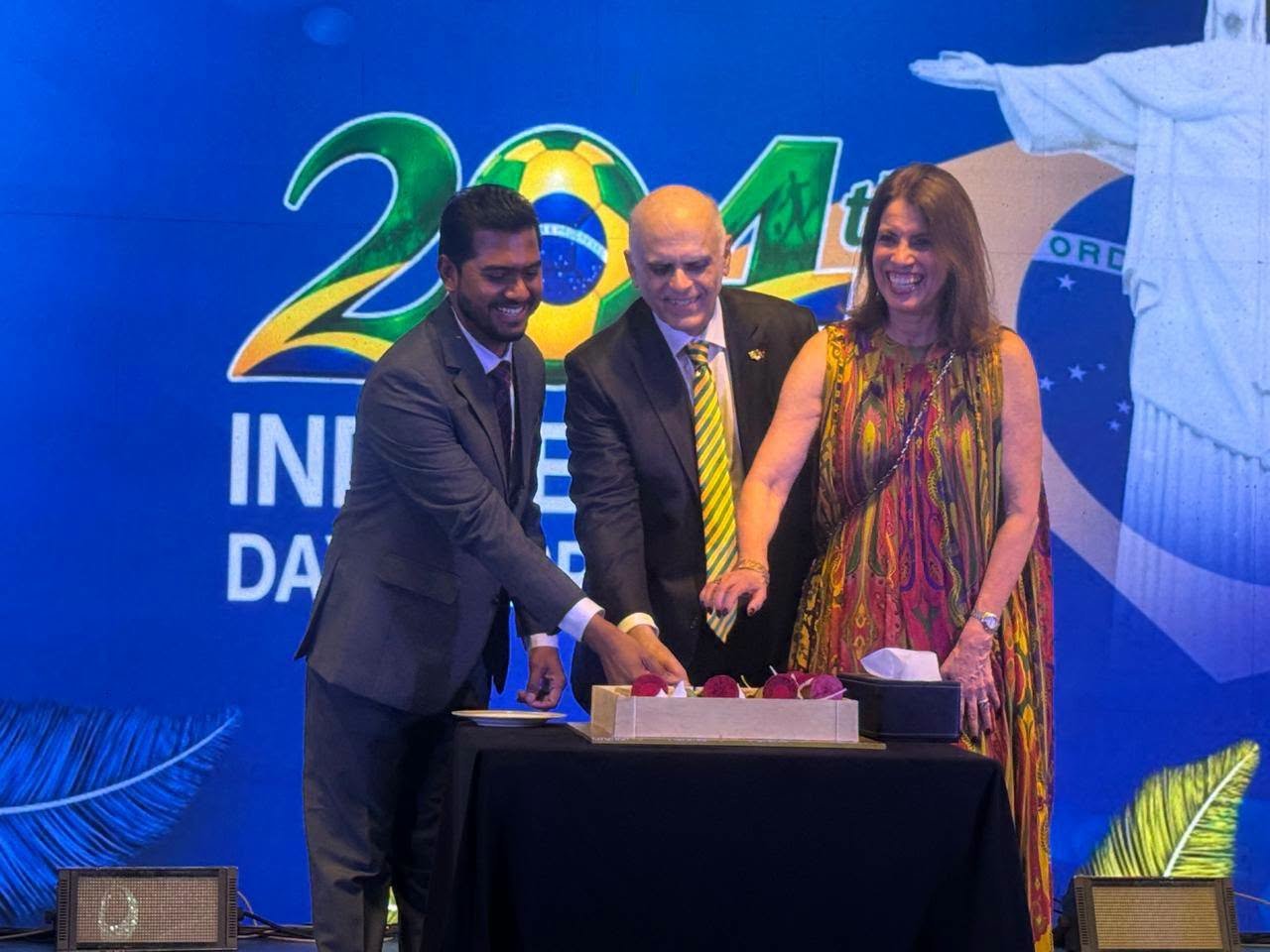
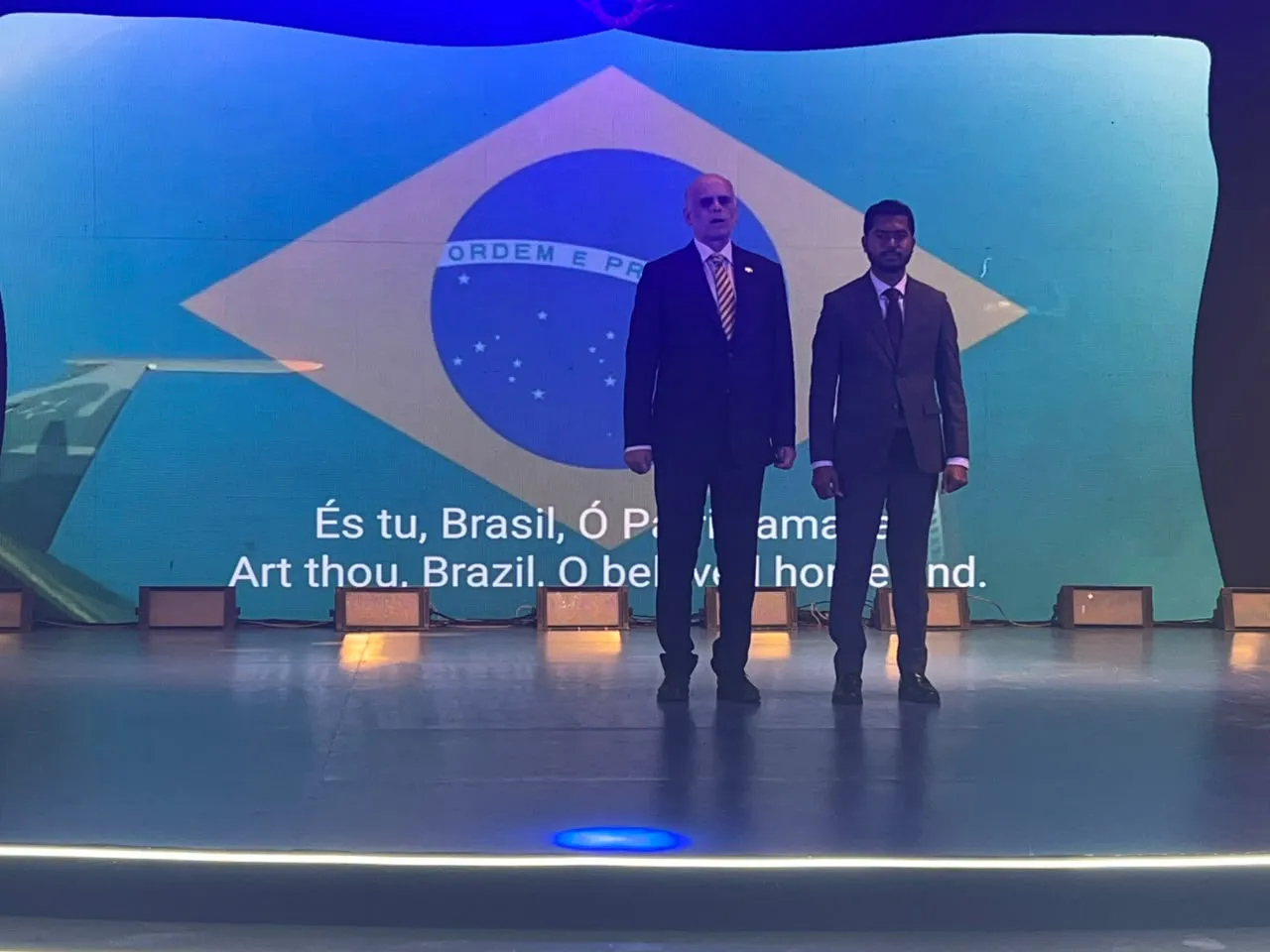
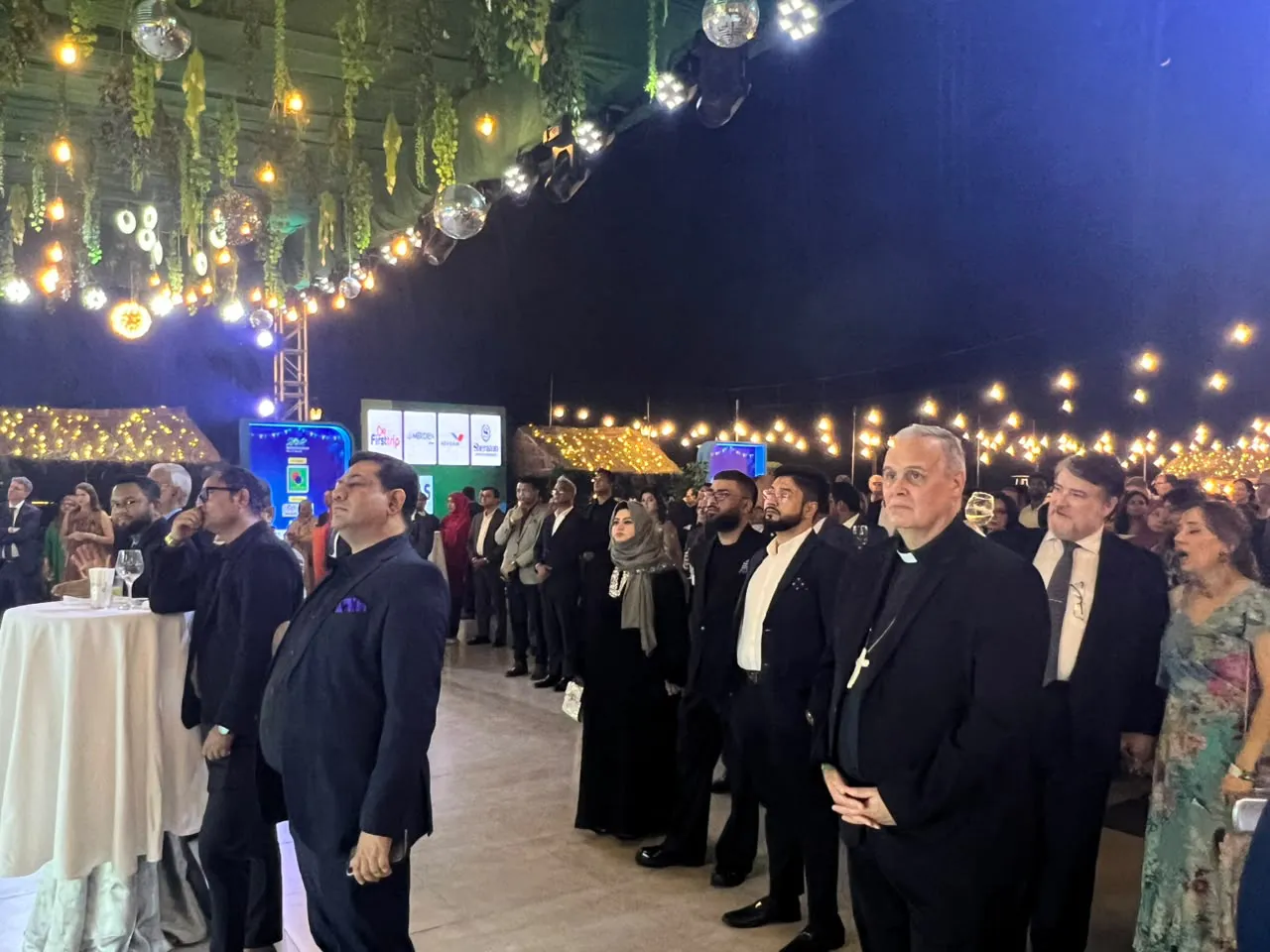
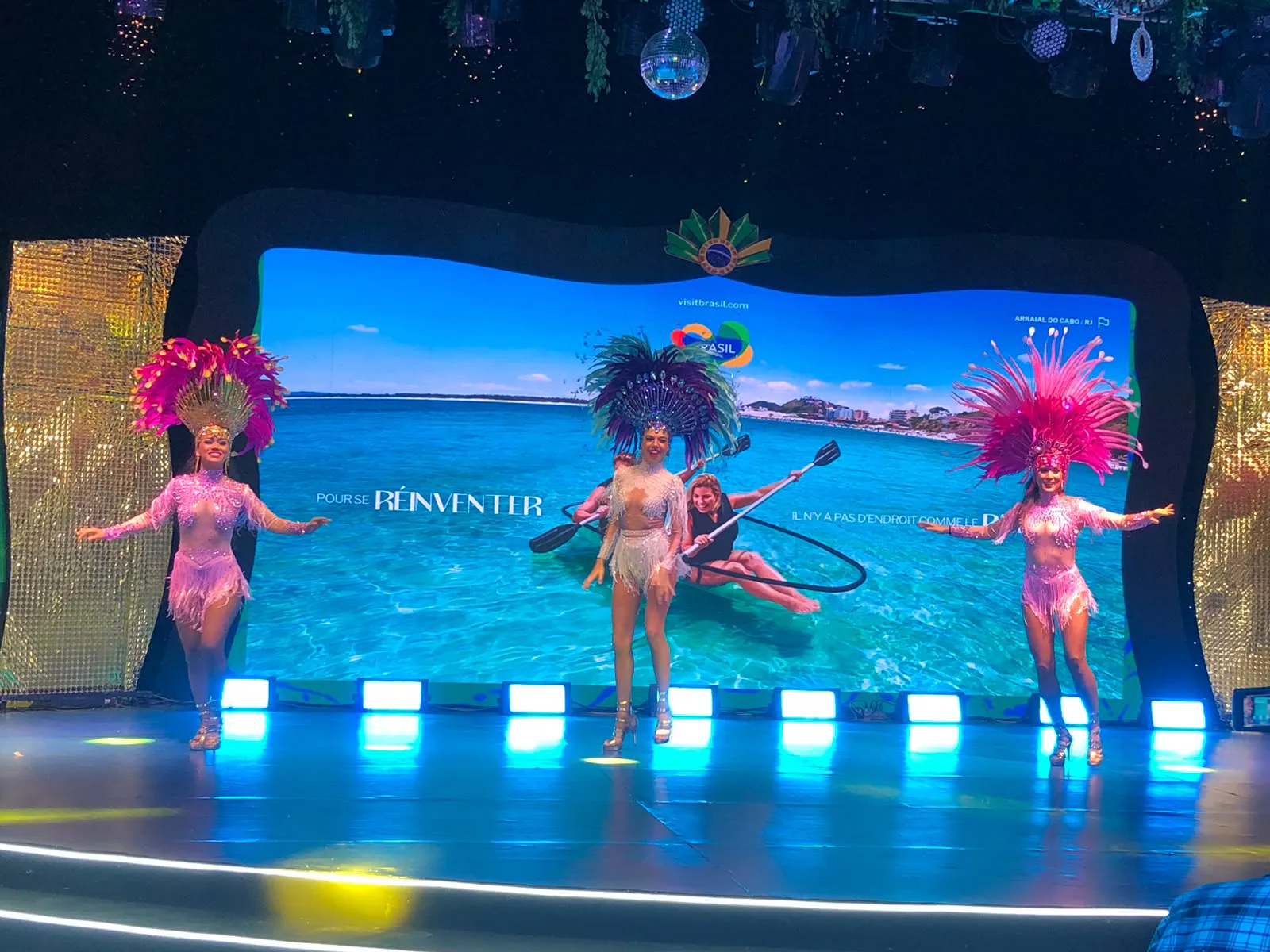
These sentiments were shared during a grand reception hosted by the Embassy of Brazil in Bangladesh at Hotel Le Méridien in the capital on Sunday (November 15, 2026), in celebration of Brazil’s 204th Independence Day. The event was presided over by the Brazilian Ambassador to Bangladesh, Paulo Fernando Dias Feres.
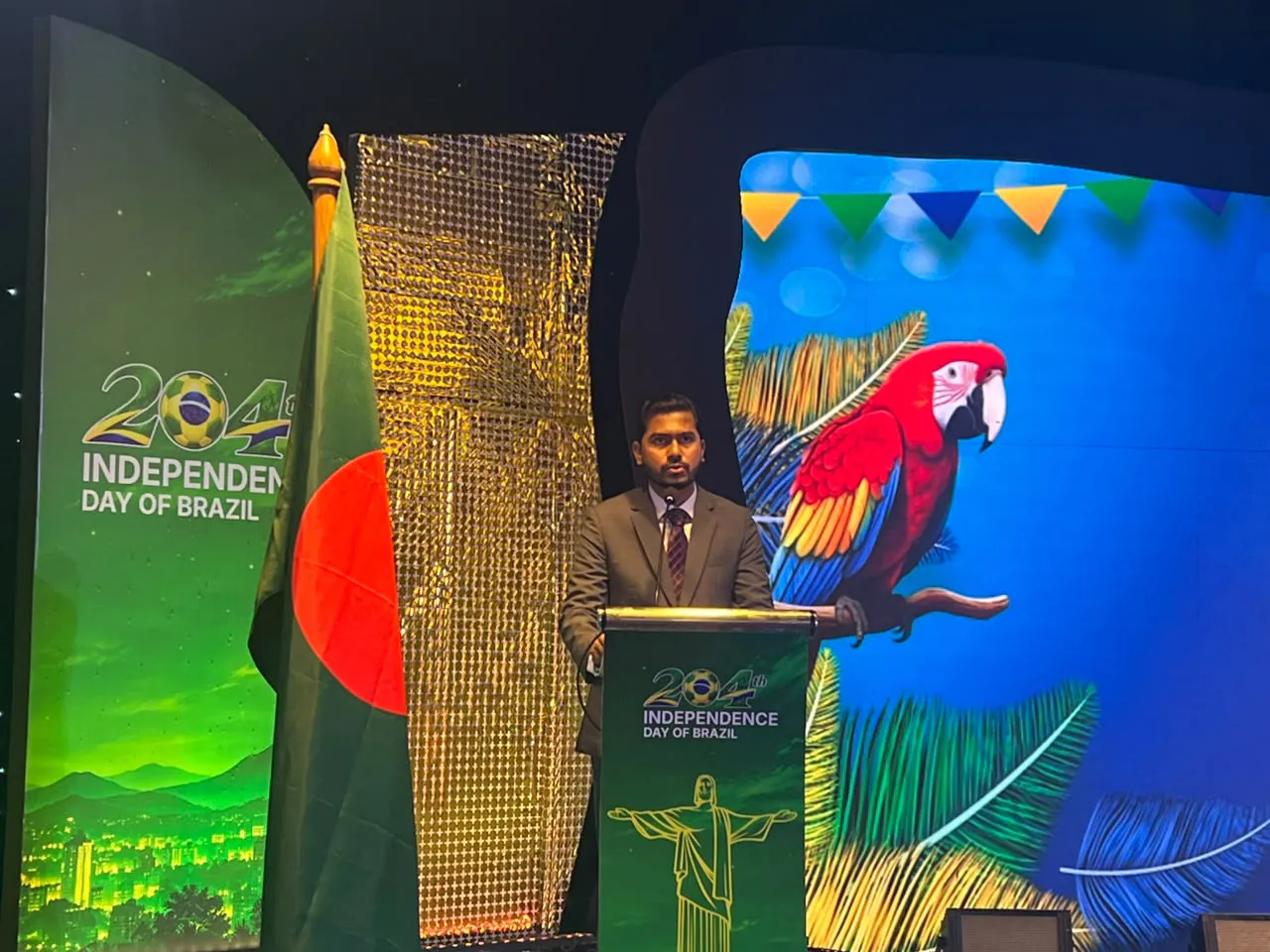
Nurul Haque Nur, State Minister for Expatriates’ Welfare and Overseas Employment, attended the event as the chief guest. The gathering was also attended by ambassadors, high commissioners, and diplomats from various nations, along with high-ranking government officials, business leaders, media personnel, and representatives from civil society.
In his address as the chief guest, State Minister Nurul Haque Nur extended his greetings and congratulations to the government and people of Brazil on the occasion of their Independence Day. He noted that on May 15, 1972—shortly after Bangladesh’s independence—Brazil became one of the first South American nations to recognize Bangladesh. This recognition holds special significance in the history of the friendly relations between the two countries.
He remarked that over the past two centuries, Brazil has established itself as a major global economy, a vibrant democracy, and an influential voice for the Global South. The nation’s contributions to multilateral cooperation, international relations, and sustainable development are highly commendable.
Highlighting Bangladesh’s economic potential, the State Minister stated that under the leadership of Prime Minister Tareq Rahman, Bangladesh is moving toward its goal of becoming a one-trillion-dollar economy by 2034. Guided by a ‘Bangladesh First’ policy, the government aims to elevate its existing relationship with Brazil to new heights.
He further mentioned that on November 11, on the sidelines of the COP30 conference, Prime Minister Tareq Rahman met with Brazilian President Luiz Inácio Lula da Silva and extended an invitation for him to visit Bangladesh. The acceptance of the invitation by the President of Brazil has opened new possibilities for the relationship between the two nations. This visit will mark the first-ever trip to Bangladesh by a Brazilian President.
Regarding bilateral trade, Nurul Haque Nur noted that the trade volume between Bangladesh and Brazil exceeded 2.8 billion US dollars in the 2024-25 fiscal year. Brazil is Bangladesh’s largest trading partner in Latin America. Bangladesh primarily imports food grains, cotton, sugar, and soybean-based products from Brazil, while exporting ready-made garments, home textiles, leather goods, and pharmaceuticals. However, Bangladesh faces a trade deficit of approximately 2.5 billion dollars with Brazil.
To address this deficit, he sought Brazil’s cooperation in expanding market access for Bangladeshi products, exploring the possibility of a Preferential Trade Agreement (PTA) with MERCOSUR, and diversifying the range of export goods. Furthermore, he encouraged Brazilian investment in Bangladesh’s economic zones, specifically within the sectors of pharmaceuticals, agro-processing, renewable energy, and information technology.
The State Minister stated that a robust foundation for institutional cooperation has already been established through 10 bilateral agreements and Memorandums of Understanding (MoUs). Work is currently underway to finalize four additional MoUs covering agriculture, health, sports, and defense. Both nations stand to benefit from an exchange of expertise—leveraging Brazil’s experience in agricultural technology and biofuels, alongside Bangladesh’s experience in climate adaptation, disaster management, and social development.
He also highlighted the deep passion and affection the people of both countries share for sports. He noted that Brazil’s five FIFA World Cup titles and its legendary style of play have inspired generations in Bangladesh. He also mentioned the popularity of Neymar among the younger generation. Citing the ‘Primary School Gold Cup’—an initiative supported by Prime Minister Tareque Rahman that involves boys and girls from over 65,000 government primary schools—he expressed optimism for further strengthening cooperation between the two nations in the field of sports.
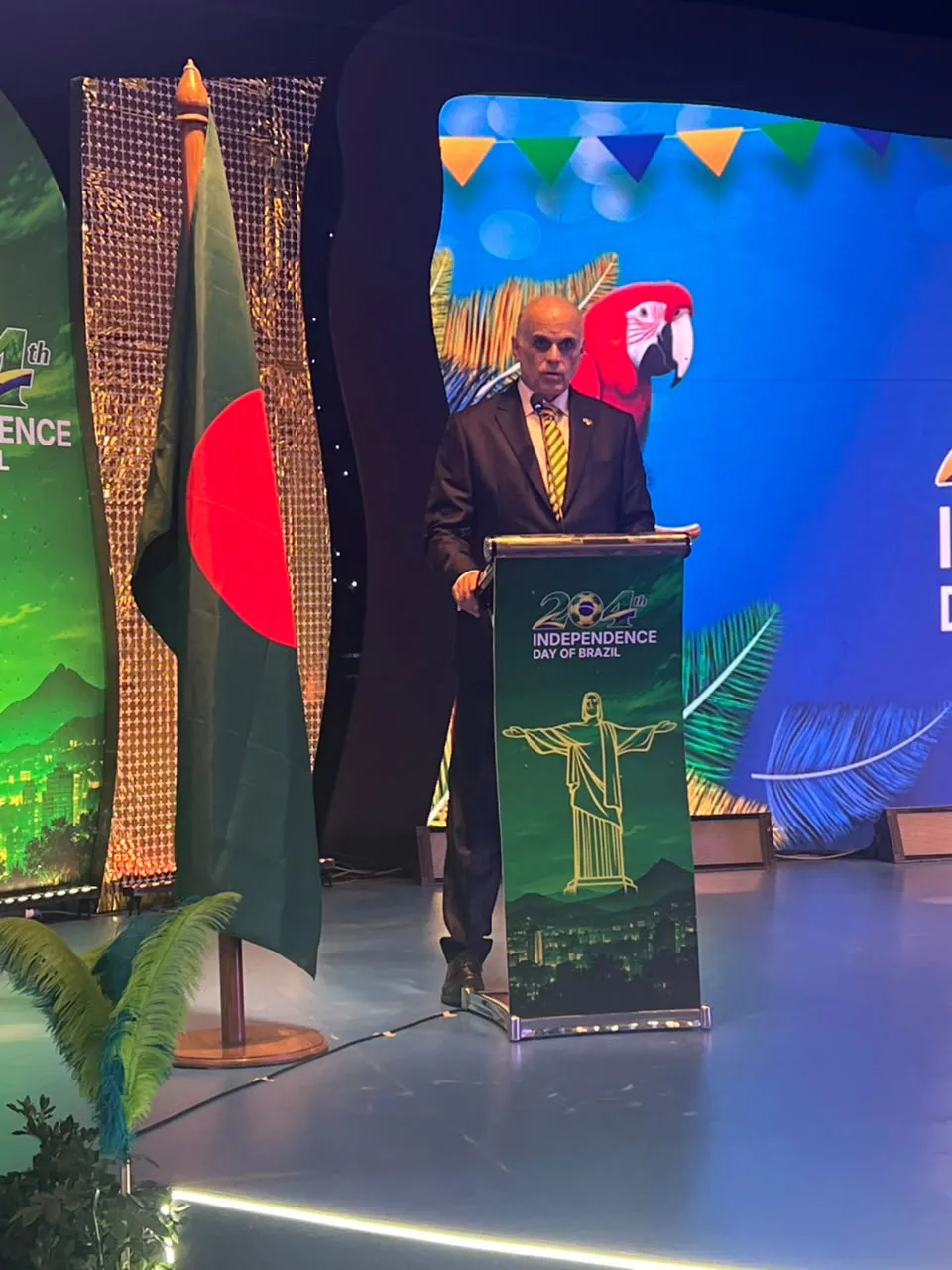
Meanwhile, Brazilian Ambassador Paulo Fernando Dias Feres, in his remarks, highlighted the current political and economic situation in Brazil, as well as the future potential for bilateral relations with Bangladesh.
He explained that although Brazil’s National Day falls on September 7, the reception was held at a later date as it could not be organized at the time. He also shed light on the strength of Brazil’s democratic institutions, its constitutional continuity, and its potential for economic development.
The Ambassador noted that Brazil possesses one of the world’s largest and most diversified industrial bases. The country holds advanced technological capabilities in sectors such as aerospace, agriculture, biotechnology, and renewable energy. Furthermore, Brazil has made significant strides in scientific research and innovation. Recent oil discoveries in the country’s Equatorial Margin have opened up new possibilities for future investment, energy production, and economic growth.
Regarding relations with Bangladesh, the Ambassador stated that political dialogue between the two nations is progressing, anchored by a shared commitment to mutual respect, friendship, and multilateral cooperation. While trade serves as a cornerstone of the bilateral relationship, there remains significant potential to expand cooperation well beyond conventional trade.
In this context, the Ambassador announced that the second ‘Made in Bangladesh Expo’ will be held in São Paulo, Brazil, from March 22 to 25, 2027. Organized under the auspices of the Brazil-Bangladesh Chamber of Commerce and Industry, the expo will provide Bangladeshi enterprises with a platform to showcase their products and services, as well as an opportunity to engage directly with Brazilian businesspeople and investors.
He encouraged Bangladeshi entrepreneurs, exporters, investors, and business associations to participate in the event. The Ambassador noted that Brazil represents a vast and diverse market, and this exhibition could play a pivotal role in exploring new prospects for Bangladeshi products—not only in Brazil but across the entire Latin American market.
Highlighting the potential for cooperation in the agricultural sector, the Ambassador mentioned that a recent visit to Bangladesh by a delegation from Brazil’s Ministry of Agriculture and Livestock has injected fresh momentum into bilateral agricultural collaboration. New opportunities have emerged in areas such as agriculture, livestock production, and the exchange of technology and technical expertise. As a follow-up, a delegation from the Brazilian Cotton Growers Association is scheduled to visit Bangladesh on November 29.
He emphasized the immense potential for collaboration between Bangladesh’s world-class textile and ready-made garment industry and Brazil’s substantial capacity for cotton production and export. This visit could pave the way for new opportunities in cotton production, supply chains, and commercial partnerships.
Regarding educational and cultural exchange, the Ambassador noted that 41 Bangladeshi students are currently studying in Brazil under undergraduate exchange programs and Portuguese language preparatory courses. An additional 17 students are expected to join them in 2027. These students will serve as a bridge, fostering long-lasting friendship and mutual understanding between the peoples of the two nations.
The Ambassador remarked that both Bangladesh and Brazil are developing nations, each possessing vast human resources and significant economic potential. The economies of the two countries are complementary, and there are numerous avenues for cooperation beyond traditional trade. These possibilities can be translated into tangible achievements through political dialogue, trade expansion, agricultural collaboration, and educational exchanges.
Towards the end of his remarks, the Ambassador expressed his deep, public gratitude to his personal secretary, Adia Sharmi, for her sense of responsibility, dedication, and support.
The event served to reaffirm the commitment to further strengthening the long-standing, friendly relations between Bangladesh and Brazil, exploring new frontiers for trade and investment, and fostering greater interaction and cooperation between the peoples of the two nations.