Desk Report:
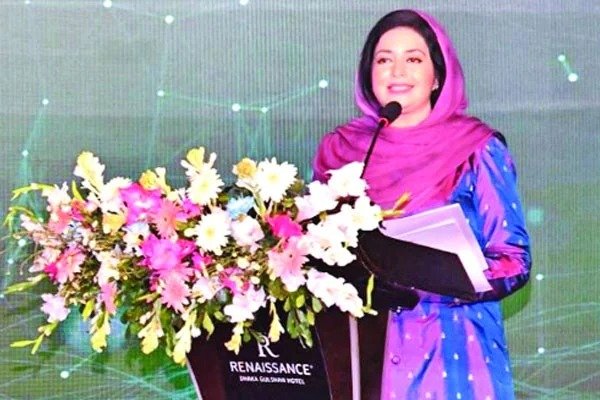
Finance and Planning Minister Amir Khasru Mahmud Chowdhury has emphasized the importance of increasing revenue, reforming the financial sector, and directing borrowed funds toward productive, high-yield projects to ensure sustainable debt management in Bangladesh’s economy. He stated that the absolute amount of debt a country incurs is not the most critical factor; rather, what truly matters is how effectively those borrowed funds are utilized.
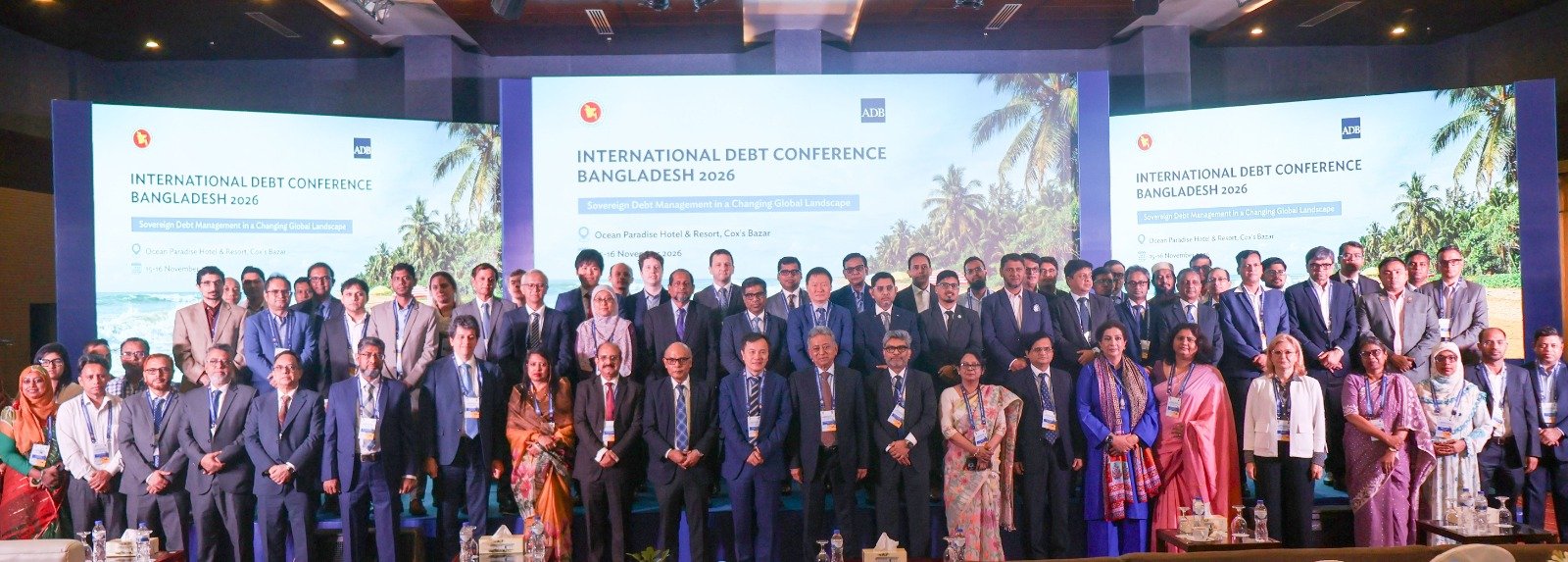
He made these remarks on Sunday (November 15) while speaking at the ‘International Debt Conference Bangladesh 2026,’ held in Cox’s Bazar. Organized by the Finance Division with support from the Asian Development Bank (ADB), the two-day conference covers topics such as public debt management, access to global capital markets, the development of local bond markets, and Bangladesh’s long-term economic stability.
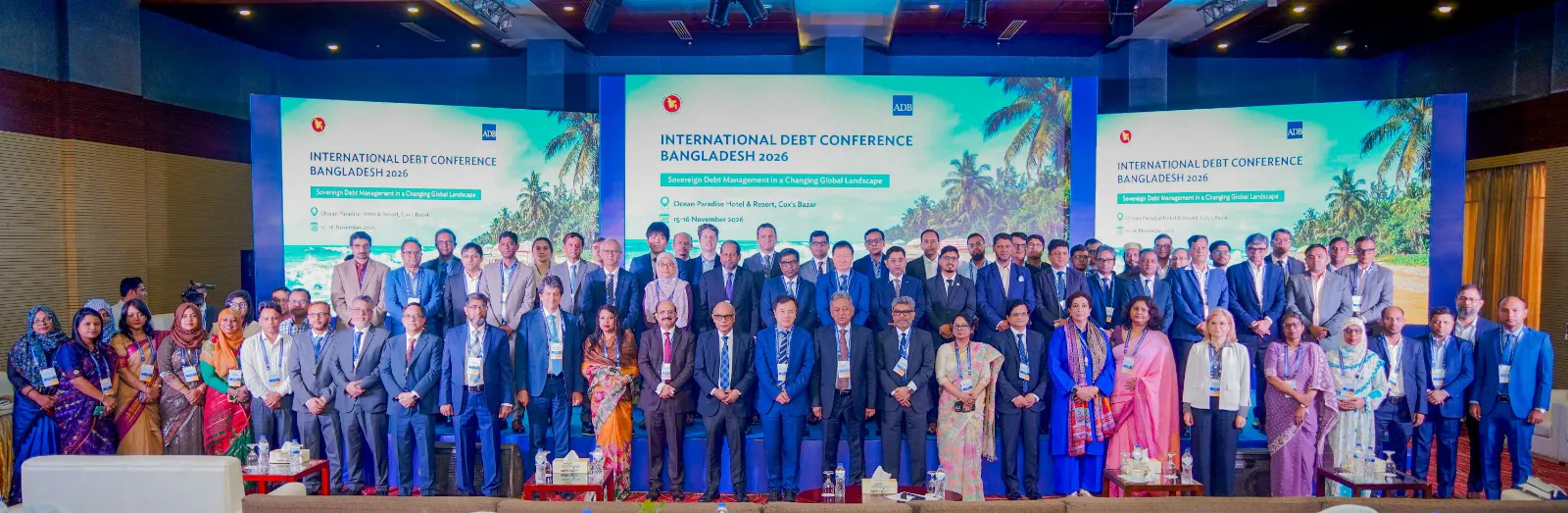
The Finance Minister noted that when the current government assumed office in August 2024, the economy faced several challenges, including a heavy debt burden, high interest costs, weak foreign exchange reserves, and the government’s reliance on the Bangladesh Bank to finance its budget deficit. Rapid debt accumulation and the practice of covering budget deficits through borrowing from the central bank had also fueled inflationary pressure. Furthermore, the previous administration left behind significant outstanding liabilities, including subsidies for the power and fertilizer sectors, as well as unpaid bills for fuel imports.
He reported that as of June 30, 2024, Bangladesh’s public debt stood at approximately 18.89 trillion BDT, equivalent to about 36 percent of the Gross Domestic Product (GDP). In June 2022, public debt was 13.44 trillion BDT—meaning it increased by roughly 5.45 trillion BDT in just two years. The country’s total external debt—encompassing both public and private sectors—had also reached approximately 104 billion USD.
According to data presented by the Finance Minister, the government’s borrowing from the Bangladesh Bank rose from 7.3 billion BDT in June 2022 to 56.75 billion BDT by June 2024. This creates additional pressure on inflation. In the 2023-24 fiscal year, the government’s interest payment expenditure exceeded 1 trillion taka. During the same period, the cost of servicing foreign debt interest increased more than threefold compared to the 2021-22 fiscal year. In 2023-24, the total amount paid toward the principal and interest on foreign debt reached 3.4 billion dollars.
He further noted that while the country’s foreign exchange reserves stood at approximately 48 billion dollars in August 2021, they had fallen to about 20.5 billion dollars by July 31, 2024, according to the IMF’s BPM6 accounting methodology. Additionally, there were outstanding subsidy payments of approximately 400 billion taka in the power and fertilizer sectors, along with about 2.5 billion dollars in unpaid liabilities for fuel imports. A weak banking sector—heavily burdened by high levels of non-performing loans—dampened both public and private investment and increased the cost of borrowing.
Highlighting positive shifts in various economic indicators under the current administration, the Finance Minister stated that reliance on the Bangladesh Bank to finance the budget deficit has been significantly reduced. Government borrowing from the central bank, which stood at 56,750 crore taka in June 2024, dropped to just 482 crore taka by June 2026. During the same period, foreign exchange reserves—calculated according to IMF standards—rose to over 30 billion dollars.
Pointing to a decline in borrowing costs, he mentioned that the interest rate on 91-day Treasury bills, which was around 12 percent in June 2025, fell below 10 percent by June 2026. Currently, this rate hovers between 8 and 9 percent. The government is now focusing on increasing borrowing through long-term bonds and sukuk (Islamic bonds) to mitigate debt repayment risks.
To enhance transparency and accountability in debt management, the Finance Minister also highlighted the publication of debt reports, the modernization of the primary dealer system, and the inclusion of Bangladesh’s local-currency bonds in international bond indices. However, noting that the pressure to repay past debts remains a major challenge, the Finance Minister stated that foreign debt repayments are set to reach $4.5 billion in the 2025-26 fiscal year and could rise to approximately $5.5 billion by the 2029-30 fiscal year.
Identifying the expansion of revenue collection as the most critical reform for sustainable debt management, the Finance Minister emphasized the need to broaden the tax base, reduce unjustified tax exemptions, and digitize the Value Added Tax (VAT) and income tax systems. Simultaneously, the government and the Bangladesh Bank are working on reforms within the banking and financial sectors—including the recapitalization of state-owned banks—to restore discipline across the entire banking industry.
He stated that, when borrowing, priority must be given to low-interest, long-term loans with favorable terms, rather than costly short-term debt. Under no circumstances should the government rely on printing money to cover budget deficits. Furthermore, the government is taking steps to publish its first Annual Borrowing Plan and a new Medium-Term Debt Strategy, ensuring that investors and the financial market have advance insight into the government’s borrowing intentions.
Regarding the use of borrowed funds for development projects, the Finance Minister stated that the economic viability and expected returns of each project must be thoroughly evaluated. Financing should be directed toward projects capable of driving high growth and delivering significant economic benefits, while ongoing projects must be completed efficiently and on a priority basis. Simultaneously, the scope of the local bond market should be expanded to encourage the participation of pension funds, insurance companies, and foreign investors.
He also emphasized the importance of managing potential financial obligations—or “contingent liabilities”—alongside direct government debt. In this context, he highlighted the need to settle outstanding subsidy payments, establish limits and impose fees on government guarantees, and ensure the publication of a comprehensive list of guarantees along with a fiscal risk statement. Furthermore, he underscored the necessity of establishing an integrated Debt Management Office (DMO) and enacting a modern, timely Public Debt Act.
Regarding the objectives and agenda of the conference, he noted that this is the first international conference on sovereign debt management held in Bangladesh. Participants include experts from the World Bank, the International Monetary Fund (IMF), the Asian Development Bank (ADB), and various countries, including the United States, the United Kingdom, Malaysia, Indonesia, Pakistan, and Sri Lanka. The conference covers topics such as borrowing in a high-interest global environment, local bond markets, Sukuk, private investment, debt risk assessment, the role of a Debt Management Office, and innovative financial instruments like green bonds and Eurobonds.
The Finance Minister mentioned that, to facilitate Bangladesh’s entry into international capital markets, the government is exploring the issuance of US dollar-denominated Eurobonds, Sukuk, Japanese Yen-denominated “Samurai” bonds, and Chinese Yuan-denominated “Panda” bonds at an opportune time. Additionally, efforts are underway to make Bangladesh’s capital market more accessible to foreign investors by leveraging the J.P. Morgan GBI-EM Edge index and establishing links with international settlement systems such as Euroclear and Clearstream. He further stated that to finance long-term and large-scale investments, it is essential to reduce over-reliance on banks and enhance the role of the capital market. This requires establishing an effective link between the banking sector and the capital market. Additionally, new investment avenues must be created by expanding the use of innovative financial instruments, such as Sukuk, green bonds, and blue bonds.
The Finance Minister noted that Bangladesh aims to become a trillion-dollar economy by 2034 and ensure a smooth graduation from the list of Least Developed Countries (LDCs) by 2029. Achieving these goals necessitates long-term debt management planning, financial sector reforms, an investment-friendly environment, and the development of effective connections with international capital markets. He expressed hope that the conference would yield practical policy recommendations on these matters.
He reiterated that the primary objective of Bangladesh’s debt management is not merely to control the volume of debt, but to ensure that borrowed funds are utilized in a way that effectively contributes to the country’s economic growth, investment, employment, and long-term financial sustainability.