Desk Report:
Prime Minister Tarique Rahman has urged the international community to provide necessary financial support to climate-vulnerable nations in the form of grants, rather than imposing additional debt burdens. He further proposed that at least 50 percent of international climate finance be allocated toward climate adaptation initiatives, based on the specific priorities of the respective countries.
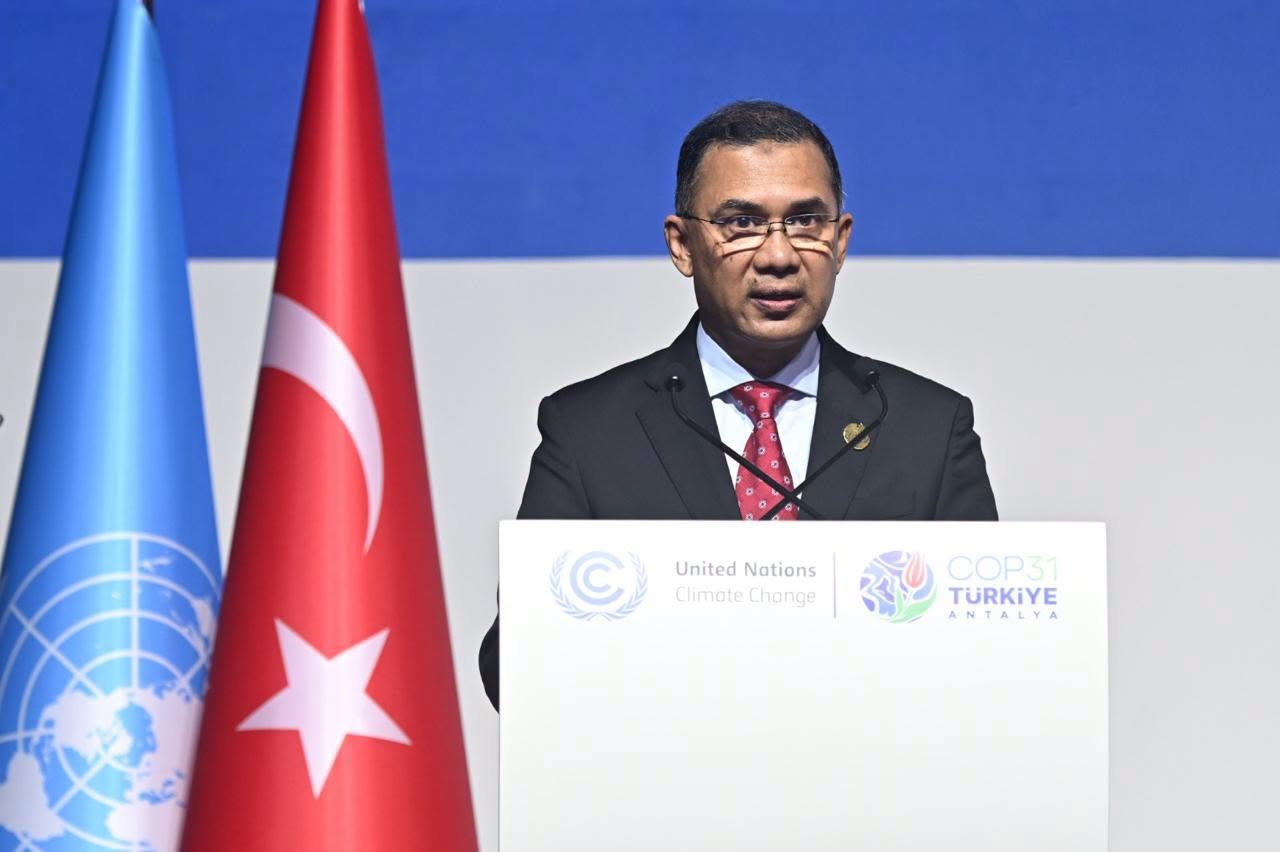
The Prime Minister made these calls on Thursday (November 12, 2026) while addressing a high-level session at COP31—the United Nations Climate Change Conference—held in Antalya, Turkey.
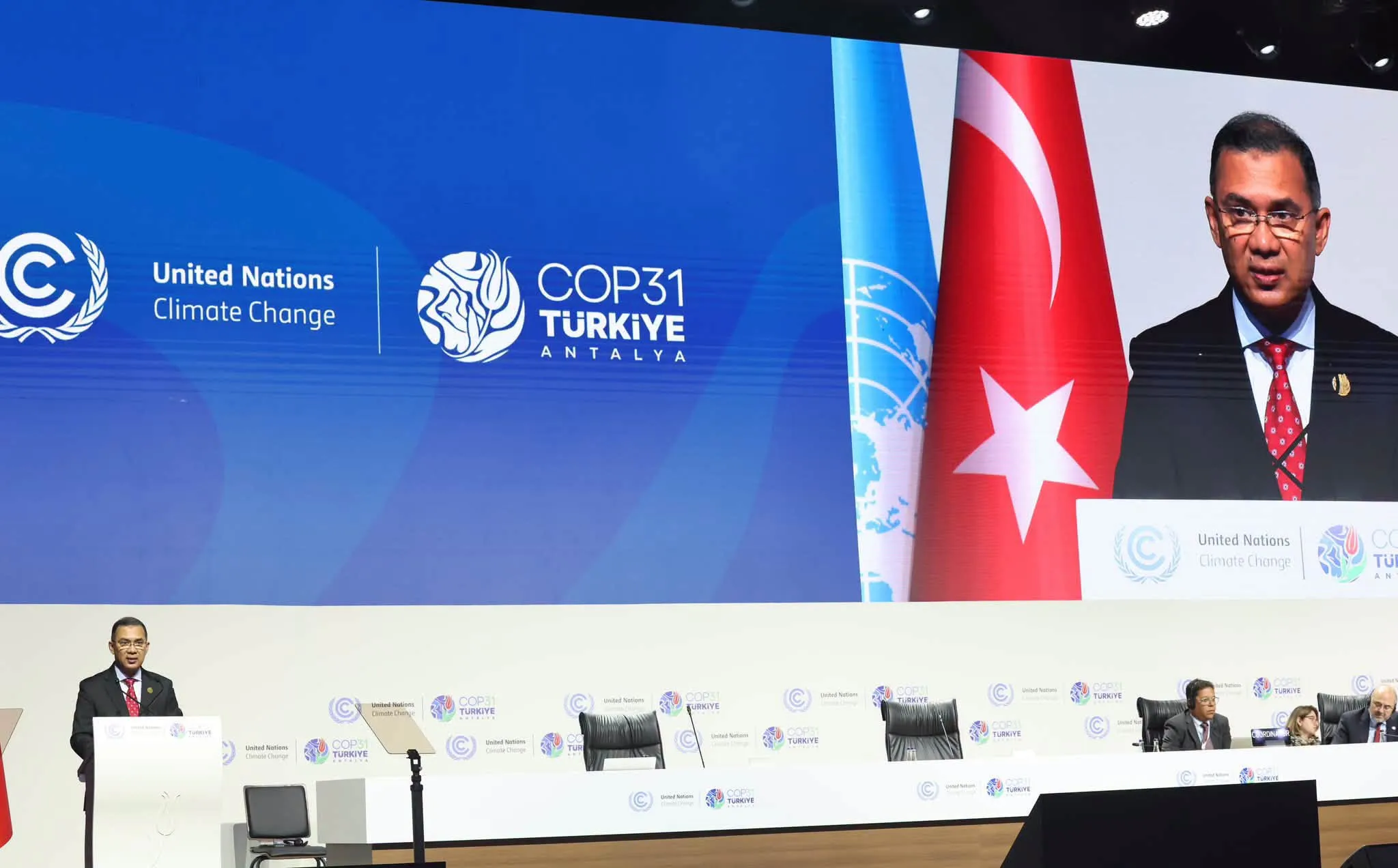
The Prime Minister stated that climate-vulnerable nations do not require further debt, as it only exacerbates their existing economic burdens. Instead, these countries need reliable financial assistance, access to modern technology, and robust support from the international community to address the impacts of climate change and facilitate adaptation.
He added that international cooperation must continue not only for climate adaptation but also for efforts to reduce greenhouse gas emissions.
Highlighting the climate reality in Bangladesh, Tarique Rahman noted that the country stands on the front lines of climate change impacts, despite contributing less than 0.5 percent to global greenhouse gas emissions. Notwithstanding these challenges, the government remains committed to building a one-trillion-dollar, climate-resilient, and sustainable economy.
Guided by the philosophy of “Bangladesh First,” the Prime Minister explained that the government aims to advance economic growth and environmental protection as mutually reinforcing goals. Emphasis is being placed on nature conservation and maintaining ecological balance alongside industrialization and development activities.
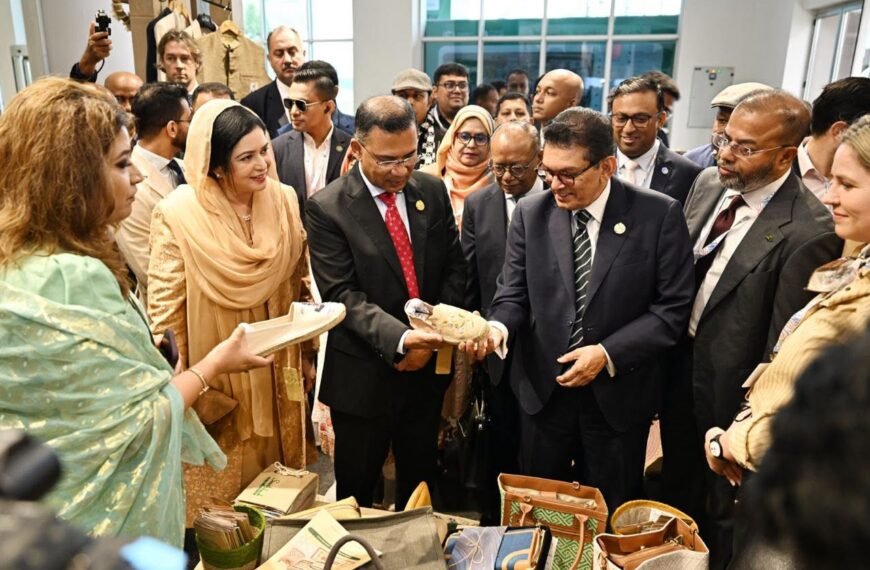
Pointing to progress in green industrialization, he mentioned that Bangladesh is now home to nearly 300 LEED-certified ready-made garment factories. Furthermore, the government is working to expand eco-friendly transport systems—by increasing the use of electric vehicles—and to promote sustainable products, such as jute-based bags. Additionally, an initiative has been undertaken to develop a national framework for carbon trading.
Outlining the government’s future plans for environmental conservation and enhancing climate resilience, the Prime Minister stated that there is a plan to plant 250 million trees across the country over the next five years. Furthermore, initiatives are underway to implement master plans for the Padma and Teesta barrages, alongside the dredging of 20,000 kilometers of rivers and canals.
She explained that the primary objectives of these initiatives are to conserve water, mitigate flood risks, revitalize wetlands, and raise groundwater levels. Simultaneously, efforts are being made to protect local communities and strengthen climate resilience by restoring mangrove forests on reclaimed land in coastal areas.
The Prime Minister thanked the government of Turkey for hosting the COP31 conference. She also expressed gratitude to Australia for its leadership in the conference’s negotiation process.
Noting that Bangladesh looks forward to a successful COP31, the Prime Minister stated that the country expects the conference to yield meaningful, balanced, and ambitious outcomes—outcomes that take into account the interests of the nations most vulnerable to climate change.