Diplomatic Desk:
South Korea has pledged to continue its support for the skill development, employment generation, and entrepreneurship of adolescent girls and young women in Bangladesh who have dropped out of the education system. This commitment was highlighted at the closing ceremony of a project worth approximately US$ 5.94 million, funded by the Korea International Cooperation Agency (KOICA)—the country’s official development cooperation agency—and implemented by the United Nations Children’s Fund (UNICEF).
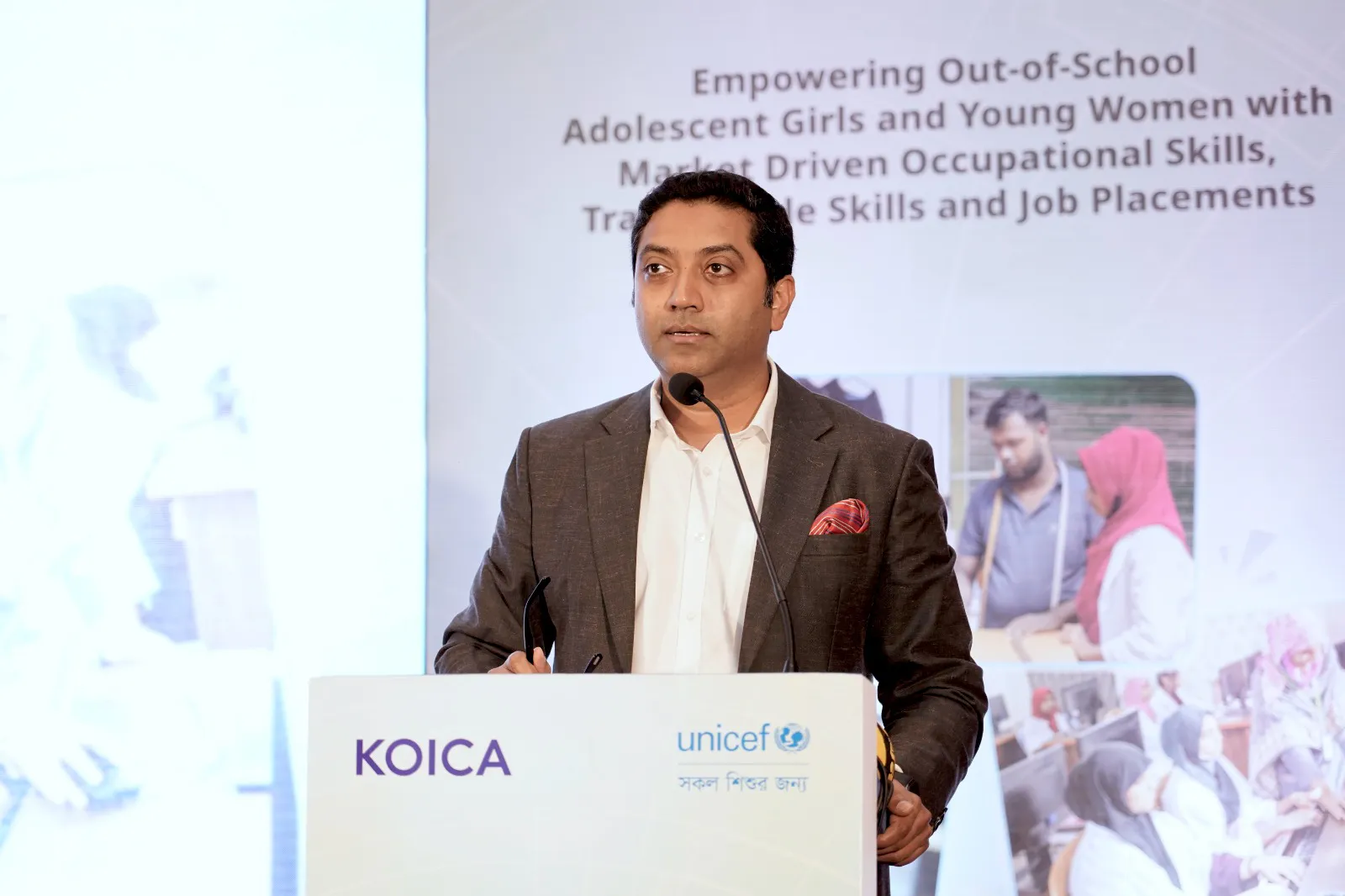
Bobby Hajjaj, State Minister for Primary and Mass Education and Member of Parliament, attended the event held in Dhaka on Monday (October 12) as the chief guest. Implemented across seven districts of the country from July 2022 to September 2026, the project engaged approximately 17,000 adolescent girls and young women who had dropped out of school in skill development activities.
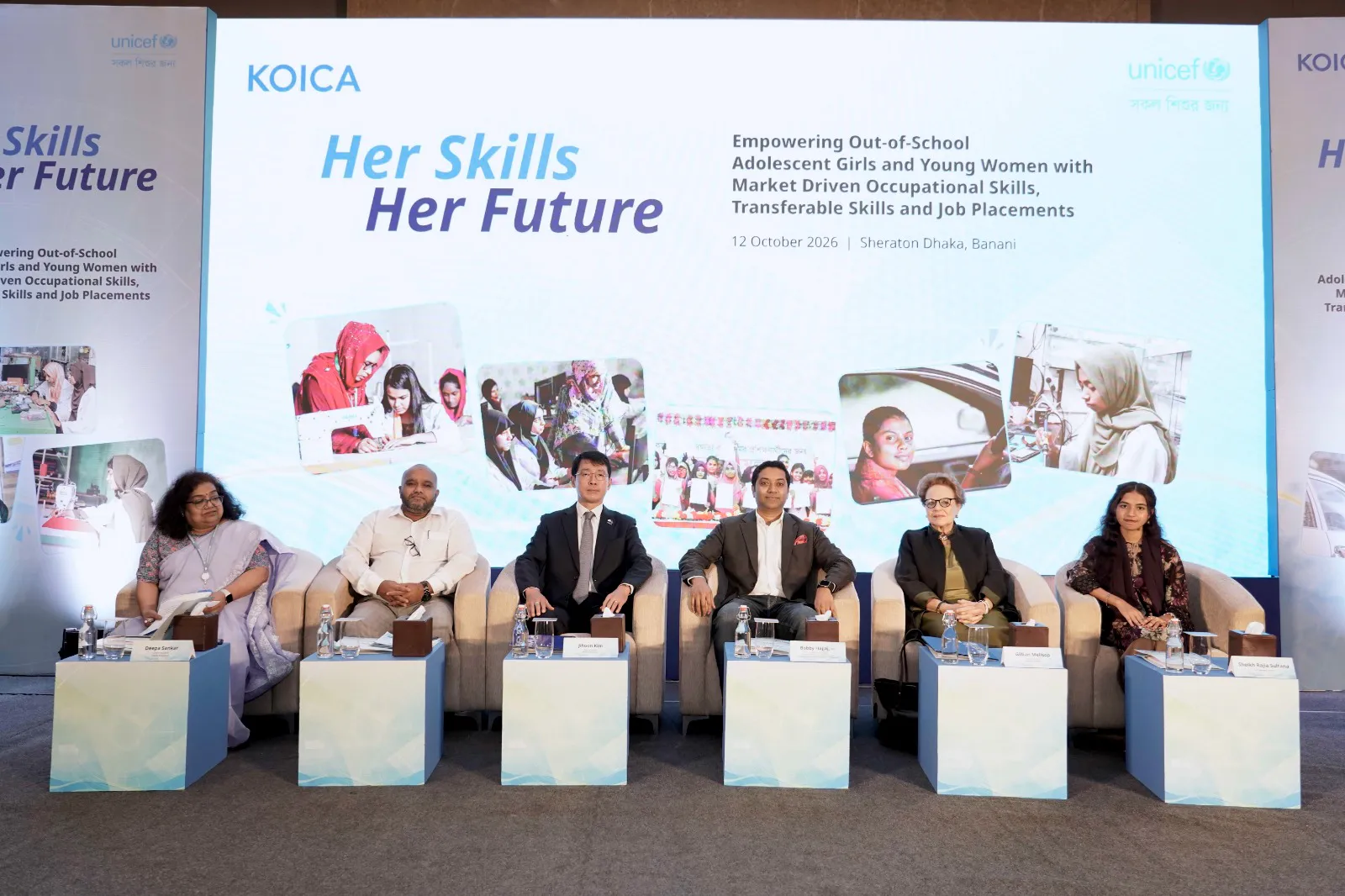
The project is titled “Empowering Out-of-School Adolescent Girls and Young Women with Market-Driven Occupational Skills, Transferable Skills, and Job Placements.” KOICA funded the project through a grant from the South Korean government, while UNICEF implemented it in collaboration with relevant government agencies and local partners.
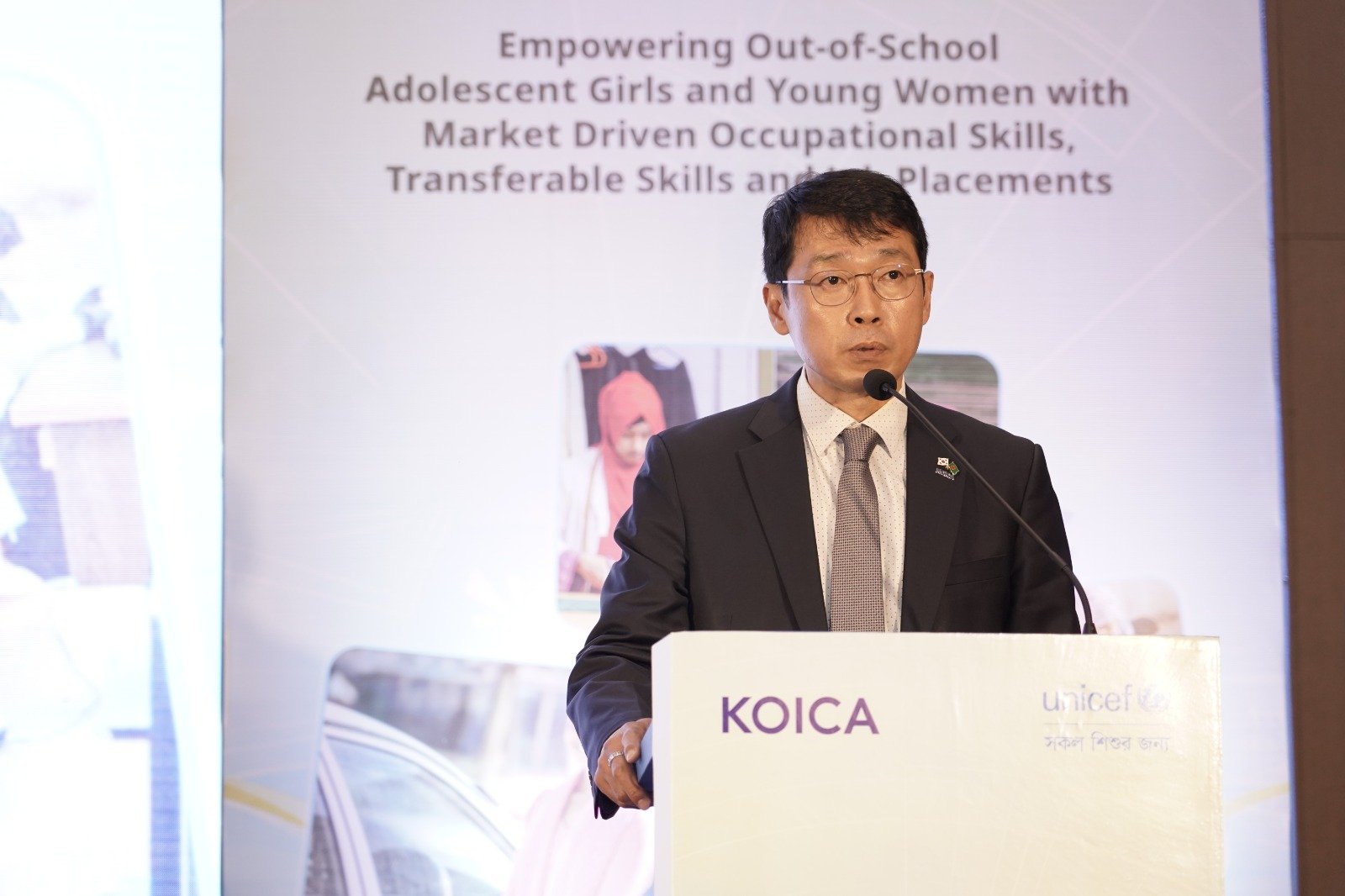
Speaking at the event, the KOICA Country Director for Bangladesh stated that investing in the skills and potential of young women could play a vital role in achieving inclusive economic growth in Bangladesh. The project’s success is not limited merely to the number of participants; its key achievement lies in linking skill development with tangible employment, entrepreneurship opportunities, and economic self-reliance.
He further added that South Korea would continue to support sustainable and inclusive development by working closely with the Government of Bangladesh and development partners.
Through this project, support was provided to out-of-school adolescent girls and young women (aged 15 to 24) in areas such as market-driven technical and vocational training, life skills and transferable skills development, workplace apprenticeships, and job placement opportunities. Simultaneously, initiatives were undertaken to assist aspiring entrepreneurs in starting and managing businesses and to facilitate connections with financial institutions.
Beyond enhancing the economic empowerment of young women, the project prioritized overcoming existing social barriers to their participation in education and employment. To this end, awareness-raising and social behavior change activities were conducted among families and local communities to foster positive attitudes toward young women’s education, careers, and entrepreneurship.
Chief Guest Bobby Hajjaj commended the initiative by KOICA and UNICEF, emphasizing the critical importance of skills development for youth. He noted, however, that acquiring technical skills alone is insufficient; communication skills must also be prioritized so that Bangladeshi youth can present themselves confidently and adapt to future challenges.
Gillian Melsop, Acting Representative of UNICEF Bangladesh, stated that this initiative—conducted jointly with the Bureau of Non-Formal Education (BNFE)—has opened up new possibilities for adolescent girls and young women who are outside the formal education system. Skills training has created opportunities for them to engage more effectively with employers, local communities, and government institutions. She emphasized the importance of leveraging the experience gained and expanding activities as needed to extend the benefits of such initiatives to future generations of learners.
The project’s market-driven and employment-oriented approach aligns with government initiatives to expand non-formal education and skills development in Bangladesh. The expansion of the Bureau of Non-Formal Education’s (BNFE) Alternative Learning Opportunities (ALO) program and the SKILFO model could play a significant role in this regard.
Although the training activities have concluded with the project’s completion, coordinated efforts among government agencies and development partners remain crucial for sustaining the success achieved, expanding employment opportunities, and ensuring the economic self-reliance of these young women.