Desk Report:
Political differences will exist in a democratic state. Debate between the government and the opposition on policies, programs or governance is a natural part of democracy. However, when there is a national crisis or the security and interests of the people of the country are in question, then working collectively above the party position is the hallmark of responsible politics.
Respect for dissent in politics and a culture of coexistence is the beauty of democracy. But the political parties need to be careful so that the differences do not overshadow the national interest. Martyred President Ziaur Rahman reminded us of this political philosophy of valuing the interests of the country rather than personal or party interests. In his words, “the party is bigger than the individual, the country is bigger than the party.”
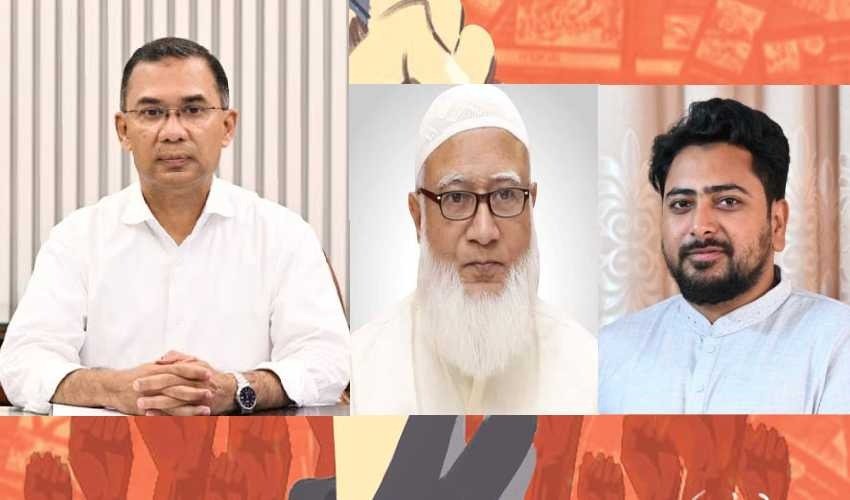
Prime Minister Tarique Rahman’s recent initiatives reflect that political view of giving concessions to party positions for the overall interest of the country. He called for national unity amid fears of political unrest, anarchy and sabotage. At the same time, he took the initiative of dialogue and exchange of views with the anti-fascist political parties that participated in the July uprising.
A private meeting was held between Prime Minister Tarique Rahman and opposition leader Shafiqur Rahman during the break of the fourth session of Parliament which ended on November 18. In that meeting, the Prime Minister emphasized the need to build unity among the anti-fascist political forces.
In continuation of this, dialogues have started with various political parties. In the first phase, a meeting was held with the National Citizen Party (NCP). On November 23, the leaders of the party held a discussion with the Prime Minister for about 35 minutes. The NCP delegation led by Nahid Islam included member secretary Akhtar Hussain, senior joint convener Hasnat Abdullah and joint convener Akram Hussain. Nahid Islam spoke to the journalists after the meeting and lunch.
After the NCP, the prime minister is scheduled to hold a dialogue with the opposition party Jamaat-e-Islami. Amir Shafiqur Rahman of the party is out of the country, so the date of the meeting has not been fixed yet. However, Jamaat Ameer is returning home from Australia after shortening the trip within the initiative of dialogue.
Sources related to Jamaat said that Shafiqur Rahman had planned a one-day visit to Malaysia after his visit to Australia. He was also supposed to participate in a program organized by expatriate Bangladeshis there. According to the pre-arranged schedule, he was supposed to return home on Thursday, but he decided to cancel his trip to Malaysia and return home on Wednesday.
It is known that Jamaat-e-Islami is positive about participating in the series of dialogues between political parties with the Prime Minister. The party is interested in discussing the initiative of national unity. However, Jamaat wants to participate in the dialogue with all the parties of the 11-party political alliance, not alone.
Meanwhile, different positions have already emerged among the political parties regarding the dialogue agenda. In the meeting with the NCP, various issues such as the July Charter, reforms, justice, the sovereignty of the country and the implementation of the referendum verdict were given importance.
After the meeting, Nahid Islam said that the current situation did not arise suddenly. The situation worsened in the months after the elections due to the deterioration of the law and order situation, compromise on the judicial process, lack of a tough stance against the defeated powers of 2024 and lack of a clear stance on diplomatic relations with India. At the same time, the NCP also questioned the role of the one-party constitution amendment committee in the process of implementing the verdict of the referendum. The party demanded the cancellation of the said committee and the implementation of the July Charter based on the verdict of the referendum.
Jamaat may also raise these issues in the upcoming dialogue, it is said. The party has been contacted by the Prime Minister. Although the date of the meeting has not been finalized yet, Jamaat’s stance on participating in the dialogue is positive. It has been said on behalf of the party that if there is a discussion, it should be with the partners of the 11-party unity. Besides, they are in favor of including NCP and other political parties in the discussion.
According to Jamaat, issues like referendum and implementation of July Charter are important issues of national politics. As the party is presenting its position in the parliament, it is also holding programs on the streets.
But the question is, how important should these issues of party and political agenda be in the dialogue organized for the purpose of national unity?
Analyzing the political culture of developed democratic countries, it can be seen that even if there are sharp differences between the government and the opposition parties, they often sit aside the party disputes in discussions on nationally important issues. The political rivalry between the Labor Party and the Conservative Party in the UK is long-standing. But in matters of national security, foreign policy or urgent state decisions, there are precedents for negotiation and compromise between the parties.
In recent times, the Iran-Israel conflict and various security issues related to the United States have also been discussed between the government and the opposition in the UK. Similarly, on important national issues including immigration, political parties are finding ways to cooperate in the larger national interest while maintaining their positions.
In the United States, too, there is a sharp political divide between the Democratic and Republican parties. Democrats have expressed strong objections to various decisions made by former President Donald Trump. Yet, on issues concerning internal security, counter-terrorism, and national interest, the two parties are often seen working together. This highlights a crucial lesson for democratic politics: while differences of opinion will inevitably exist, the space for cooperation on matters of national interest must remain intact.
Such a political culture is also needed in Bangladesh. In this regard, the initiative taken by the Prime Minister to engage in a series of dialogues with various political parties is a significant step. Amidst fears of anarchy, sabotage, and political violence—and emphasizing the need for national unity—the Prime Minister held a direct meeting with the leader of the opposition. Subsequently, steps have been taken to exchange views with other political parties as well.
Efforts to make the parliament effective, to value the opinions of the opposition, and to foster coordination among political parties during national crises could pave the way for a new, constructive practice within Bangladesh’s democratic landscape.
However, the success of this endeavor does not depend solely on the government; opposition political parties must also play a responsible role. Differences of opinion between the government and the opposition may naturally arise regarding issues such as referendums, the ‘July Charter,’ constitutional reforms, or the governance of the state. Such matters should be debated in parliament, where political parties can articulate their respective positions, with the public ultimately expressing their verdict through elections.
Yet, when the nation faces insecurity, violence, or the threat of anarchy, partisan demands should not be conflated with the imperative for national unity. National interest cannot be a subject for bargaining.
If the government opens the door to political dialogue to foster a stable and democratic environment, the opposition parties must also seize this opportunity responsibly. While disagreements and political competition will persist, a culture of standing together when the broader national interest demands it can serve as a robust foundation for a healthy democracy.