Desk Report:
The country’s housing sector is facing immense pressure due to a combination of factors: the unchecked rise in construction material costs, high interest rates on home loans, and a shortage of flat buyers. Reluctance to launch new projects is growing, while work on many ongoing projects has stalled. This is directly impacting numerous enterprises linked to the construction industry and shrinking employment opportunities. To revitalize the sector, Dr. Ali Afzal, President of the Real Estate and Housing Association of Bangladesh (REHAB), has emphasized the need to reduce home loan interest rates for consumers to 5%, provide single-digit interest loans to developers, lower flat registration costs, and prioritize affordable housing construction through public-private partnerships. He warns that without effective measures, the livelihoods of approximately 5 million people associated with this sector could be further jeopardized.
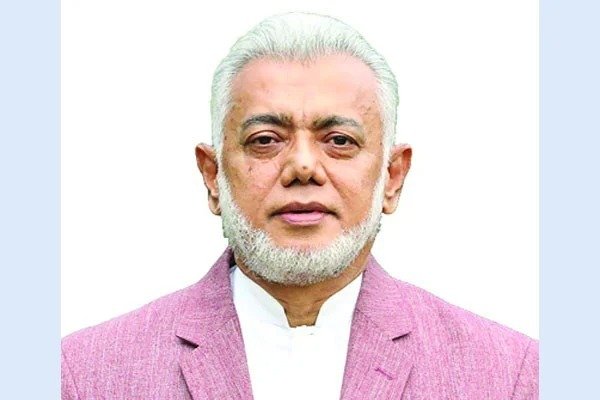
Dr. Ali Afzal—Managing Director of Krishibid Group and Chairman of Glorious Lands and Developments Limited—discussed the current crisis in the housing sector, business obstacles, and ways to make housing accessible to the general public. In his view, housing should not be viewed merely as a business venture but as a means to fulfill a fundamental human need and a vital component of the nation’s economic activity.
The REHAB President believes that the rising cost of construction materials has deepened the crisis in the housing sector. He noted that prices initially surged by about 31% due to the war situation; a subsequent 12% hike pushed the overall increase in construction costs to nearly 43%. However, flat sale prices cannot be raised in proportion to these rising costs, leaving many companies facing financial losses.
Dr. Ali Afzal pointed out that implementing housing projects is a long-term process; buyers typically sign agreements to purchase flats years in advance and pay in installments. Even if the costs of construction materials and other expenses rise after a contract is signed, there remains an obligation to hand over the flat at the pre-determined price. Consequently, developers are forced to shoulder the burden of these additional costs.
He noted that while large real estate companies may possess some financial resilience, it is difficult for small and medium-sized firms to withstand such pressure for an extended period. Construction work on some projects has already halted, and various companies have reduced their workforce.
The REHAB President identifies declining purchasing power, high interest rates on loans, and investment uncertainty as the primary reasons for the drop in demand for flats. In his view, public interest in purchasing flats has not vanished entirely; rather, buying a flat at current market prices has become unaffordable for many.
He stated that purchasing a flat with a high-interest housing loan has become difficult for middle-class families. Simultaneously, uncertainty regarding the future economic situation prevents many from committing to large-scale investments.
According to Dr. Ali Afzal, the crisis in the housing sector began during the COVID-19 pandemic. Subsequently, political and economic uncertainties have impacted the investment climate. He also mentioned that foreign investors harbor concerns regarding the assurance of repatriating their invested capital and earned profits.
The crisis in the housing sector is not limited to flat developers or sellers alone. The REHAB President pointed out that approximately 270 allied industries—including those producing rods, cement, ceramics, and furniture—are linked to this sector. The housing sector is a major buyer of products from these industries; consequently, a decline in flat construction leads to reduced demand and sales for these products.
He explained that a contraction in construction activities harms the businesses of these allied industries. Alongside falling production and sales, companies may face pressure to repay bank loans. Thus, a downturn in the housing sector impacts the broader economy as well.
Dr. Ali Afzal stated that approximately 5 million people are employed in the country’s housing sector. Due to the reduction in projects and the suspension of construction work, various companies are laying off employees. However, he stated that he does not have precise figures regarding exactly how many employees have lost their jobs so far.
Dr. Ali Afzal believes that registration costs and associated taxes and fees have become a significant financial burden when purchasing a flat. According to him, the total cost—comprising registration, taxes, and fees—can currently range from 11 to 16 percent of the price. As this additional amount is added to the base price of the flat, purchasing a home is becoming increasingly difficult for many buyers.
He noted that due to high registration costs, many people delay the registration process even after purchasing a flat. Buyers would benefit if registration were based on actual market value and costs were reduced to a manageable level. Furthermore, an increase in the number of registrations would create opportunities for the government to boost its revenue.
The REHAB President also emphasized the need to simplify the approval process for housing projects. Proposing the full digitization of government services—including the approval of land and building designs—he pointed out that delays and irregularities in approvals extend project implementation timelines. This drives up construction costs, the ultimate burden of which falls on flat buyers.
To address the housing challenges faced by the middle class, Dr. Ali Afzal proposed reducing the interest rate on long-term home loans to 5 percent. In his view, lowering interest rates would enhance affordability and generate fresh demand within the housing sector.
He suggested that home loan interest rates could be determined by taking into account the socio-economic realities of different regions across the country. Implementing a tiered interest rate system—higher rates in Dhaka, lower rates in district towns, and rates as low as approximately 1% in upazilas and rural areas—could help alleviate the population and housing pressure on the capital.
At the same time, he emphasized the need for single-digit interest rate loans for housing developers. In his view, access to low-interest financing during a period of rising construction costs would encourage companies to complete ongoing projects and undertake new ones.
Dr. Ali Afzal noted that housing is linked to a fundamental human need. Therefore, rather than viewing the sector solely as a profit-driven business, policy support should be provided with the broader objective of ensuring housing for the general public.
The REHAB President proposed adopting long-term plans through public-private partnerships to expand affordable housing opportunities for the masses. He suggested that instead of indiscriminately using agricultural land for new housing, unused government land could be utilized in a planned manner. Combining the use of government land with the expertise and investment of private firms would create opportunities to build relatively affordable housing.
He further stated that a permanent solution to the problem cannot be achieved through housing plans centered solely on Dhaka. Improved road connectivity must be established to facilitate commuting from districts and upazilas surrounding the capital. Enhanced commuting facilities would boost interest in living outside Dhaka, thereby easing the pressure on housing demand within the capital.
Dr. Ali Afzal believes it is essential for the government to effectively support companies affected by the crisis in the housing sector. He emphasized the need to ensure that the benefits of initiatives regarding loan rescheduling, interest waivers, and low-interest financing actually reach the businesses that have suffered losses.
He added that taking effective measures in three key areas—construction costs, home loan interest rates, and flat registration fees—could inject new momentum into the housing sector. At the same time, it is essential to reduce delays in government services and ensure an investment-friendly environment.
According to the REHAB president, overcoming the current crisis is difficult without a coordinated effort involving the government, banks, and real estate developers. Revitalizing the housing sector through well-planned policy support and affordable financing would boost demand in the flat market, enable allied industries to recover, and help safeguard the livelihoods of a vast number of people.