Desk Report:
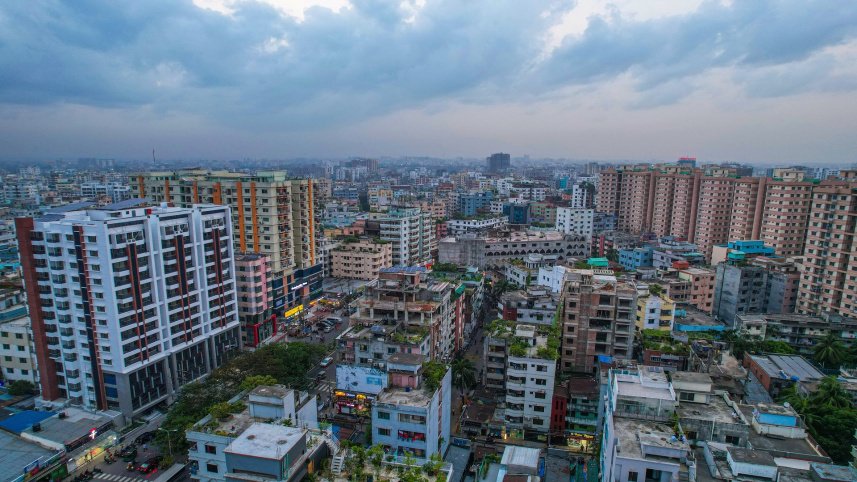
The real estate sector is deeply intertwined with Bangladesh’s economic progress, job creation, and urbanization. Its operations involve not only real estate developers but also a vast array of professionals, including engineers, architects, construction workers, and transport personnel. Consequently, a crisis in the real estate sector is not merely a challenge for a single business industry; it impacts the livelihoods of hundreds of thousands of families and the broader economy.
Drawing on 19 years of experience in the real estate industry—including a tenure as the managing director of a firm—an industry insider highlights the immense significance of this sector to the Bangladeshi economy. Yet, due to various obstacles and policy-related complexities, this promising sector is currently navigating a difficult period.
Many mistakenly believe that the real estate business is limited solely to buying and selling land or constructing buildings. In reality, its scope is far broader; it is directly or indirectly linked to a multitude of industries, businesses, and employment opportunities.
A wide range of individuals—from developers and engineers to architects, masons, steel fixers, electricians, painters, tile installers, transport workers, and truck drivers—depend on this sector. Estimates suggest that the real estate industry directly supports the livelihoods of approximately 4 million people, while another 10 million people rely on it indirectly. Therefore, any slowdown in this sector has a ripple effect, impacting countless families.
It is estimated that the real estate sector and its allied industries contribute more than 15% to the nation’s GDP. The sector maintains direct links with over 260 associated industries and service sectors, including those producing steel rods, cement, bricks, tiles, sanitary ware, electrical equipment, and elevators. An increase in investment in the housing sector boosts production, marketing, and employment opportunities across various related industries.
The government generates significant revenue from land and flat registration fees, VAT, income tax, various other levies, and charges for gas, electricity, and water connections. Additionally, government revenue is derived from diverse sectors linked to building construction and housing activities. Consequently, a vibrant real estate sector enhances government revenue and invigorates economic activity. Conversely, any stagnation in this sector exerts a negative impact on the overall economy.
Despite its potential, real estate developers currently face numerous challenges. It is becoming increasingly difficult for entrepreneurs—particularly those who operate honestly and in compliance with regulations—to remain in business.
Key challenges include:
An abnormal surge in land prices, which drives up the production cost of flats.
Frequent fluctuations and instability in the prices of construction materials, such as steel rods and cement.
High interest rates on bank loans, which have currently reached 12 to 14 percent.
Protracted approval processes and administrative complexities involving the Detailed Area Plan (DAP) and RAJUK.
A decline in the number of genuine buyers and investors due to existing limitations in investment and financing.
The cumulative effect of these issues has led to growing uncertainty regarding the initiation of new projects, the execution of construction work, and the sale of flats.
Addressing the crisis in the real estate sector cannot rely solely on the government; developers themselves must also play a responsible role.
First, they must earn and maintain the trust of buyers. Priority must be placed on handing over flats within the agreed-upon timeframe and fulfilling all commitments.
Second, there can be no compromise regarding construction quality or building safety. The use of substandard construction materials—ostensibly to cut costs—is entirely unacceptable.
Third, transparency must be ensured in all business operations. Information regarding land ownership, necessary documentation, RAJUK-approved architectural plans, and other critical project details must be clearly presented to prospective buyers.
Fourth, unity and coordination among developers should be fostered through organizations like REHAB. Furthermore, collective initiatives must be taken to highlight the sector’s challenges to policymakers and advocate for practical solutions.
Five Proposals to the Government for Revitalizing the Real Estate Sector
Government policy support is essential to harness the potential of this sector and restore momentum to the housing industry. In this regard, five specific initiatives warrant consideration:
- Reducing Home Loan Interest Rates to 7–8%
Owning a flat is a long-cherished dream for many in the middle class. However, current high interest rates on home loans make it difficult for many to purchase a flat. Lowering these rates to 7–8% would enhance the purchasing power of average buyers, thereby accelerating flat sales and construction activities, while also potentially increasing government revenue.
- Rationalizing Registration Costs for Flats and Land
Currently, the total cost of registering land and flats can reach 10–12%, which discourages buyers from declaring the actual transaction value. Reducing these registration costs to 5–6% would encourage buyers to report the true value. This would lead to an increase in registration activity and, in the long term, create opportunities for higher government revenue.
- Implementing a ‘One-Stop Service’ for the Approval Process
Implementing a housing project requires approvals from various agencies, including RAJUK, WASA, Titas, and DESCO. Developers often face lengthy delays and complex administrative hurdles in obtaining these clearances. Therefore, it is essential to establish an effective “one-stop service” that integrates the offerings of all relevant agencies. This would reduce both time and costs, while also fostering a more favorable investment climate.
- Ensuring Stability in the Construction Materials Market
When the prices of construction materials—such as steel rods and cement—fluctuate unpredictably, it becomes difficult to estimate the costs of housing projects. To address this, steps must be taken to ensure market competition, curb the influence of syndicates, and bring transparency to the supply chain. Stable prices for construction materials would benefit both developers and buyers.
- Formulating a Long-term and Stable Housing Policy
Investment in the housing sector relies on long-term planning. However, frequent changes to policies and the Detailed Area Plan (DAP) create uncertainty among business owners. It is, therefore, necessary to formulate a clear, realistic, and stable urban development and housing policy—one designed for at least a 20-year horizon. This would enable developers to plan and invest with a long-term perspective.
Coordinated Efforts Can Revitalize the Housing Sector
Viewing the real estate sector solely through the lens of commercial profit fails to capture its true significance. This sector is intrinsically linked to the livelihoods of millions, the production systems of numerous industries, government revenue, and the aspirations of the middle class to own a home.
If the current crisis in this sector persists, it will negatively impact developers, workers, buyers, and the broader economy. Conversely, through well-planned policy support, accessible financing, the removal of administrative bottlenecks, and greater business transparency, the real estate sector can once again serve as a key driver of the economy.
What is needed now is effective dialogue and collaborative action between the government and the business community. Mutual finger-pointing or mere criticism will not solve the problems; what is required are pragmatic decisions and their effective implementation. Saving the real estate sector is not just about protecting a single industry; it is about safeguarding the livelihoods of nearly 4 million people connected to it, the nation’s economic growth, and the housing dreams of millions. Therefore, the time has come to give serious thought to the future of this sector.