Diplomatic Desk:
President Mirza Fakhrul Islam Alamgir has urged Slovenia, Estonia, Guinea, and Ghana to import various products—including ready-made garments and pharmaceuticals—from Bangladesh, and to recruit skilled workers from the country.
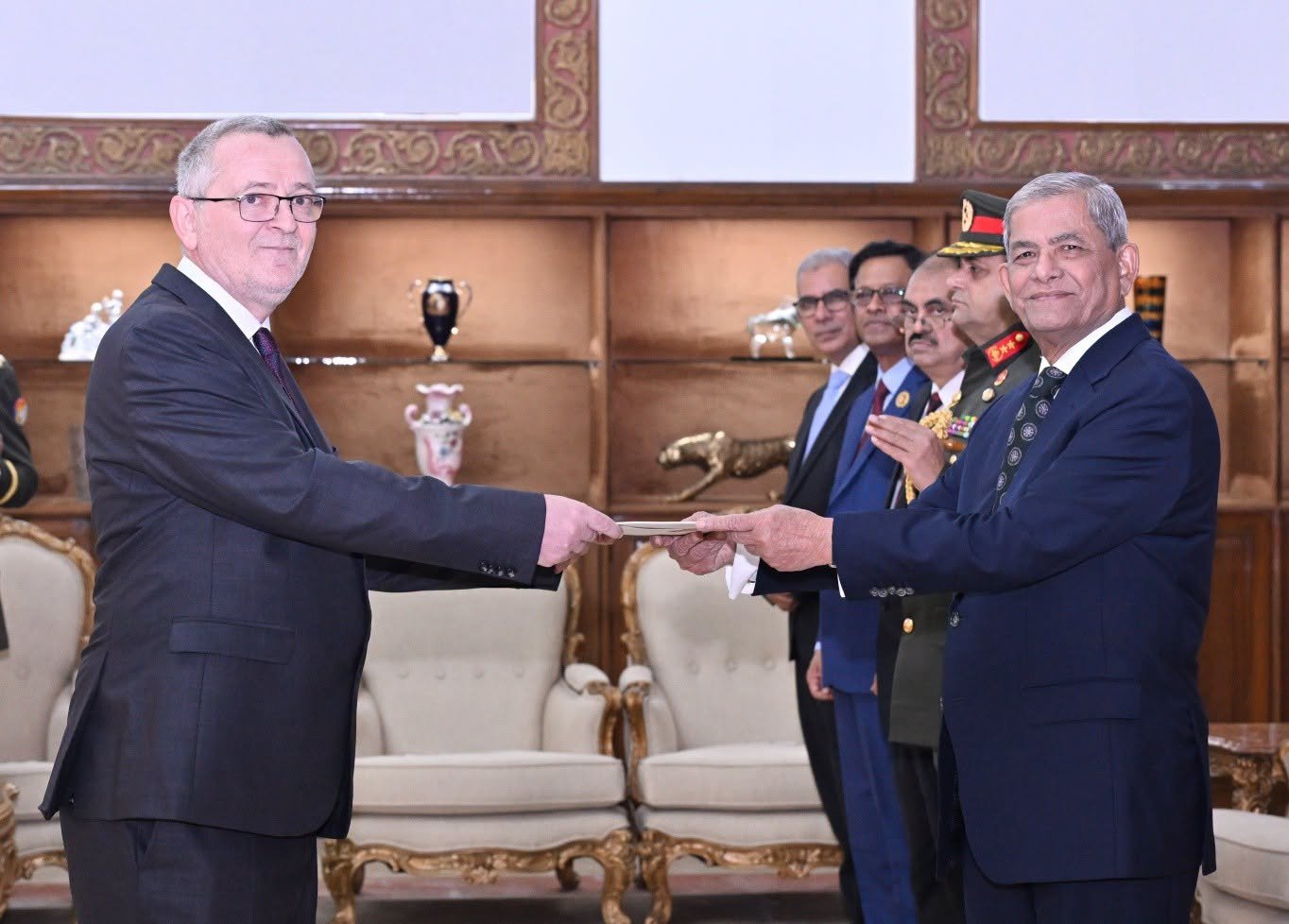
The President made this call on Tuesday morning (November 17, 2026) at Bangabhaban, as the newly appointed non-resident High Commissioner of Ghana and the newly appointed non-resident Ambassadors of Guinea, Estonia, and Slovenia presented their credentials to him.


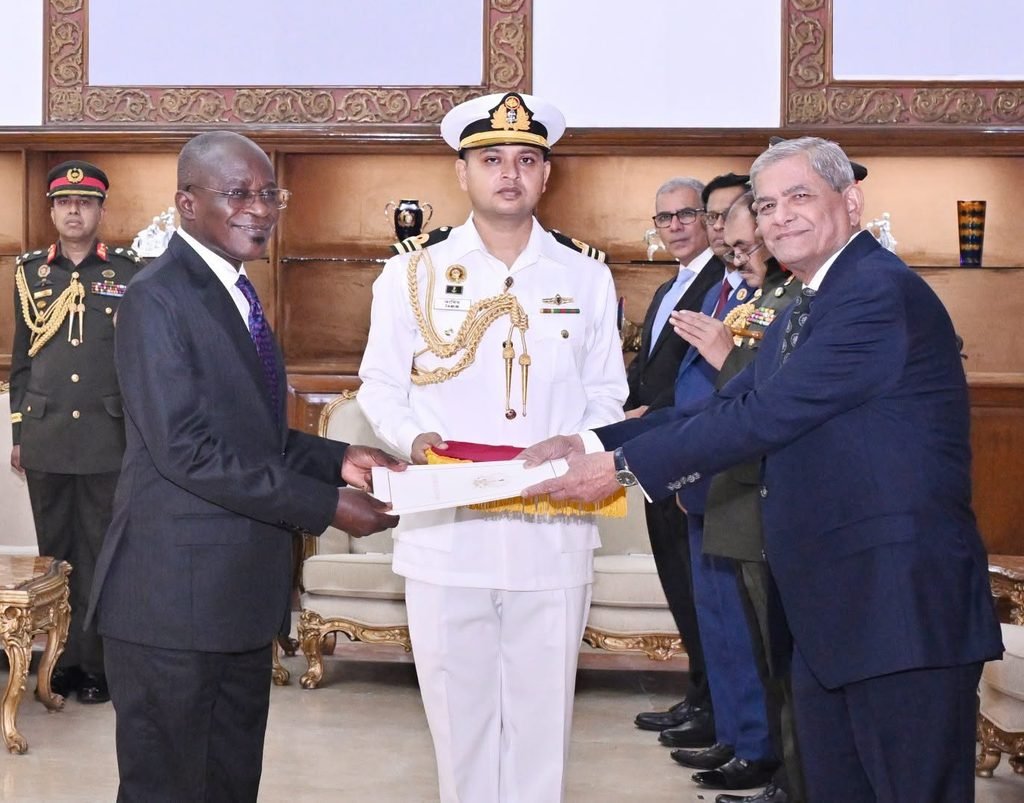
Upon their arrival at Bangabhaban, the High Commissioner and Ambassadors were accorded a guard of honour by a well-turned-out contingent of the President Guard Regiment. Following the formal presentation of credentials, the President held a courtesy meeting with them.
During the meeting, the President encouraged these nations to increase their imports from Bangladesh, specifically citing ready-made garments, pharmaceuticals, leather goods, jute products, ceramics, frozen fish, light engineering products, and ICT services.
The President noted that Bangladesh produces and exports high-quality ready-made garments and pharmaceuticals at competitive prices. He requested that these countries facilitate greater market access for Bangladeshi products and, where necessary, simplify the registration process for pharmaceuticals.
The President also invited these nations to invest in Bangladesh’s Special Economic Zones, as well as in sectors such as ICT, textiles, pharmaceuticals, and renewable energy. He urged Slovenia and Estonia to recruit more Bangladeshi professionals and skilled workers for sectors including engineering, construction, hospitality, healthcare, nursing, and transport. Meanwhile, he suggested that Guinea and Ghana could benefit from Bangladesh’s agricultural expertise by recruiting skilled farmers and agricultural scientists.
During his meeting with the non-resident Ambassador of Slovenia, Tomaz Mencin, the President requested that the visa process for Bangladeshi students, businesspeople, tourists, and researchers traveling to Slovenia be simplified. He also emphasized the importance of working jointly with the country on honey production and the conservation of honeybees.
During his meeting with the non-resident High Commissioner of Ghana, Professor Kwasi Obiri-Danso, the President underscored the need to harness the potential in the agriculture, agro-processing, and textile sectors. He also extended an invitation to the President of Ghana, John Dramani Mahama, to visit Bangladesh at a convenient time.
The non-resident Ambassador of Guinea, Conte Alassane, sought Bangladesh’s cooperation in implementing his country’s ‘Simandou 2040’ development initiative. The President expressed interest in supporting the implementation and expansion of this initiative. In response to Guinea’s request, he assured the provision of technical assistance in the fields of textile processing, dyeing, and printing.
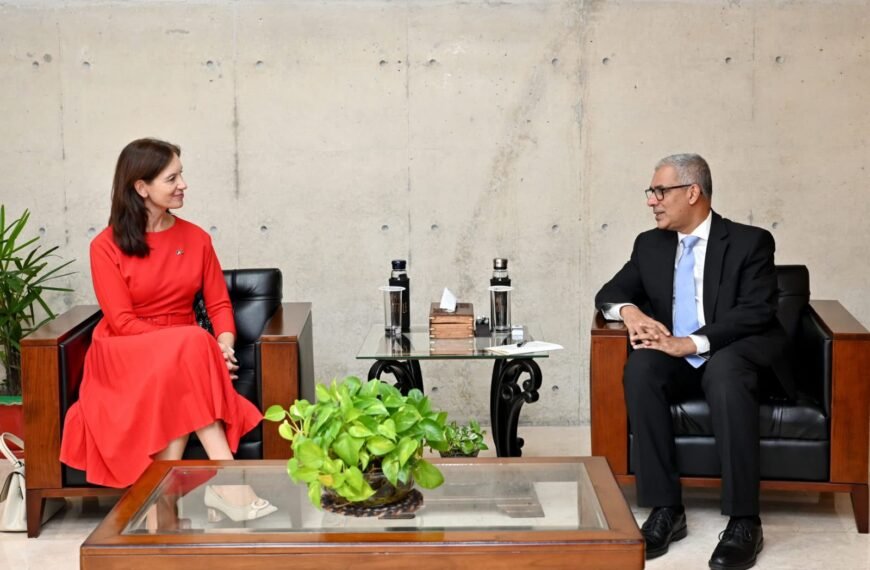
While meeting with the non-resident Ambassador of Estonia, Kristi Karelsohn, the President commended that nation’s advancements in digital governance. He conveyed Bangladesh’s keen interest in leveraging Estonia’s experience and cooperation in the sectors of ICT, digitalization, startups, and fintech. Furthermore, he invited Estonia to invest in Bangladesh’s ICT, pharmaceutical, and digital sectors.
The President wished the newly appointed High Commissioner and Ambassadors success in their new roles and assured them of full cooperation. He expressed hope that during their tenure, Bangladesh’s friendly relations, trade, investment, and mutual cooperation with their respective countries would be further expanded.
Senior officials, including the President’s Military Secretary, Secretary, Press Secretary, and the Foreign Secretary, were present on the occasion.