Desk Report:
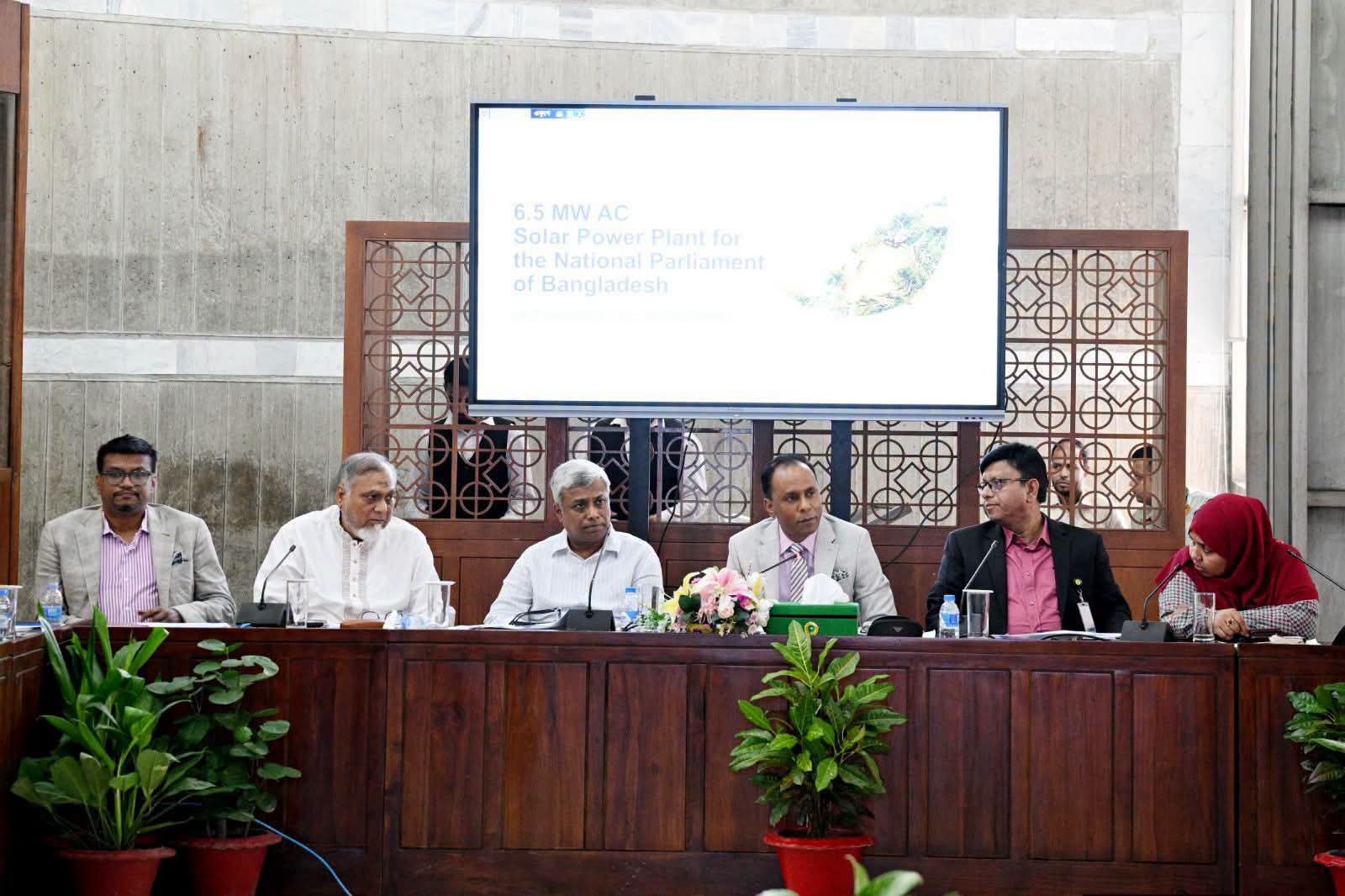
The second meeting of the committee—tasked with evaluating the feasibility of installing solar panels within the National Parliament House complex, ensuring efficient electricity usage, and modernizing energy management—was held on Monday (November 2, 2026) at the Parliament House. The meeting was chaired by the committee’s convener, Deputy Speaker of the National Parliament, Barrister Kaiser Kamal, MP.
Committee members in attendance included the State Minister for Power, Energy and Mineral Resources, Anindya Islam Amit; Md. Ashraf Uddin, MP; Lutfullahel Majed, MP; Md. Saiful Alam, MP; and Mardia Momtaz, MP.
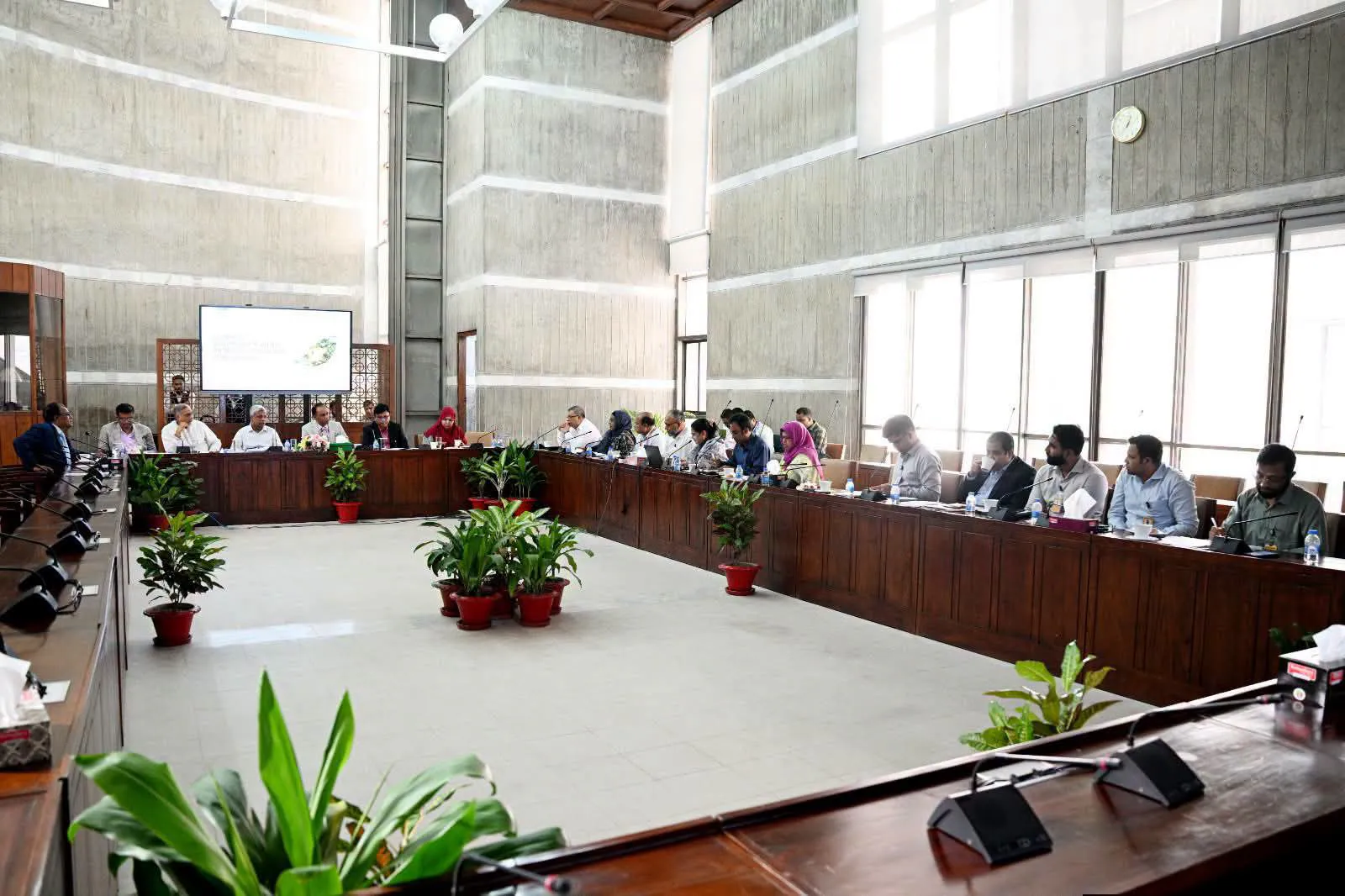
During the meeting, a 3D presentation was showcased regarding the plan to install solar panels at the National Parliament Secretariat. Discussions covered the Secretariat’s overall electricity demand, the operational scope of the central air-conditioning system, natural airflow and ventilation patterns within the building, and the identification of available, unused spaces suitable for solar panel installation. Furthermore, the committee emphasized determining the optimal capacity for a solar power system—based on electricity demand and technical feasibility—and developing a long-term strategy for its implementation.
To prevent electricity wastage and ensure efficient consumption, the committee recommended raising public awareness and integrating all lighting systems within the building with motion sensors. Additionally, the committee advised ensuring accountability among relevant personnel to prevent energy waste, with provisions for departmental action in cases of negligence or misuse.
The meeting also recommended the installation of sub-meters or prepaid meters for the Sonali Bank Limited branch and the residential area located within the Parliament House complex, ensuring the accurate collection of electricity bills.
Emphasis was also placed on the energy-efficient use of air-conditioning systems within the mosque located on the premises. To this end, it was recommended that the air-conditioning (AC) system in the mosque be switched on one hour before prayer times when a parliamentary session is in progress, and half an hour before prayer times at other times.
Furthermore, it was decided that a comprehensive Development Project Proposal (DPP) for the implementation of a solar power system—to be executed through the Dhaka Power Distribution Company (DPDC)—would be prepared and presented at the next meeting.
The meeting was attended by Barrister Md. Golam Sarwar Bhuiyan, Secretary of the Bangladesh National Parliament Secretariat; an Additional Secretary from the Power Division; representatives from the DPDC; officials from the Public Works Department; and other relevant personnel from the National Parliament Secretariat.