Diplomatic Desk:
Minister for Commerce, Industry, Textiles and Jute Khandaker Abdul Muktadir said that the government is ready to provide necessary support to develop the country’s image, export capacity and skilled human resources through trade and employment abroad.
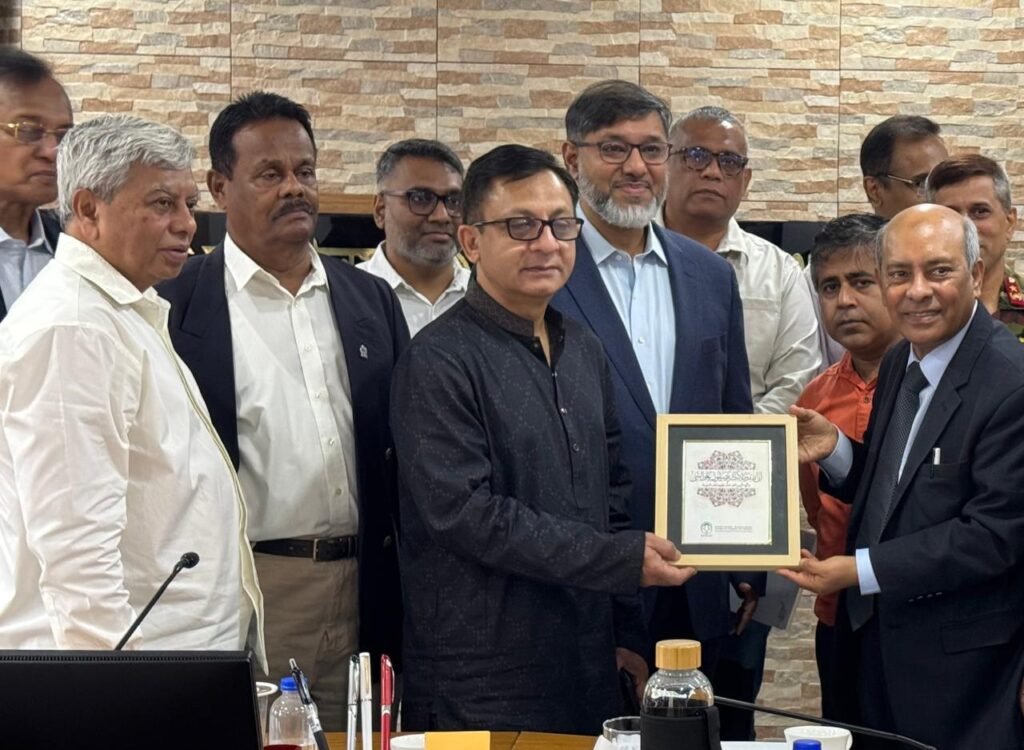
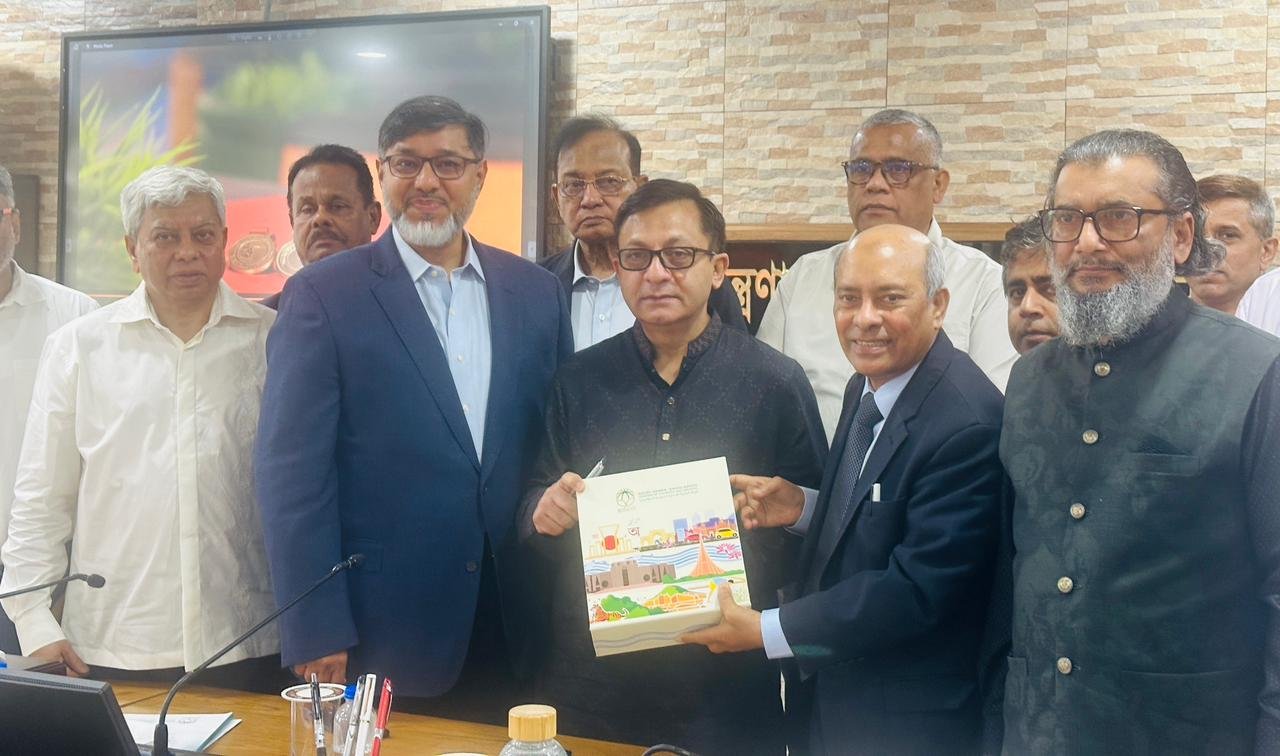
The minister said these things when a delegation from the Saudi Arabia-Bangladesh Chamber of Commerce and Industry came to meet the Commerce Minister at his office on Sunday (May 24, 2026).
Khandaker Muktadir said that Bangladesh’s exports are still dependent on the ready-made garment sector. However, there is a huge opportunity to export Bangladesh’s medicines, leather products, jute products, food products and ready-made garments according to the needs of Saudi consumers in the Saudi Arabian and Middle Eastern markets. To utilize this opportunity, a sector-based plan must be taken out of the conventional way.
Citing the issue of expatriate workers, he said that people who go to work abroad make a lot of sacrifices. If their proper training and skill development is ensured, everyone—the individual, the family, and the country—will benefit. In addition to earning foreign exchange, skilled human resources can become a great asset for Bangladesh.
Addressing the delegation, the Commerce Minister said that specific proposals should be made on which sectors require what kind of support, where policy support is needed, and where financial or sector-based cooperation is needed. If a realistic proposal is received, the government will consider it seriously.
At the meeting, Ashraful Haque Chowdhury, President of the Saudi Arabia-Bangladesh Chamber of Commerce and Industry, said that there is a huge export and trade potential for Bangladesh’s products and services in the Saudi Arabian market. If government support and coordinated initiatives are taken, it is possible to increase Bangladesh’s exports to Saudi Arabia to US$ 1 billion by 2027.
The delegation said that in view of Saudi Vision 2030, World Expo, and the World Cup, new possibilities have been created for Bangladesh in sectors such as education, skilled human resource development, green technology, environment, desert forestry, agriculture and food sector, and microfinance.
The meeting discussed ways to further strengthen trade, investment, and sector-based cooperation between the two countries.