Diplomatic Desk:
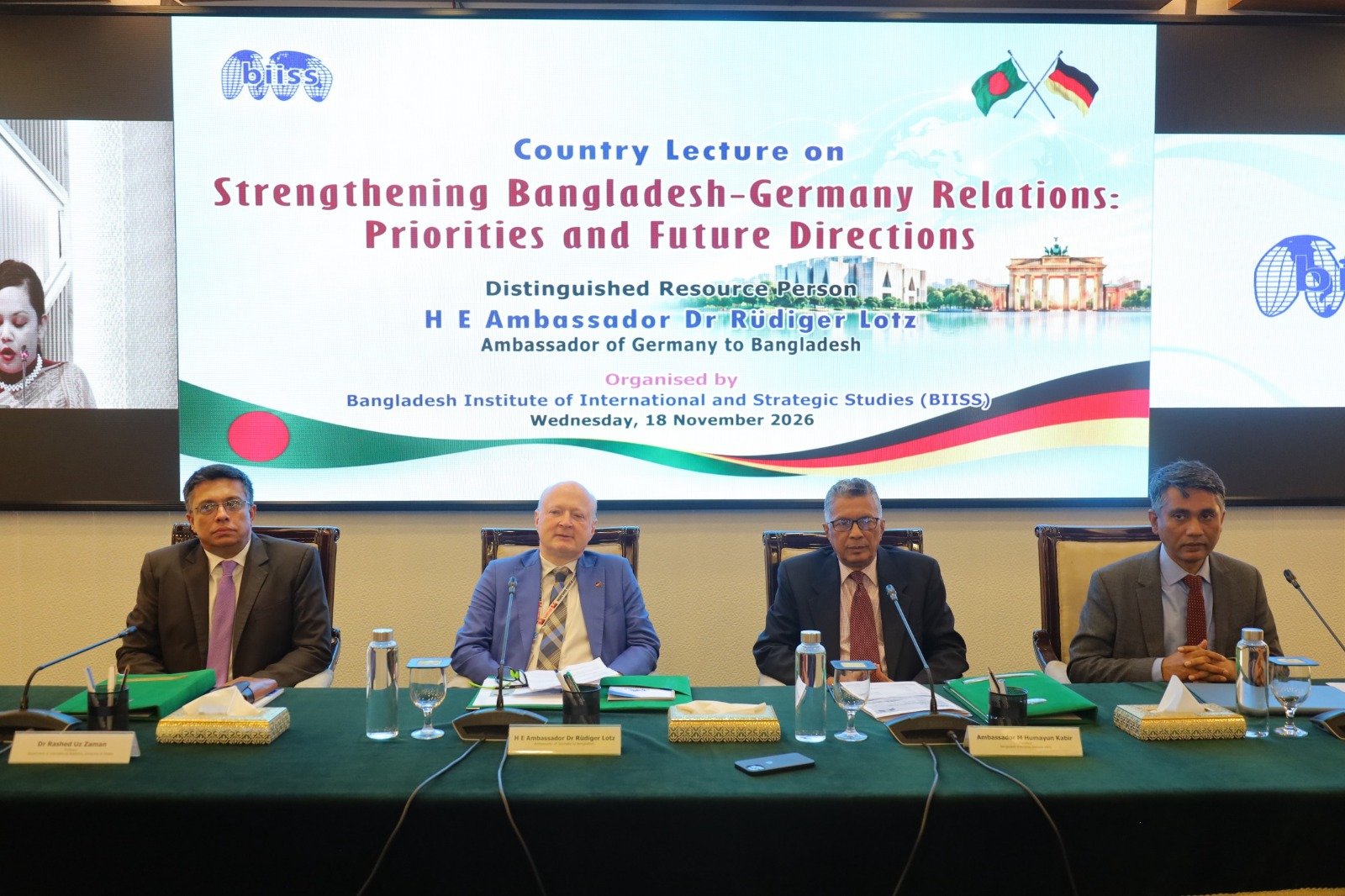
The Bangladesh Institute of International and Strategic Studies (BIISS) organized a country lecture titled “Strengthening Bangladesh-Germany Relations: Priorities and Future Directions,” aimed at further bolstering the long-standing, friendly bilateral ties between Bangladesh and Germany. The event took place on Wednesday (November 18) at the BIISS auditorium.
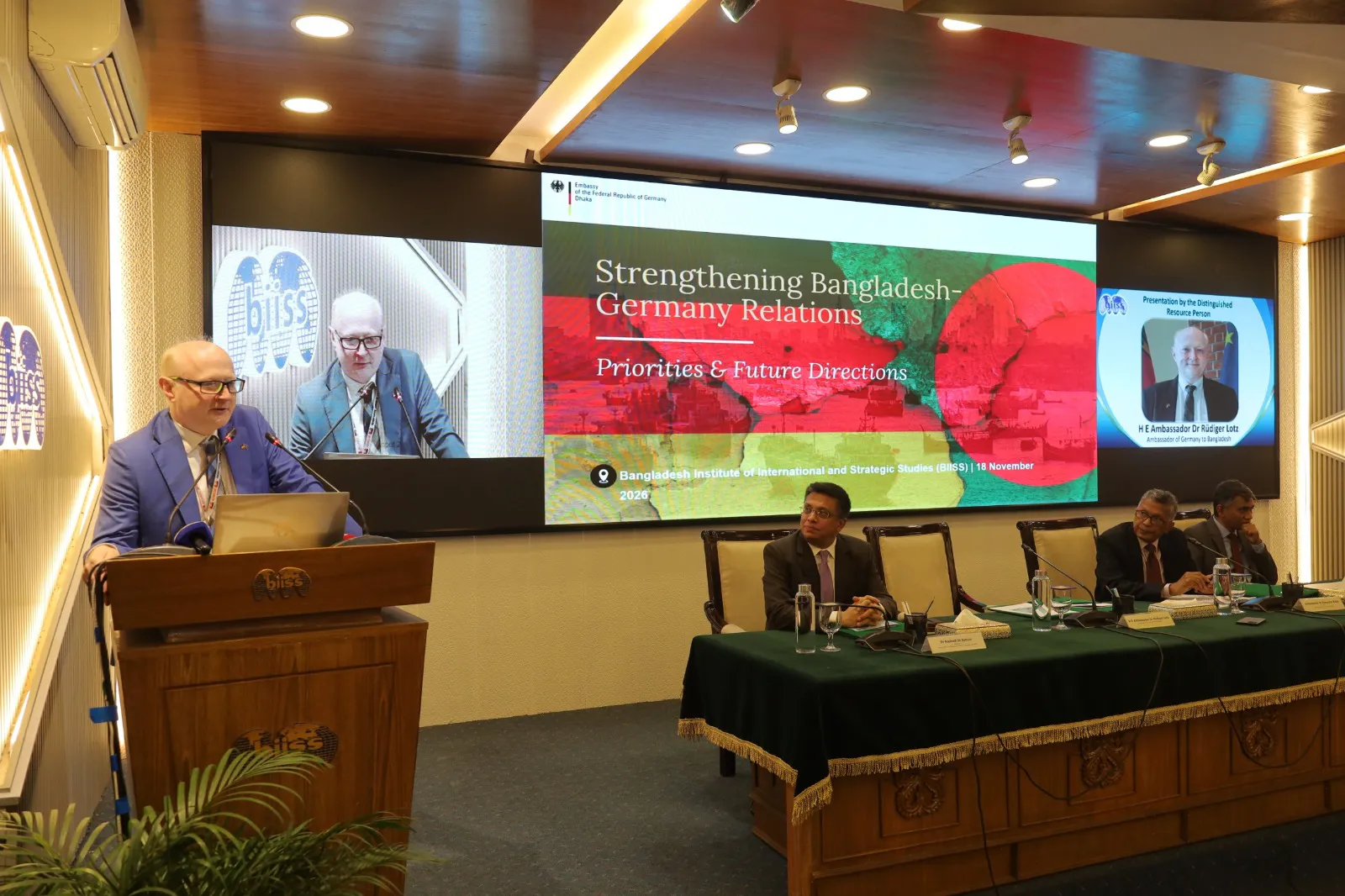
Dr. Rüdiger Lotz, Ambassador of Germany to Bangladesh, served as the distinguished speaker and keynote presenter at the event.
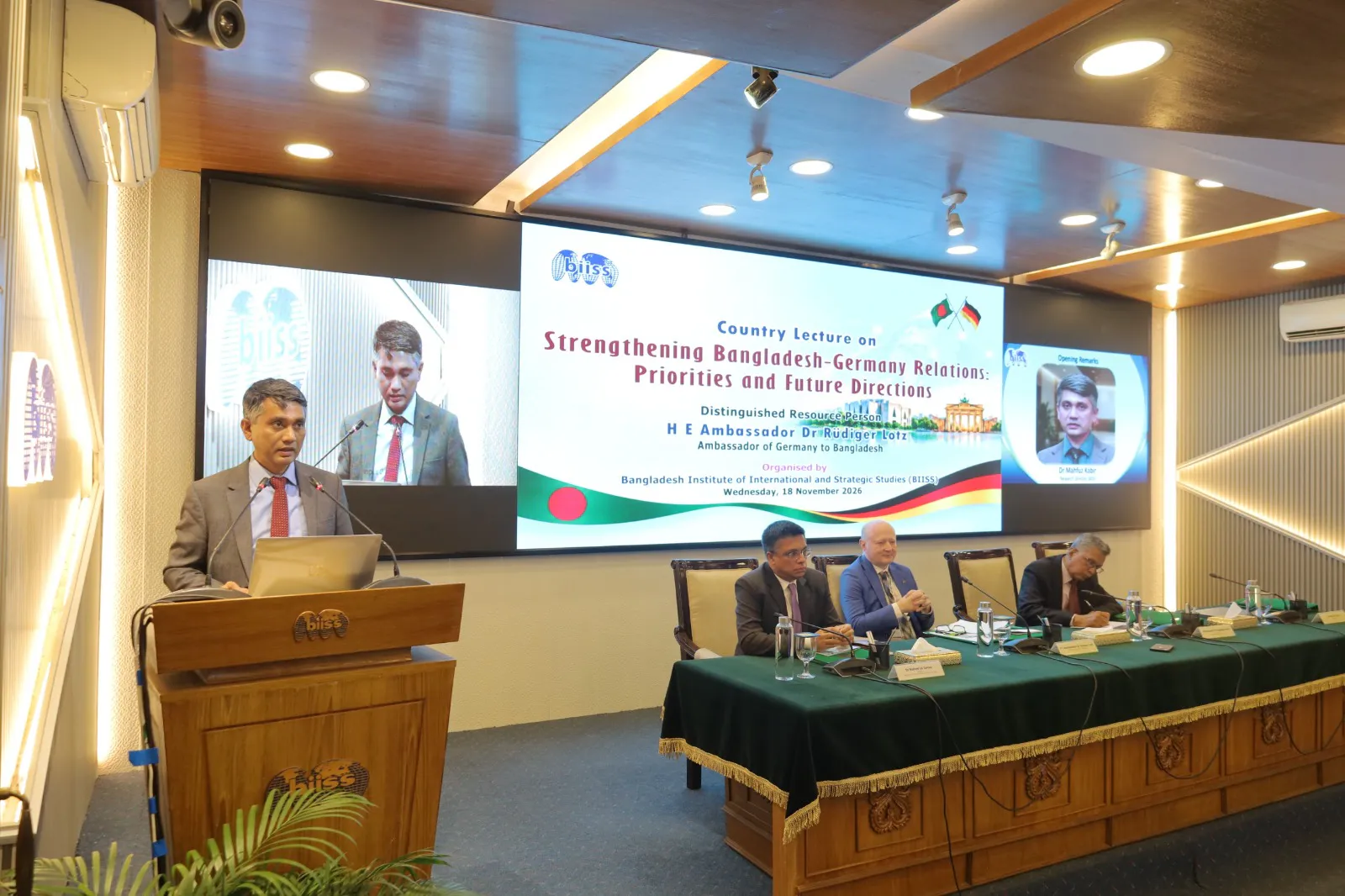
Dr. Mahfuz Kabir, Research Director at BIISS, delivered the welcome remarks, while Dr. Rashed Uz Zaman, a professor in the Department of International Relations at the University of Dhaka, provided the context for the discussion. The session was chaired by Ambassador M. Humayun Kabir, President of the Bangladesh Enterprise Institute (BEI), who also presented a summary of the discussion at the conclusion of the event.
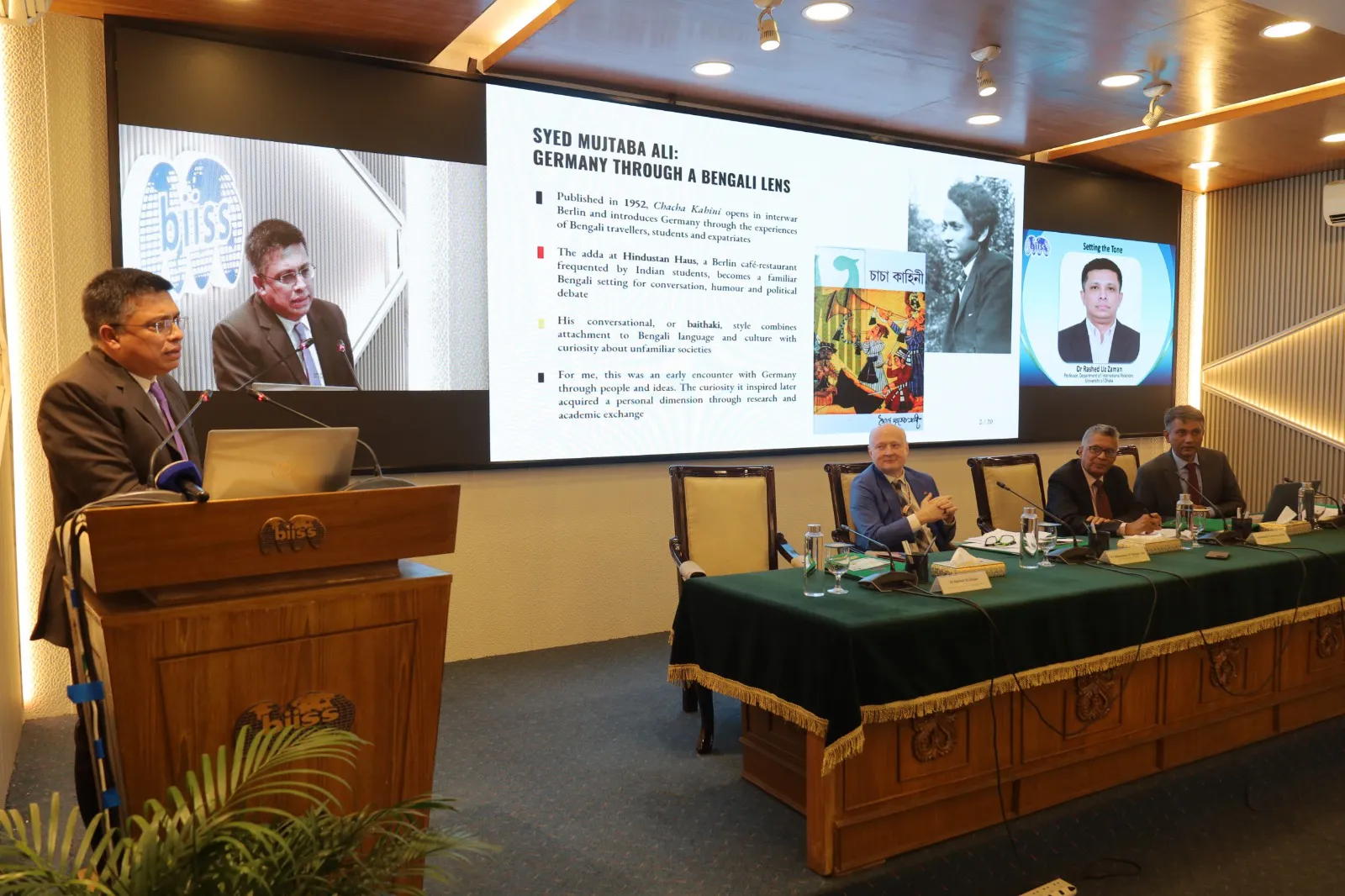
In his keynote address, Ambassador Dr. Rüdiger Lotz highlighted various facets of the long-standing, friendly relationship, mutual trust, and multifaceted cooperation between Bangladesh and Germany. He noted that Germany was among the first European nations to recognize Bangladesh’s independence in 1972. Since then, the two countries have consistently developed their political, economic, and development cooperation.
The Ambassador pointed out that Germany is one of Bangladesh’s most significant development partners and a primary export destination. In 2024, Germany emerged as Bangladesh’s second-largest bilateral export market, underscoring the importance of the economic and commercial ties between the two nations. He emphasized the need to further expand Bangladesh-Germany cooperation across several key areas, including addressing climate change, developing the energy sector, establishing good governance, promoting technical and vocational education, fostering sustainable supply chains, and providing humanitarian assistance.
Furthermore, he highlighted the growing opportunities for higher education, research, and knowledge exchange between the two nations—facilitated by scholarships from the German Academic Exchange Service (DAAD) and various educational exchange programs.
During the open discussion session that followed the keynote address, participants exchanged views on the current state of Bangladesh-Germany relations, priorities for mutual cooperation, and future prospects. They offered various observations and recommendations on how to make the bilateral relationship more dynamic and multifaceted.
The country lecture was attended by representatives from the diplomatic community, senior government officials, members of the armed forces, academics, researchers, and prominent figures from various relevant sectors.