Diplomatic Desk:
Emphasis has been placed on further strengthening the existing trade and economic relations between Bangladesh and the European Union (EU) and expanding new areas of mutual cooperation.
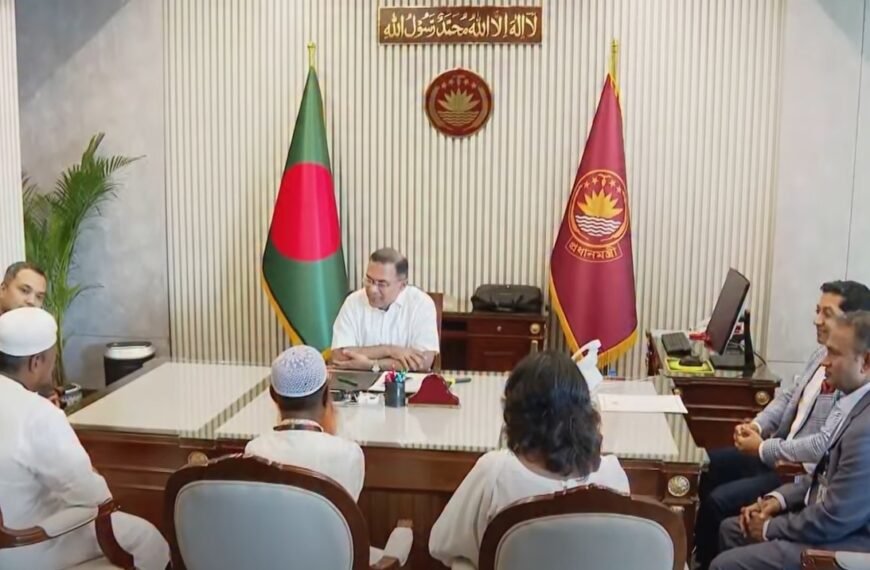
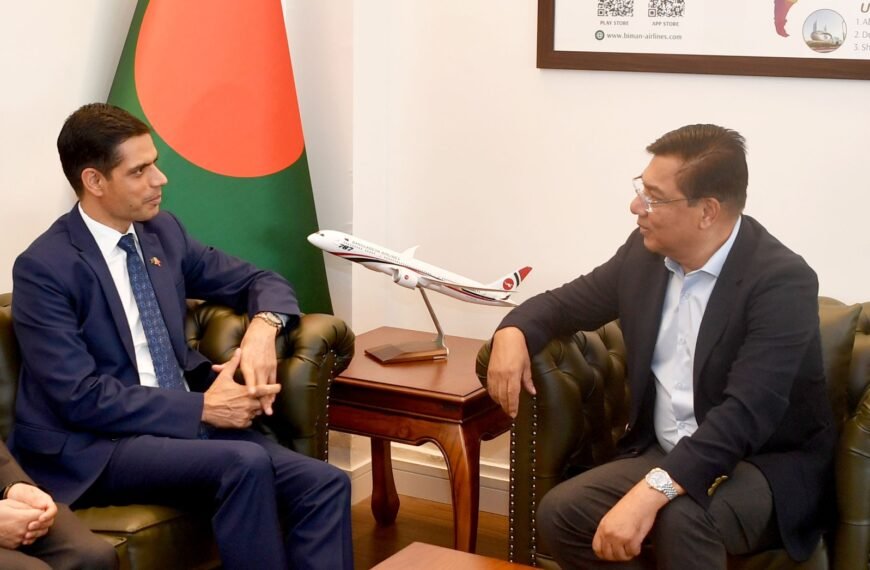
These matters were discussed on Wednesday (September 16, 2026) during a courtesy meeting at the National Parliament House between Md. Khaled Hossain Mahbub, Chairman of the Parliamentary Standing Committee on the Ministry of Commerce of the 13th National Parliament, and Michael Miller, the European Union Ambassador to Bangladesh.
Baiba Zarina, Deputy Head of the EU Delegation, and Abu Sayed Belal, Trade Advisor, were present at the meeting.
During the meeting, views were exchanged on various issues of mutual interest, including Bangladesh’s democratic practices, the functioning of the National Parliament, the effectiveness of parliamentary standing committees, the 13th National Parliament election, the investment-friendly environment in Bangladesh, labor laws, market access for Bangladeshi products in the EU, and overall Bangladesh-EU trade and economic cooperation.
Md. Khaled Hossain Mahbub briefed the EU delegation on the development of parliamentary democracy in Bangladesh, the operations of the National Parliament, and the role of parliamentary committees. He noted that a democratic environment has returned to Bangladesh after a long period, and the people have entrusted the current government with responsibility through a free and fair election. He also highlighted the existence of a favorable investment climate in the country.
He described parliamentary standing committees as “mini-parliaments,” noting that through these committees, the executive branch remains accountable to the parliament—and by extension, to the people’s representatives. He added that the current Prime Minister has issued necessary directives to make these committees more effective and productive.
Discussions also covered the potential for investment in Bangladesh, ensuring a favorable investment climate, and various avenues for expanding trade and economic cooperation between Bangladesh and the EU.
The discussion underscored the importance of making the long-standing trade and economic relationship between Bangladesh and the EU more effective, sustainable, and mutually beneficial. Particular emphasis was placed on increasing market access for Bangladeshi products in the EU, addressing labor laws and worker welfare, improving the investment climate, and expanding into new areas of trade cooperation. Noting the ban on child labor in the ready-made garment sector, the Speaker stated that the government is implementing various programs—such as providing mid-day meals and educational materials, as well as promoting sports—to eliminate child labor and encourage children to attend school. Simultaneously, the government is working to ensure a better and more supportive work environment for women, including provisions for maternity leave.
She further added that the current government has prioritized renewable energy to find a sustainable solution to the energy crisis inherited from the previous administration.
During the meeting, the European Union delegation expressed interest in various matters concerning Bangladesh’s National Parliament, democratic institutions, and cooperation in trade and economic affairs.
Detailed discussions were held regarding areas of mutual cooperation between Bangladesh and the European Union.