Desk Report:
Md. Ismail Zabiullah, Advisor to the Prime Minister on Public Administration (with the rank of Minister) and a member of the BNP’s National Standing Committee, has called upon Chinese entrepreneurs to invest in the manufacturing sector and establish factories in Bangladesh. This initiative aims to reduce the trade deficit, create employment opportunities, and diversify exports.
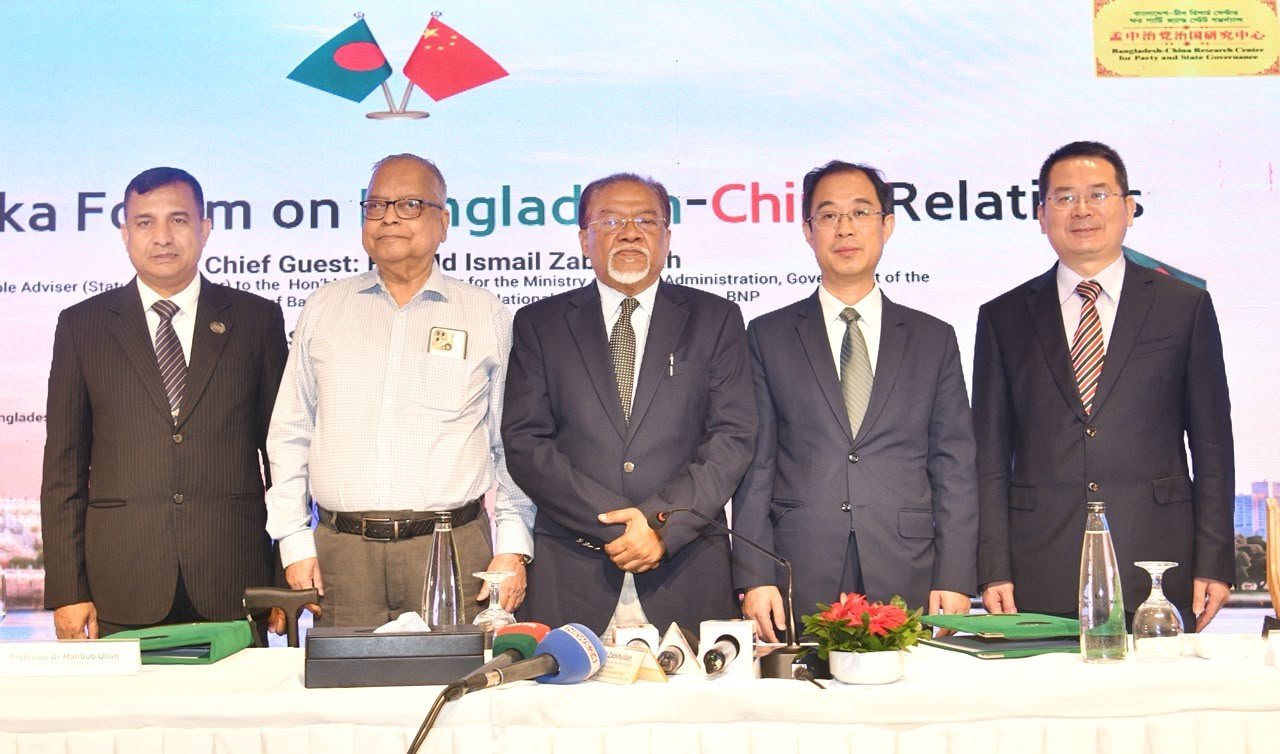
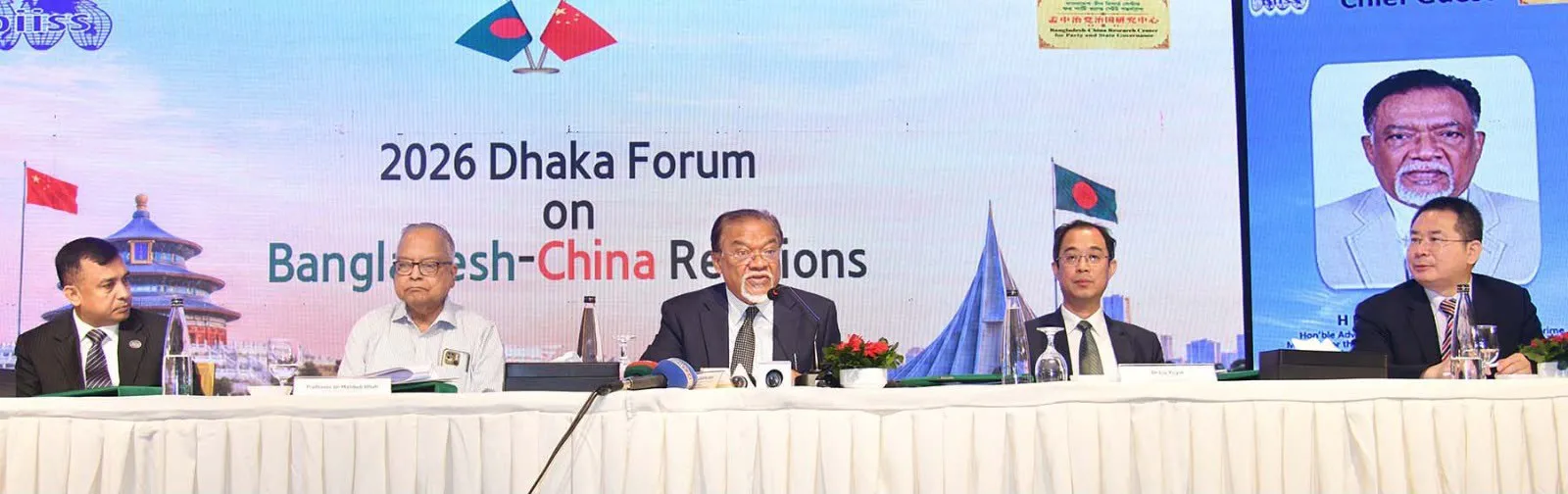
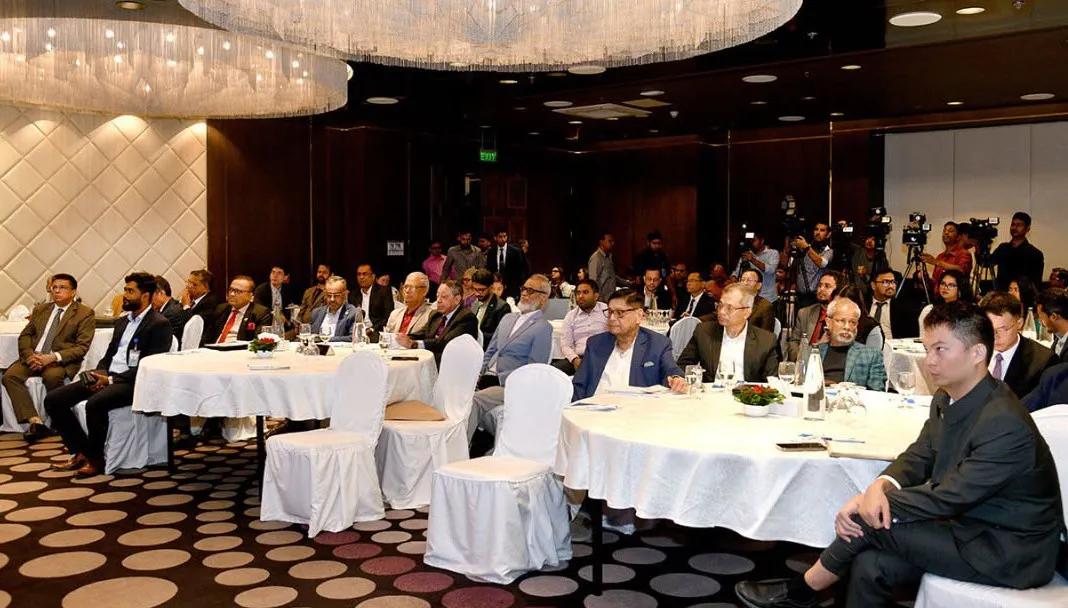
He made this call while speaking as the chief guest at a seminar titled “2026 Dhaka Forum on Bangladesh-China Relations,” held in Dhaka on Wednesday (November 25, 2026). The seminar was jointly organized by the Bangladesh Institute of International and Strategic Studies (BIISS) and the Chinese Embassy in Dhaka.
Highlighting the existing trade deficit between Bangladesh and China, the Advisor noted that in the 2025-26 fiscal year, approximately 75% of Bangladesh’s total exports went to Western markets—with 18.85% destined for the United States—while exports to China accounted for only 1.71%. To address this, he emphasized that bilateral trade should move beyond the simple exchange of goods; it must expand to include joint investments, cultural exchange, technology transfer, and cooperation in the manufacturing sector. He suggested that by establishing factories in Bangladesh, Chinese entrepreneurs could leverage the country’s strategic geographical location, skilled workforce, and market access to export goods to markets in Africa, the Middle East, and Europe.
Regarding the progress of bilateral relations, Md. Ismail Zabiullah noted that high-level visits and communications between the two nations have increased following the political transition on August 5. He highlighted that the commitment to build a “Bangladesh-China Community with a Shared Future”—announced during Prime Minister Tarique Rahman’s visit to China in June 2026—has added a new dimension to the relationship. He stressed that this partnership, built on the principles of mutual respect, sovereignty, and non-interference in each other’s internal affairs, should now be further advanced toward practical economic cooperation.
Emphasizing the development of ports and communication infrastructure, the Advisor stated that Chinese cooperation could play a vital role in transforming Bangladesh’s seaports into modern, eco-friendly logistics hubs. He sought China’s cooperation in constructing another major port infrastructure, similar to the Matarbari deep-sea port. Furthermore, he emphasized the importance of conducting a feasibility study to develop Chandpur into a potential port and logistics hub, constructing a bridge or tunnel between Chandpur and Shariatpur, and establishing a joint Bangladesh-China shipping and logistics company—modeled after the international shipping firm Maersk.
Md. Ismail Zabiullah, the Prime Minister’s Advisor on Public Administration, remarked that the China-Myanmar-Bangladesh Economic Corridor could open new possibilities for strengthening regional connectivity and economic cooperation. He noted that the implementation of this corridor would create fresh opportunities for trade and economic collaboration among the participating nations. Specifically, by developing road and rail links from Kunming (China) to Kyaukphyu (Myanmar) and connecting the port of Kyaukphyu with the port of Chattogram via sea routes, it would be possible to establish an effective regional economic corridor. However, he stressed that Bangladesh would prioritize its own national interests throughout the implementation of such a project. He further added that this corridor should not be viewed merely as an infrastructure development project, but rather as a broader initiative aimed at fostering economic integration and effective cooperation among the involved countries. Advancing this initiative, however, requires a careful review of the political realities, security situations, institutional capacities, and economic interests of the respective nations. Emphasizing the need for research into the corridor’s potential and for enhanced policy dialogue, he noted that evidence-based assessments, feasibility studies, and meaningful consultations with relevant stakeholders would be crucial in determining a pragmatic path forward.
Regarding the Rohingya crisis and regional stability, the Advisor stated that regional peace and stability are essential for sustainable trade and investment. Bangladesh looks to China to play a constructive and robust diplomatic role in ensuring the safe, voluntary, and dignified repatriation of the Rohingya people, as well as in restoring stability to Myanmar’s Rakhine State.
Speaking as a special guest, the Chargé d’Affaires of the Chinese Embassy in Bangladesh, Dr. … Liu Yuyin emphasized the need to further strengthen cooperation between Bangladesh and China in sectors such as trade, investment, infrastructure, energy, education, healthcare, and technology. He noted that the relationship between the two nations could be elevated to new heights through industrial development, technology transfer, capacity building, and the expansion of economic cooperation. Referring to China’s 15th Five-Year Plan, he called for the exploration of new areas for regional and economic collaboration between Bangladesh and China.
Major General Hussain Muhammad Masihur Rahman, Director General of the Bangladesh Institute of International and Strategic Studies (BIISS), delivered the welcome remarks. Dr. Liu Zongyi—a Senior Research Fellow at the Shanghai Institutes for International Studies (SIIS), Director of its Center for South Asian Studies, and Director of the SIIS-DU Center for China Studies—spoke as a special guest. The inaugural session was chaired by National Professor Dr. Mahbub Ullah.
The seminar was attended by senior officials from various ministries and government agencies, representatives from the Chinese Embassy, former diplomats, military and civilian officials, academics, researchers, university faculty and students, media personnel, and policymakers.