Desk Report:
Dr. Zubaida Rahman, Vice President of the Ziaur Rahman Foundation, has announced plans to launch a nationwide mid-day meal program by 2027, aimed at ensuring proper nutrition for children in government primary schools. She stated that under this initiative, approximately 11 million children across all government primary schools in the country’s 500 upazilas will receive a mid-day meal every day.
She noted that the school feeding program will play a crucial role in addressing nutritional deficiencies among children, while also boosting school attendance and helping to retain students within the formal education system.
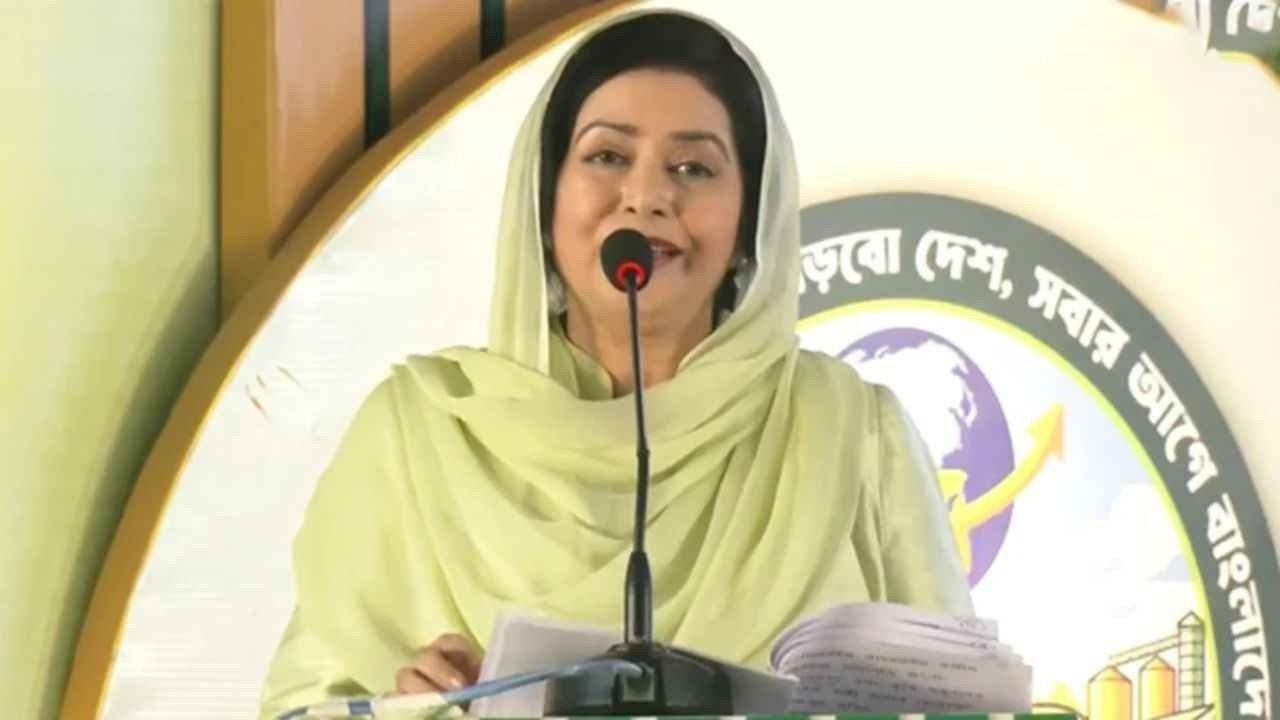
Dr. Zubaida Rahman made these remarks on Friday at an award-giving ceremony for a cooking competition—held as part of National Livestock Week—at the former Dhaka International Trade Fair grounds, adjacent to Sher-e-Bangla Agricultural University in Agargaon, Dhaka.
The event was presided over by the Minister of Fisheries and Livestock, Mohammad Amin Ur Rashid. Other notable attendees included State Minister for Fisheries and Livestock Sultan Salauddin Tuku, Ministry Secretary Md. Delwar Hossain, and the Acting Director General of the Department of Livestock Services, Md. Shahjaman Khan, among others.
A total of 300 recipes were submitted for the cooking competition organized for National Livestock Week, from which five participants were selected for awards.
Tahera Islam Tinni from Madaripur secured first place, followed by Abu Abdullah MD Siam in second, and Sazia Ferdous from Rangpur in third. The winners were presented with commemorative crests, certificates, and checks. Following the ceremony, Dr. Zubaida Rahman participated in a photo session with the contestants.
Regarding the mid-day meal program, Dr. Zubaida Rahman mentioned that, currently, approximately 3.1 million students across 151 of the country’s 500 upazilas are already receiving nutritious meals on a daily basis.
She emphasized that this program has proven effective in increasing school attendance among children aged four to ten and in ensuring they remain engaged in formal education. There is a plan to expand the program to all government primary schools across 500 upazilas, starting in 2027. This initiative will provide daily midday meals to approximately 11 million children.
She emphasized the importance of increasing oversight by involving mothers to ensure the nutritional value and quality of the meals.
Dr. Zubaida proposed organizing cooking competitions at the district and upazila levels to make school midday meals more delicious, nutritious, and accessible.
She noted that such local-level competitions could generate new ideas for preparing healthy and nutritious food for children. Furthermore, this would encourage the use of locally available vegetables, protein sources, and dairy products in the meals.
In addition to adopting hygienic cooking practices in primary schools, she stressed the need to increase the involvement and oversight of mothers in the food preparation process. Dr. Zubaida believes these initiatives will contribute to improving the nutritional status of children.
Dr. Zubaida Rahman highlighted the creative and cultural dimensions of cooking, rather than viewing it merely as a process of preparing food.
She described cooking as an art form, as well as a language, a science, and a means of connecting with others. It integrates necessity, passion, creativity, and cultural heritage; through cooking, individuals express their history, personality, and love.
Encouraging the pursuit of innovation and creativity in cooking, she advised participants to incorporate their own unique perspectives. She also urged everyone to contribute toward promoting Bangladeshi cuisine on a global stage.
Dr. Zubaida highlighted key aspects of the United Nations’ Sustainable Development Goals (SDGs) aimed at addressing global hunger and malnutrition. She identified several critical objectives, including ensuring food for all, guaranteeing food security for impoverished populations, reducing stunting and malnutrition among children, supporting smallholder farmers, and building sustainable food systems. Highlighting the nutritional status of children in Bangladesh, she noted that, according to United Nations statistics, 25.1 percent of children under the age of five in the country suffer from stunting.
She also emphasized the importance of increasing agricultural production to address nutritional deficiencies. She advocated for the cultivation of improved crops, the production of vitamin- and nutrient-rich foods, and the promotion of vitamin A-enriched ‘golden rice’ and disease-resistant potatoes.
Dr. Zubaida also highlighted the expansion of the cultivation of pest-resistant eggplant, which helps reduce the use of pesticides. She mentioned that currently, more than 30,000 farmers are cultivating this variety of eggplant.
Furthermore, she stressed the need to raise awareness at the grassroots level to ensure access to diverse and safe food for mothers and children. Citing technical support from the Food and Agriculture Organization (FAO), she underscored the necessity of fostering awareness regarding healthy cooking practices and the consumption of safe food.
Dr. Zubaida Rahman called for collective, coordinated efforts from everyone to build a hunger-free world.